India’s temples are far more than sacred spaces of worship they are living embodiments of the country’s spiritual depth, artistic brilliance, and cultural continuity. For millennia, temples have functioned as dynamic institutions that preserve not only religious practices but also art, education, architecture, and social systems. As tangible heritage sites deeply connected with intangible traditions, Indian temples stand as enduring symbols of a civilization that seamlessly blends spirituality with creativity and knowledge.
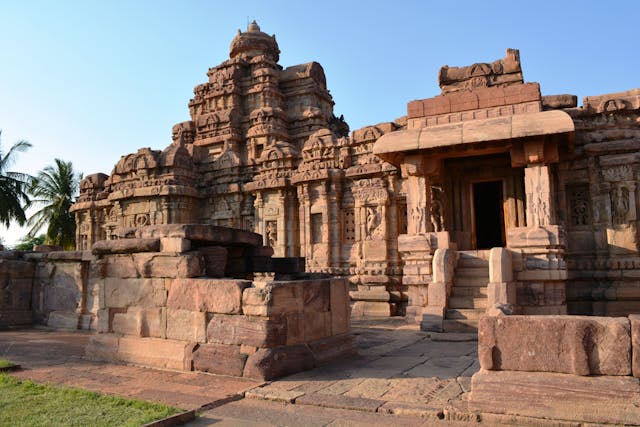
Pic credit: Pexels(Abhinandan J. Patil)
Temples as Living Repositories of Heritage
In the Indian context, temples are not static monuments but “living heritage” spaces. They embody both tangible elements—such as architecture, sculptures, and inscriptions—and intangible aspects like rituals, festivals, music, and oral traditions. This unique integration ensures that temples remain relevant across generations.
Historically, temples served as community hubs where people gathered for worship, learning, and social interaction. They functioned as centers of governance, economic exchange, and cultural expression. Through daily rituals and grand festivals, temples continue to pass on traditions, ensuring that India’s cultural identity remains intact even in a rapidly modernizing world.
Preservation of Classical Arts
One of the most significant contributions of temples lies in their role as custodians of Indian art forms. Temples have historically patronized and nurtured classical dance, music, and visual arts, making them vital to the evolution of India’s artistic heritage.
Classical dance forms such as Bharatanatyam, Odissi, and Kuchipudi originated within temple premises as devotional offerings to deities. These dances were not merely performances but acts of spiritual expression, often accompanied by intricate gestures and storytelling rooted in mythology.
Similarly, temples have long been centers for music. Carnatic and Hindustani traditions flourished in temple environments, where saints and composers found inspiration to create devotional compositions. Even today, temple festivals often feature musical performances that preserve these traditions.
Visual arts, too, find their finest expressions in temple spaces. Intricate stone carvings, frescoes, and murals serve as “textbooks in stone,” narrating stories from epics like the Ramayana and Mahabharata. These artistic elements not only beautify temple structures but also educate devotees about cultural and spiritual narratives.
Centers of Knowledge and Education
Ancient Indian temples functioned as centers of education, often comparable to universities. Institutions known as pathashalas, ghatikas, and mathas were attached to temples, where scholars imparted knowledge in diverse fields such as the Vedas, philosophy, mathematics, astronomy, and medicine.
Temples also housed libraries, known as Sarasvati-bhandaras, which preserved manuscripts on palm leaves. These collections safeguarded invaluable knowledge, ensuring the survival of ancient texts and intellectual traditions.
Moreover, temple architecture itself reflects scientific understanding. Advanced knowledge of geometry, metallurgy, and astronomy is evident in temple designs. For instance, structures like the Konark Sun Temple demonstrate precise alignment with celestial movements, showcasing the scientific sophistication of ancient Indian builders.
Architectural Heritage and Diversity
Indian temple architecture is a testament to the country’s regional diversity and historical evolution. Broadly, temple architecture can be classified into three major styles:
- Nagara Style (North India): Characterized by beehive-shaped spires known as shikharas, seen in temples like those at Khajuraho.
- Dravida Style (South India): Known for towering gopurams (gateway towers), expansive courtyards, and intricate carvings, as seen in temples like the Brihadeeswarar Temple.
- Vesara Style (Deccan Region): A hybrid of Nagara and Dravida styles, exemplified by Hoysala temples such as the Chennakesava Temple.
Each style reflects local materials, climatic conditions, and cultural influences. Temples like the Sun Temple at Konark, the Jagannath Temple in Puri, and the Meenakshi Temple in Madurai stand as masterpieces of architectural innovation and artistic excellence.
The layout of temples is deeply symbolic. The sanctum (garbhagriha) represents the cosmic center, while the towering spire symbolizes the connection between the earthly and the divine. Every element, from pillars to carvings, carries philosophical meaning, reflecting the concept of a universe governed by harmony and balance.
Social and Economic Significance
Temples have historically played a crucial role in shaping Indian society and economy. They acted as economic centers, managing land, supporting agriculture, and providing employment to artisans, musicians, and laborers. In many regions, temples functioned as banks, offering financial support to communities.
Socially, temples have always been inclusive spaces that foster community bonding. Festivals such as Rath Yatra and Mahashivratri bring together people from diverse backgrounds, reinforcing unity and shared cultural identity.
Temples also contribute to social welfare. Practices like annadana (free food distribution), provision of shelter, and medical aid have long been associated with temple institutions. These activities highlight the humanitarian dimension of temples, extending their role beyond spirituality into community service.
Spiritual Significance and Cultural Continuity
At their core, temples are sacred spaces where devotees connect with the divine. Rituals such as darshan, puja, and archana form the foundation of spiritual practice, offering individuals a sense of peace and purpose.
Temples also play a vital role in other Indian religions such as Jainism and Buddhism. Jain temples, like the Dilwara Temples, showcase exquisite craftsmanship, while Buddhist stupas like Sanchi represent early developments in sacred architecture.
Pilgrimage traditions associated with temples ensure the continuity of cultural practices. Millions of devotees visit temples annually, keeping ancient rituals and beliefs alive in contemporary times.
Temples as Artistic and Cultural Narratives
Temples are often described as “galleries of living art.” Sculptures depict gods, goddesses, celestial beings, and everyday life, bridging the gap between the divine and the human experience. For instance, the Nataraja sculpture of Lord Shiva symbolizes cosmic creation and destruction, reflecting profound philosophical ideas through art.
Murals and frescoes further enrich temple interiors, illustrating stories with vibrant colors and intricate detailing. Sites like Ajanta and Ellora showcase how art and spirituality merge to create immersive cultural narratives.
Relevance in Modern Times
In the modern era, temples continue to play a vital role in preserving India’s heritage. Despite challenges such as urbanization and environmental degradation, efforts are being made to restore and conserve temple structures.
Organizations and government bodies are working to protect these heritage sites, with several temples recognized as UNESCO World Heritage Sites. At the same time, temples are adapting to contemporary needs by embracing digital platforms and community outreach initiatives.
Temple art continues to inspire modern artists, influencing contemporary interpretations of traditional themes. This ongoing dialogue between tradition and modernity ensures that temple heritage remains vibrant and relevant.
Conclusion
Indian temples are more than architectural marvels—they are living testaments to the country’s spiritual, cultural, and artistic legacy. By preserving art, knowledge, traditions, and social values, temples have played an indispensable role in shaping India’s identity.
As India moves forward in an era of globalization, the preservation of temple heritage becomes increasingly important. These sacred spaces not only connect us to our past but also guide us toward a culturally enriched future.
In essence, temples stand as timeless bridges between the divine and the human, the past and the present—ensuring that India’s rich heritage continues to inspire generations to come.
