Hyderabad, May 6: With Telangana witnessing intense summer conditions and several districts including Hyderabad recording temperatures above 44°C in recent days, AIG Hospitals, Banjara Hills has launched “Beat the Heat”, a large-scale public awareness initiative aimed at educating citizens on heat stroke, heat-related illnesses, early warning signs, first-aid measures, and preventive action. Though intermittent rainfall and thunderstorms may bring temporary relief, weather advisories continue to underline the need for caution as heat stress remains a serious public health concern.
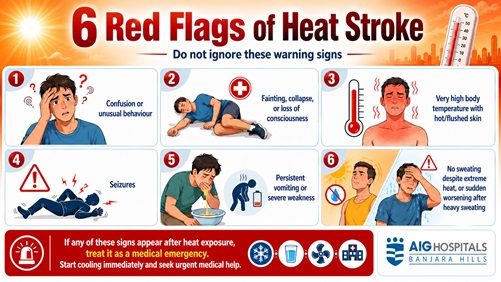
The campaign comes at a time when weather experts are also closely watching the evolving El Niño pattern, which is often associated with increased heat stress, uneven rainfall, and greater weather variability in India. Telangana has also been advised to prepare for heat and uneven rainfall patterns as the season progresses.
Speaking on the need for the initiative, Dr. D. Nageshwar Reddy, Chairman, AIG Hospitals, said,
“Heat stroke is one of those medical emergencies where awareness can directly save lives. Many people still think of heat-related illness as simple dehydration or tiredness, but in reality, it can rapidly affect the brain, heart, kidneys, and other vital organs. Our goal is to help people recognise danger signs early, protect vulnerable family members, and act correctly in the first few minutes.”
Heat stroke occurs when the body loses its ability to regulate temperature. It is not the same as ordinary fever. In fever, the body’s temperature control system is still functioning; in heat stroke, that system begins to fail. As the core body temperature rises dangerously, it can cause altered mental status, seizures, collapse, and multi-organ damage. Medical guidance from leading health institutions identifies heat stroke as a medical emergency that can quickly damage the brain, heart, kidneys, and muscles if treatment is delayed.
Explaining the clinical seriousness, Dr. Praveen Kumar Koppula, Director & Sr. Consultant – Internal Medicine, AIG Hospitals Banjara Hills, said,
“The biggest problem with heat stroke is that it often begins innocently. A person may first feel unusually tired, dizzy, nauseous, or may develop headache and muscle cramps. These are usually dismissed as exhaustion. But when the body is unable to cool itself, symptoms can progress very quickly. Confusion, unusual behaviour, slurred speech, fainting, persistent vomiting, seizures, or not sweating despite extreme heat should never be ignored. These are red flags that the brain and vital organs are under stress. At that point, waiting at home or assuming that the person will recover with rest alone can be dangerous.”
One of the key objectives of the campaign is to help the public understand the progression from heat exhaustion to heat stroke. Heat-related illnesses may begin with cramps, dehydration, heavy sweating, weakness, dizziness, or headache. If ignored, the condition may progress to heat stroke, where the individual may become confused, restless, drowsy, unconscious, or develop seizures. Delay in cooling and treatment increases the risk of kidney failure, cardiac complications, liver dysfunction, muscle breakdown, and brain injury. The longer the body remains overheated, the greater the chance of serious complications or death.
Emphasising the importance of first response, Dr. Imran Shareef, HOD & Sr. Consultant – Emergency Medicine, AIG Hospitals, said,
“In heat stroke, the first few minutes are critical. The most important action is to start cooling immediately while arranging medical help. Move the person to shade or an air-conditioned area, remove excess clothing, apply cool water or wet cloths, fan the person, and place ice packs or cool towels around the neck, armpits, and groin. If the person is fully conscious, small sips of water or oral rehydration can be given. But if the person is confused, drowsy, vomiting, or unconscious, do not give anything orally because of the risk of choking. Cooling should begin even before the ambulance arrives, because in heat stroke, cooling is the treatment.”
Certain groups are at a much higher risk during extreme heat. These include the elderly, infants and children, pregnant women, outdoor workers, traffic personnel, athletes, people living alone, and those with diabetes, hypertension, kidney disease, obesity, neurological illness, or cardiovascular disease. People on medications such as diuretics, certain blood pressure medicines, psychiatric medications, or drugs that affect sweating and hydration may also be more vulnerable. The World Health Organization notes that heat can worsen underlying illnesses such as cardiovascular disease and diabetes, and that older adults and people with chronic diseases face higher risks during heatwaves.
Highlighting the risk among cardiac patients, Dr. Varsha Kiron, Director – Cardiology, AIG Hospitals Banjara Hills, said,
“Extreme heat puts additional strain on the heart. To cool the body, the heart has to pump more blood and dehydration can further reduce blood volume, making the heart work even harder. For patients with coronary artery disease, heart failure, hypertension, rhythm disorders, or those taking diuretics and blood pressure medications, this can increase the risk of dizziness, low blood pressure, palpitations, worsening heart failure, or even acute cardiac events. Cardiac patients should avoid peak heat hours, maintain hydration as advised by their doctor, never skip medicines without consultation, and seek help immediately if they experience chest discomfort, breathlessness, fainting, or unusual fatigue during hot weather.”
As part of the “Beat the Heat” public awareness campaign, AIG Hospitals, Banjara Hills will focus on simple preventive measures that can be adopted by every household. These include drinking water regularly and not waiting until thirsty, avoiding direct sun exposure between late morning and afternoon, wearing light-coloured and breathable clothing, using caps or umbrellas outdoors, taking frequent rest breaks, avoiding intense exercise during peak heat, checking on elderly family members, avoiding alcohol and excessive caffeine during extreme heat, and ensuring children and pets are never left inside parked vehicles.
The hospital also advises people with diabetes, hypertension, heart disease, kidney disease, and elderly individuals to be extra cautious during heatwave conditions. They should monitor symptoms closely, keep emergency contacts available, store medications safely, and consult their doctor regarding fluid intake if they have any restrictions due to heart or kidney conditions.
The “Beat the Heat” initiative will include public awareness camps, doctor-led talks, educational materials, media outreach, community engagement, and practical guidance on recognising and responding to heat-related illness. The campaign’s core message is simple: heat stroke is preventable, but only if people recognise the risk early and act in time.
Don’t Ignore the Heat. It Won’t Ignore You.
