New Delhi, May 21 : Failure rates falling by 70% in a single year. Pass rates jumping from 87% to 99.3% in just twelve months. Districts historically affected by Left Wing Extremism climbing from the bottom tier to the #1 spot in state board rankings.
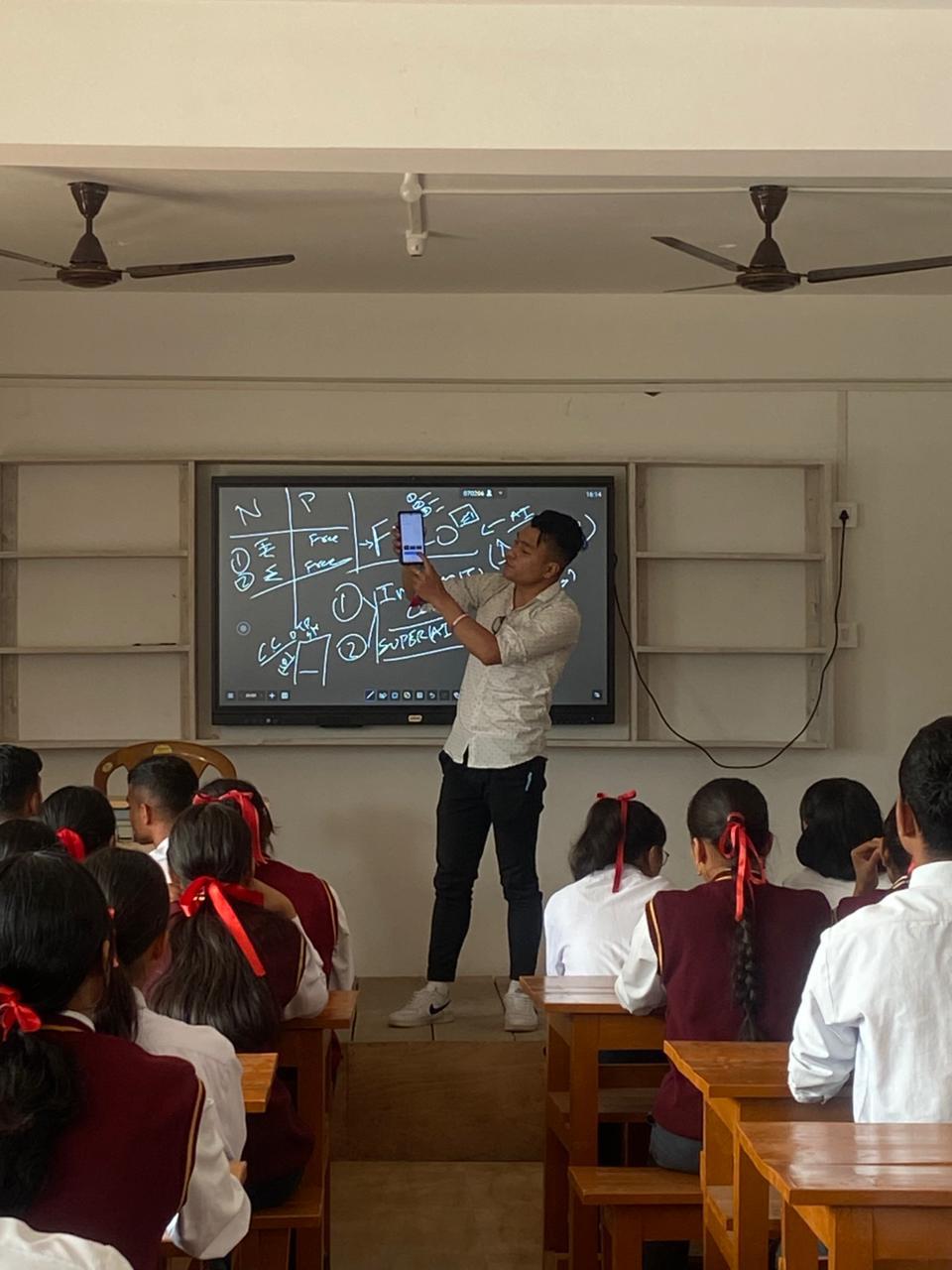
The program driving these numbers is called Sampurna Shiksha Kavach , a public-private partnership between state governments and Filo, a Delhi-based AI education startup with a formal academic collaboration with the National Council of Educational Research and Training . The model is straightforward: Filo’s platform provides live one-on-one sessions with personal teachers inside & outside government schools, around the clock, yes, 24×7, at no cost to families. The design goal is not to help a selected cohort of strong students get stronger. It is to lift the entire school – including the weakest cohort and to do so in regions that the edtech industry has largely ignored.
The program’s national footprint grew rapidly over the past two years. In Vidisha, Madhya Pradesh, a district-level pilot covering 275 students across three government schools generated 4,192 live one-on-one sessions and 4,408 AI-enabled learning interactions within its first phase; multiple students from the cohort scored above 90% in the 2025 – 26 academic session. In Bilaspur, Himachal Pradesh, the program was formally launched by the Chief Minister. Similar launches have followed in Meghalaya and Rajasthan, each inaugurated at the state level.
In Sangli, Maharashtra, the 2026 SSC board results told two very different stories depending on a single variable: how much students had used Filo’s AI tutoring platform. Among the 42 government schools in the block, schools where more than half the students adopted the platform and did 30,000+ learning sessions, saw their pass rates decline by just 2.4 percentage points year-on-year. Schools below that adoption threshold fell by 9.2 points. The gap at the 50% mark: 6.8 percentage points – in favour of higher usage, in less than 5 months when scores were trending downward across the board. The data point from Sangli is not an outlier. It is one thread in a pattern that now runs across six states.
“Every district we enter, people tell us the challenges are unique — the terrain, the language, the teacher shortages. And they are right. But the learning gap is universal, and so is the desire of a child to get unstuck at 10 pm before going to sleep. We built a platform for that child. The board results are just the system telling us it is working.”
Rohit Kumar, Co-founder, Filo
The most mature evidence base, however, comes from Jharkhand, where SSK has been operating longest and where the Jharkhand Academic Council (JAC) publishes district-level rankings for all 24 districts. The results are striking regardless of where one begins. Latehar, a Left Wing Extremism-affected district, sat 13th in Class 12 Science rankings in 2023. By 2025 it had climbed to #1 – and held that position in 2026, achieving a 93.25% pass rate, the highest Class 12 Science pass rate by any Jharkhand district in three years. In Class 10, Latehar moved from 21st to 4th and held that rank for two consecutive years. Gumla, a NITI Aayog Aspirational District, was ranked 20th in Class 10 in 2025. Twelve months later, it ranked #1 in Jharkhand; its pass rate went from 87% to 99.3%, and the share of students achieving First Division, the threshold that determines university admission eligibility, rose by 66%.
Dumka, where SSK began almost four years ago and now covers roughly half the district’s schools, has risen from 24th to #2 in Class 10. The performance gap between SSK schools and non-SSK schools in the same district stands at 20.9 percentage points in favour of SSK – 98.2% versus 77.3% – a controlled comparison that rules out district-level factors such as teacher quality or infrastructure. In Ramgarh, 21 SSK schools saw their failure rate fall by 70% in a single year, with the historically weakest five schools posting a 20.8% improvement – the highest turnaround in the district’s recorded history. In West Singhbhum, a tribal-majority district, Class 12 Science rankings climbed from 18th to 9th over two years, with SSK schools outperforming non-SSK schools by nearly 15 percentage points.
The contrast is equally visible within Jharkhand’s CBSE government schools. The state launched CM Schools of Excellence – its flagship CBSE-board schools two years ago. Schools in that cohort without SSK recorded approximately 2% performance growth. Schools within the same CMSOE system with SSK recorded more than 12%, with three SSK-enabled CMSOEs achieving pass rates above 98%, including 100% at CM School of Excellence Masalia, Dumka. Across SSK districts, students achieving First Division in board exams have risen by up to 50% – a metric with direct consequences for higher education access.
Independent academic validation of Filo’s model arrived from the United States. A quasi-experimental study by Johns Hopkins University in Jefferson County used a matched comparison group to measure Filo’s impact on standardised test performance. Among male students, the program produced a +13.7 point gain in Math Achievement (p < 0.05); among African-American students, the gain was +10.4 points (p < 0.05) – both groups representing low-income, historically disadvantaged populations, comprising roughly 70% of the Jefferson County student population. Higher tutoring session counts were also significantly associated with higher English Language Arts scores in both correlation and regression analyses. The groups that showed the strongest gains in Jefferson County are structurally similar to the populations SSK serves in India: under-resourced, high student-teacher ratios, limited after-school academic support.
The Government of India has formally recognised the program four times. SSK received the Gold Award at the 28th National Awards for e-Governance 2025 and the Gold Award at the 26th National Awards for e-Governance 2023. NITI Aayog awarded it 1st Position in Education at the NITI for States Awards 2025 as a national best practice. The program was also recognised at the G20 Digital Innovation Alliance event organised by the Ministry of Electronics and Information Technology (MeitY) a sequence of accolades that spans the country’s top policy, governance, and technology platforms.
What SSK represents, at its core, is a reframing of what is possible in public education at scale. Conventional remedial programmes tend to identify a cohort of capable students and accelerate them. The SSK model is designed differently: it meets every student where they are, at the hour they need help, in the language and subject they are struggling with and lets the cumulative effect of thousands of such interactions show up in board exam rankings. From Latehar to Shirala, from Dumka to Vidisha, the pattern is consistent enough that it is no longer a hypothesis. It is a repeatable outcome.