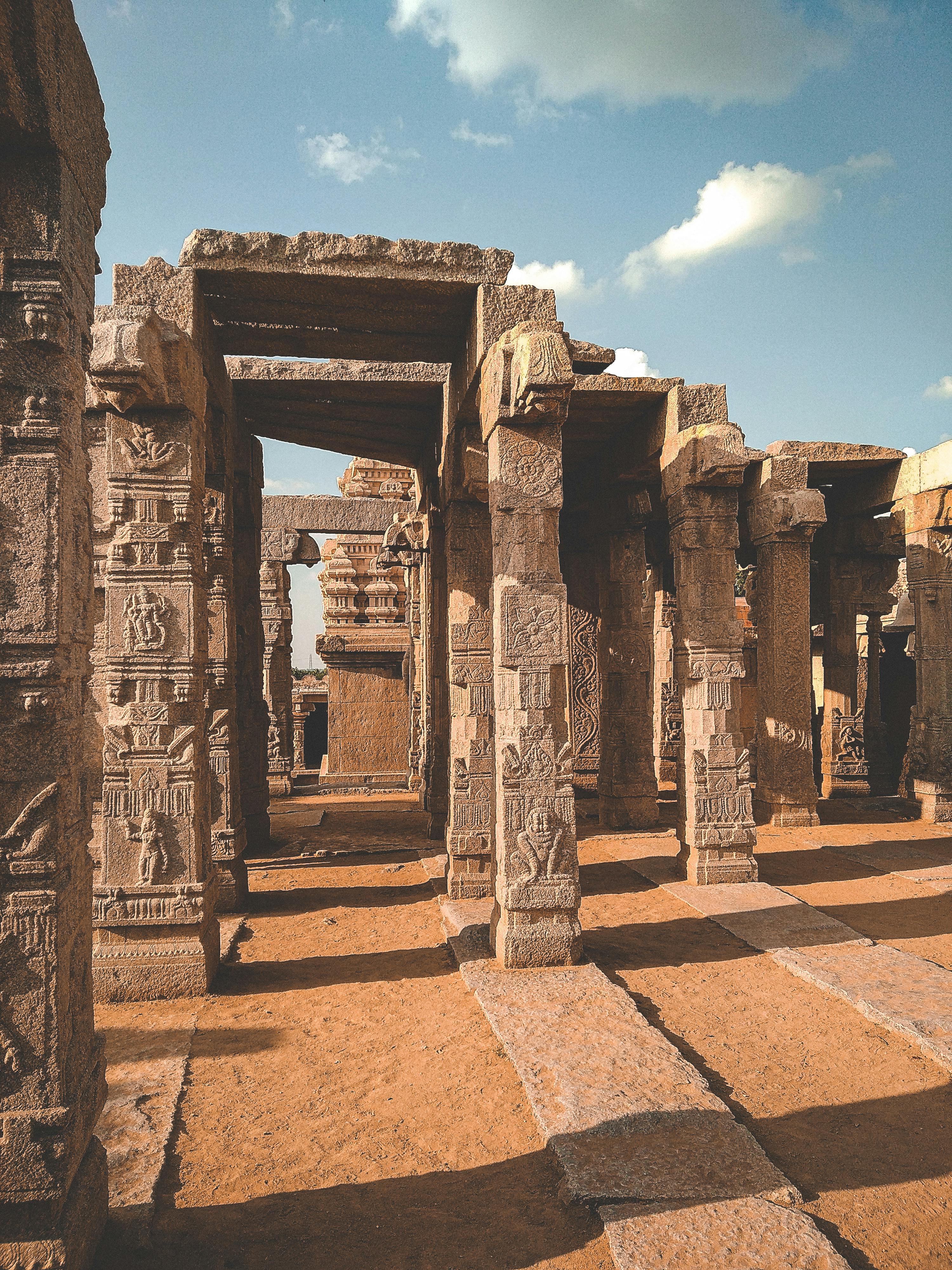
India, a land deeply rooted in spirituality and cultural heritage, is home to some of the world’s oldest temples—many with origins that stretch back thousands of years. While iconic landmarks like the Brihadeeswarar Temple and the Konark Sun Temple dominate global attention, countless lesser-known temples quietly preserve stories that rival—or even predate—ancient civilizations like the pyramids of Egypt.
Scattered across remote villages, forests, and rugged terrains, these forgotten shrines offer a rare window into India’s architectural brilliance, spiritual traditions, and enduring cultural legacy. Their rediscovery and renewed recognition are reshaping how we understand India’s ancient past.
Ancient Sanctuaries That Defy Time
Among the most remarkable is the Mundeshwari Devi Temple, often regarded as one of the oldest continuously functional Hindu temples. With origins traced to at least the Gupta period—and possibly earlier—it stands atop Piwara Hill, featuring a rare octagonal sanctum. Its enduring worship tradition highlights an unbroken spiritual continuity that few sites in the world can claim.
Equally significant is the Gudimallam Temple, home to one of the earliest known Shivalingas, dating back to the 3rd–2nd century BCE. Unlike later grand Dravidian temples, its simplicity reflects the early stages of temple architecture, offering invaluable insights into the origins of Shaivism.
The Udayagiri Caves, dating to 401 CE, represent some of the earliest preserved Hindu worship sites. Their intricate carvings, including the iconic Varaha (boar) incarnation of Vishnu, demonstrate not only artistic mastery but also a sophisticated understanding of cosmology and symbolism.
The Cradle of Temple Architecture
The town of Aihole is often referred to as the cradle of Indian temple architecture, and for good reason. Here, structures like the Lad Khan Temple and the Durga Temple showcase experimental designs that laid the foundation for later temple construction across India.
The Lad Khan Temple, originally a community hall, evolved into a place of worship, reflecting the organic development of sacred spaces. Meanwhile, the Durga Temple’s apsidal (semi-circular) design—reminiscent of Buddhist chaityas—illustrates the blending of religious and architectural influences during its time.
Hidden Architectural Marvels
In North India, the Bhitargaon Temple stands as one of the oldest surviving brick temples. Built during the Gupta era, its towering structure and terracotta carvings highlight early advancements in temple construction and design.
Similarly, the Nachna Parvati Temple, dating to around 465 CE, exemplifies early Nagara-style architecture. Though modest in appearance, its intricate carvings and rural setting make it a hidden gem of immense historical value.
These temples, often overshadowed by more famous counterparts, are crucial pieces of India’s architectural puzzle—each contributing to the evolution of temple design across centuries.
Rediscoveries That Reignite History
Recent years have witnessed remarkable rediscoveries that have brought lost temples back into public consciousness. In Odisha, the Gopinath Temple resurfaced from the Mahanadi River after being submerged for over a century. Its re-emergence served as a powerful reminder of how nature can both conceal and reveal history.
The redevelopment of the Kashi Vishwanath Corridor led to the discovery of over 40 hidden temples embedded within modern structures—an extraordinary example of history layered within contemporary life.
Meanwhile, the 2004 tsunami revealed submerged ruins near the Shore Temple, lending credibility to the ancient legend of the “Seven Pagodas” and offering new insights into India’s maritime and architectural past.
Why These Temples Matter
Unlike monuments such as pyramids, which served as tombs, India’s temples were—and continue to be—living spaces of worship. They embody philosophies of devotion, cosmology, and community life. Their layouts often follow principles like the vastu-purusha-mandala, reflecting an advanced understanding of geometry, astronomy, and spatial design.
These temples are not just relics; they are storytellers. Their carvings depict myths, daily life, and cultural practices, offering historians invaluable insights into ancient Indian society. More importantly, they continue to inspire faith and cultural identity among communities.
Challenges and the Path Forward
Despite their significance, many of these temples face challenges such as neglect, environmental damage, and limited accessibility. Remote locations and lack of infrastructure often keep them off the tourism map, while funding constraints hinder restoration efforts.
Organizations like the Archaeological Survey of India are actively working to preserve these sites, but long-term conservation requires greater public awareness and responsible tourism. Community involvement is equally critical, as local custodians often play a key role in protecting and maintaining these sacred spaces.
A Living Legacy
The rediscovery and recognition of India’s lesser-known temples mark a cultural revival—one that reconnects modern society with its ancient roots. These structures, weathered by time yet standing resilient, remind us of a civilization that seamlessly blended spirituality, science, and art.
Exploring these forgotten treasures is more than a journey through history—it is an invitation to experience the timeless spirit of India. As these temples re-emerge into the collective consciousness, they reaffirm a powerful truth: history may fade, but it is never truly lost.
