Ancient Indian temples stand as extraordinary examples of spiritual architecture, where devotion, geometry, and environmental knowledge converge. Far from being merely ritual spaces, these sacred structures were envisioned as powerful energy centers designed to harmonize the human being with cosmic forces. Guided by the principles of Vastu Shastra and the ritual guidelines of Agama Shastra, temple builders developed a sophisticated form of “spiritual engineering.” Through precise geometry, carefully chosen materials, and geophysical alignment, temples were designed to attract, amplify, and radiate subtle energies that support spiritual awareness and inner transformation.
The Cosmic Blueprint: Vastu Purusha Mandala
At the heart of traditional temple design lies the sacred geometric diagram known as the Vastu Purusha Mandala. This grid—commonly arranged in 8×8 or 9×9 squares—represents the cosmic order and the body of the universal being known as Vastu Purusha. Each square within the grid corresponds to specific energies or divine forces, ensuring that the temple structure reflects the harmony of the universe.
The central zone of this grid is called the Brahmasthana, considered the nucleus of spiritual energy. It is here that the Garbhagriha, or sanctum sanctorum, is established. This space functions as the energetic heart of the temple, from which spiritual vibrations are believed to radiate outward.
Within the mandala are also critical intersections known as Marmasthanas, or vital energy nodes. Ancient architects avoided placing heavy pillars or structural barriers on these points to ensure an unobstructed flow of prana, the life energy believed to circulate through sacred spaces.
Sacred Geography and Site Selection
The selection of temple sites was not arbitrary. Ancient Vastu scholars studied the natural landscape and chose locations believed to possess strong geomagnetic or energetic properties. Many temples were therefore constructed near rivers, sacred water tanks, hills, or unique rock formations—places thought to amplify natural energy fields.
Modern studies have suggested that several ancient temples, particularly Shiva temples, align with zones rich in natural resources and geomagnetic activity. While these correlations are still being explored, they highlight the deep environmental awareness of ancient builders.
This careful positioning allowed temples to interact with both cosmic and terrestrial forces, creating an environment where spiritual practices could be intensified.
The Sanctum: Core of Spiritual Energy
The Garbhagriha, or sanctum sanctorum, represents the spiritual core of the temple. Typically a small, enclosed chamber constructed from dense materials such as granite, it is designed to concentrate and preserve subtle vibrations.
The idol of the deity is often installed above a copper plate or sacred metal inscribed with yantras—mystical geometric patterns. These plates are believed to absorb the Earth’s natural magnetic waves and distribute them throughout the temple. Devotees performing pradakshina, the clockwise circumambulation of the sanctum, symbolically move through these energy fields.
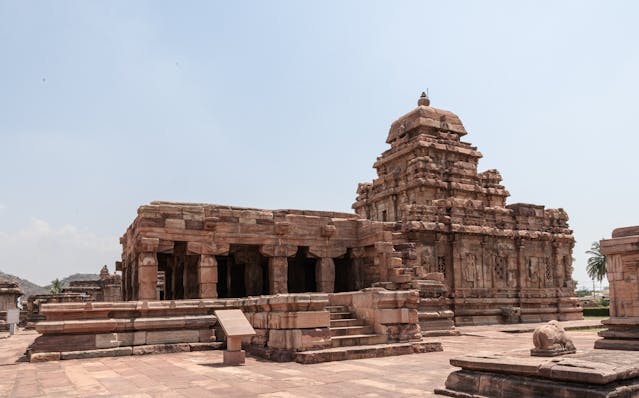
Above the sanctum rises the temple tower—called the Shikhara in North India or the Vimana in many South Indian temples. Topped with a metal finial known as the Kalash, this vertical structure symbolically acts like an antenna, channeling cosmic energy downward into the sanctum.
Materials, Geometry, and Energy Amplification
Ancient temple builders carefully selected materials that could interact with natural energies. Granite and quartz-rich stones were widely used due to their durability and unique physical properties. Under the immense weight of the temple structure, these stones may generate small electrical charges through the piezoelectric effect, potentially enhancing vibrational energy within the space.
Temple architecture also frequently displays fractal-like geometry—patterns that repeat at multiple scales from the overall layout to the smallest decorative elements. This visual and structural harmony reflects the philosophical idea that the universe itself operates through repeating cosmic patterns.
Mathematical systems such as Ayadi calculations were used to determine precise proportions and dimensions, ensuring that the temple resonated with specific spatial frequencies believed to enhance spiritual experience.
Sound, Ritual, and Bio-Energetic Resonance
Sound is an essential component of temple energy dynamics. The ringing of bells, chanting of mantras, and rhythmic recitation of sacred hymns create waves of vibration that resonate through the stone architecture.
The Garbhagriha, often built in near-cubic proportions, supports strong acoustic resonance. Chanting within this chamber produces immersive sound fields that may influence the human nervous system, encouraging calmness and mental clarity.
Temple bells are traditionally crafted from specific metal alloys designed to produce a sustained tone. These vibrations are believed to stimulate both hemispheres of the brain and clear mental distractions before prayer or meditation.
The Temple as a Symbol of the Human Body
Ancient texts often describe the temple as a symbolic representation of the human body. The entrance corresponds to the feet, the assembly hall or mandapa represents the heart or navel center, and the sanctum represents the crown of consciousness.
This alignment reflects the concept that spiritual journeys occur both externally and internally. Walking through a temple mirrors the awakening of the body’s energy centers—from the grounding Muladhara at the entrance to the transcendent Sahasrara at the sanctum.
A Living Space for Transformation
Through sacred geometry, geophysical awareness, carefully chosen materials, and powerful ritual practices, ancient Indian temples functioned as living spiritual instruments. They were designed not only for worship but also for meditation, healing, and the elevation of human consciousness.
Even today, these magnificent structures continue to inspire architects, historians, and spiritual seekers. Their enduring presence reminds us that when architecture aligns with nature, mathematics, and spiritual insight, it can create spaces that nurture harmony between the human spirit and the cosmos.
Photo by Roman Saienko:
