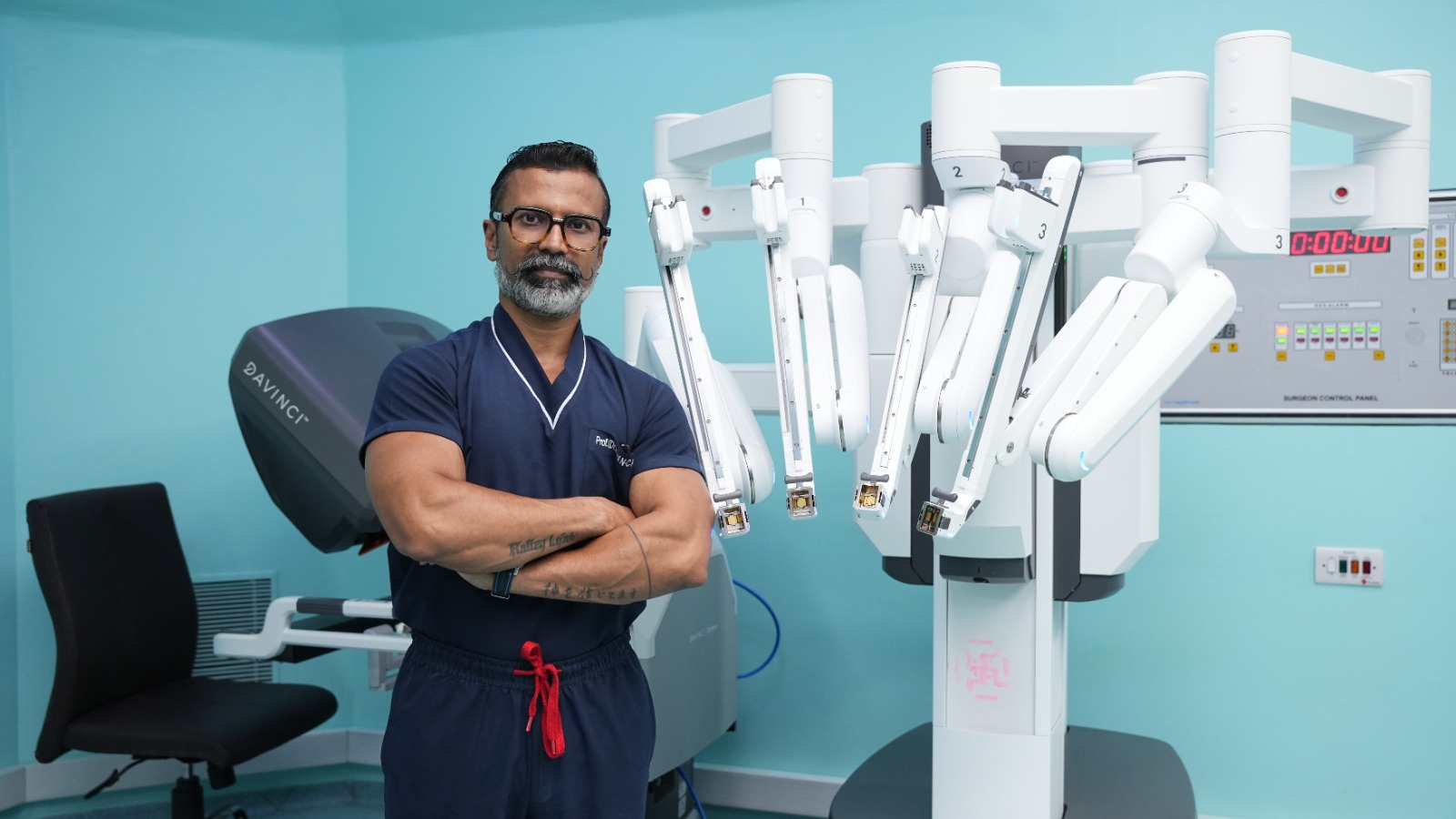
New Delhi, Mar 24: Max Smart Super Speciality Hospital announced that its surgical team recently completed 25 robotic–assisted procedures using the da Vinci surgical system in a single day, reflecting the hospital’s growing robotic surgery programme and the coordination of multidisciplinary clinical teams involved in minimally invasive care.
The procedures were performed by Dr. Atul N.C. Peters, Director – Department of Bariatric, Minimal Access & General Surgery, along with a team of surgeons, anaesthetists, nurses and operating room specialists.
The cases included a mix of routine and complex procedures, including hernia surgeries, with both primary and recurrent cases managed through robotic–assisted surgical techniques. According to the hospital, the procedures were carried out as part of routine clinical scheduling rather than a pre-planned volume target.
“Robotic–assisted surgery allows us to approach many procedures with enhanced visualization and instrument articulation while maintaining the principles of minimally invasive care,” said Dr. Atul N.C. Peters. “For patients, the focus is always on safety, surgical precision and recovery. When teams gain experience and operate within structured systems, it becomes possible to manage multiple procedures efficiently while maintaining clinical judgement and patient-first decision making.”
Robotic–assisted surgery has increasingly become part of modern surgical practice as hospitals integrate technology with established clinical pathways. The da Vinci surgical system enables surgeons to perform minimally invasive procedures with high-definition three-dimensional visualization and wristed instruments, while the surgeon remains in full control of the system.
Beyond the technology itself, hospital representatives noted that team readiness and coordinated workflows play an important role in managing surgical programmes at scale. The process involves collaboration across multiple departments including surgical teams, anaesthesia, nursing, radiology, sterilisation units and hospital administration.
“Robotic surgery is not a single-surgeon effort; it requires a well-prepared ecosystem,” Dr. Peters added. “From patient evaluation and operating room preparation to post-operative recovery, many teams contribute to ensuring that each procedure is performed safely.”
Hospitals adopting robotic–assisted surgery also place emphasis on structured training and familiarisation of operating room teams, including console training, docking procedures, instrument handling and workflow coordination.
According to the hospital, most patients undergoing minimally invasive procedures are able to resume normal activity relatively quickly depending on the nature of the surgery and individual recovery factors.
Max Smart Super Speciality Hospital continues to expand the use of minimally invasive and robotic–assisted surgical approaches across multiple specialties as part of its clinical programmes.
