Introduction: The Science and Spirituality of Sound
Temples are carefully designed spaces where sound, vibration, and devotion intersect. The ringing of bells, the blowing of conches, and the rhythmic beating of drums are not mere ritualistic customs—they are deliberate tools that influence both the mind and body.
Ancient Hindu traditions understood that sound generates vibrations capable of purifying spaces, sharpening attention, and enhancing spiritual awareness. Modern research in acoustics and neuroscience supports this, showing that certain tones and rhythms can synchronize brain activity, induce calm, and deepen meditation.
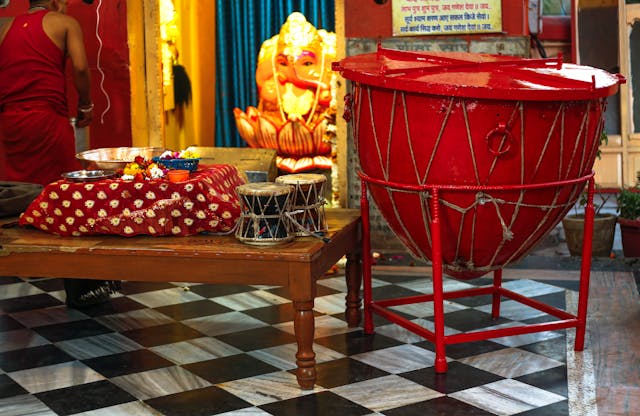
Sacred Sound in Hindu Philosophy
In Hindu thought, sound is regarded as the primal force of creation. The universe itself is believed to have emerged from the cosmic vibration “Om,” which represents the energy underlying all existence. Temple instruments like bells, conches, and drums translate these cosmic vibrations into tangible experiences, affecting both the environment and the consciousness of devotees.
These sounds help quiet mental chatter, improve focus, and serve as a bridge connecting human perception with the divine.
Temple Bells (Ghanta): Awakening Awareness
The ghanta, or temple bell, is often rung when entering a temple or during rituals.
Spiritual Significance: Bells symbolize a devotee’s presence and summon divine attention. Their sound is said to clear negativity and distractions, creating a space for concentrated worship.
Scientific Perspective: Made from panchadhatu (an alloy of copper, zinc, iron, silver, and gold), temple bells produce resonant tones in the range of 500–1000 Hz. This frequency can stimulate both hemispheres of the brain, quiet the default mode network, and shift brainwaves from an active Beta state to a more relaxed Alpha state, preparing the mind for meditation.
Echo and Energy Alignment: Traditional beliefs hold that the bell’s sustained resonance—lasting several seconds—aligns with the body’s seven chakras, harmonizing energy flow and heightening spiritual receptivity.
The Conch (Shankha): Resonance of the Cosmos
The shankha, or conch shell, is blown at the start and conclusion of rituals.
Spiritual Meaning: Associated with Lord Vishnu, the conch symbolizes the primordial sound of creation. Its tones are thought to awaken spiritual awareness and invite positive energy into the environment.
Acoustic Insights: Acting as a natural wind instrument, the conch produces deep, resonant tones with a high Q factor, allowing the sound to travel long distances. Its vibration closely resembles “Om,” enhancing meditative focus.
Health Benefits: Blowing the conch strengthens the lungs, improves breath control, and may even help cleanse the surrounding atmosphere, supporting both physical and spiritual wellness.
Drums and Rhythmic Instruments: Energizing Mind and Body
Drums, including the mridangam, dhol, and damru, provide rhythmic accompaniment to rituals.
Spiritual Role: The beat of the drums energizes worship spaces, synchronizes collective chanting, and encourages emotional engagement, creating a shared spiritual experience.
Scientific Perspective: Rhythmic sounds trigger entrainment, where listeners’ brainwaves and heart rates align with the rhythm. This promotes meditation, emotional regulation, and a sense of communal unity. Faster rhythms evoke excitement, while slower beats foster reflection and introspection.
Temples as Acoustic Spaces
Temple architecture amplifies the effects of sound. Stone walls, domes, and enclosed sanctuaries act as natural resonators, reflecting vibrations throughout the space.
Garbha-griha and Sanctuaries: The inner sanctum is designed as a resonant chamber, where the vibrations of bells, conches, and drums can be both heard and felt, intensifying the spiritual and meditative experience.
Psychological and Physiological Effects
Sacred sounds influence the human mind and body in multiple ways:
-
Focus and Awareness: The clarity of bell tones activates neural pathways that enhance attention.
-
Reverence: Deep tones of the conch foster a sense of awe and mindfulness.
-
Emotional Alignment: Drum rhythms synchronize internal bodily rhythms, enhancing group cohesion and devotion.
These combined effects create an immersive environment that deepens meditation, prayer, and spiritual consciousness.
Cultural and Ritual Importance
Bells, conches, and drums are central to temple rituals and daily worship. They mark prayer times, guide ceremonies, and create a multisensory experience when combined with light and fragrance during aarti. Beyond tradition, these instruments actively shape the devotee’s mental, emotional, and spiritual state.
Conclusion: Sacred Sound as Transformation
Temple sounds are not merely ceremonial—they are transformative. Bells, conches, and drums produce vibrations that influence brain activity, synchronize body rhythms, and elevate awareness, connecting the physical and spiritual realms.
For centuries, these instruments have guided devotees into meditative states, fostering personal and collective spiritual awakening. Today, their enduring resonance demonstrates the deep harmony between science, spirituality, and the sacred art of sound.
Photo by Swastik Arora:
