In Hindu temples, rituals and traditions play a central role in shaping the spiritual lives of devotees. Among the most meaningful of these practices is the tradition of offering food and other items to the deity and receiving them back as prasad. This ritual, observed across temples and households, carries profound religious, cultural, and philosophical significance.
For many devotees, prasad is far more than sanctified food. It represents divine grace, spiritual nourishment, and the sacred connection between humans and the divine. Through the simple act of offering and receiving, devotees express gratitude, humility, and devotion while acknowledging the belief that all blessings ultimately come from the divine.
Meaning and Origin of Prasad
The term prasad (or prasadam) originates from the Sanskrit word prasāda, which means grace, kindness, favor, or blessing. In Hindu religious practice, prasad refers to any offering—usually food—that is first presented to a deity during worship and later distributed among devotees.
Once the offering is made, it is believed to be blessed by the deity and transformed into something sacred. Devotees receive it as a symbol of divine acceptance and grace. In this way, prasad becomes a sacred exchange between the devotee and the divine.
Receiving prasad is considered a spiritual privilege. Even a small portion is accepted with reverence because it represents the deity’s blessings. Devotees often consume it respectfully and sometimes share it with family members to extend the blessing to others.
Historical Roots of the Tradition
The practice of offering food and receiving prasad has ancient roots in Hindu religious traditions. Early references to offerings appear in the sacred Vedic literature, where rituals were performed to honor the deities and maintain harmony between the divine and human worlds.
Texts such as the Bhagavad Gita emphasize the spiritual importance of offering food with devotion before consuming it. In these teachings, food offered to the divine is believed to become purified and spiritually uplifting.
Later scriptures, including the Srimad Bhagavatam and the Skanda Purana, describe temple rituals and the importance of offering food to the deity as an expression of devotion. These texts highlight how offerings strengthen the relationship between devotees and the divine.
Over centuries, temple traditions evolved and incorporated elaborate rituals, festivals, and community participation. The practice of preparing and distributing prasad became a central feature of temple culture throughout India.
The Spiritual Purpose of Offerings
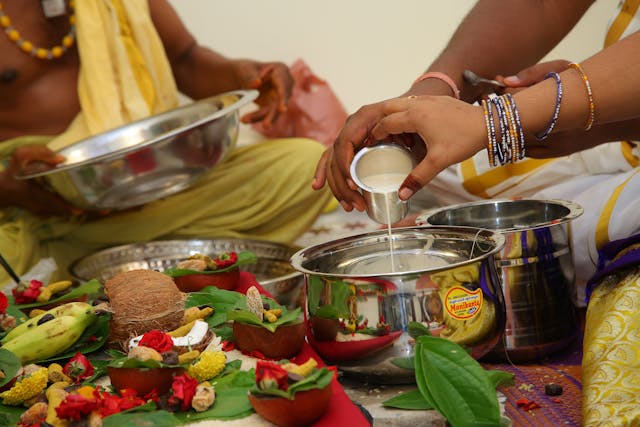
Offerings in Hindu temples are acts of devotion and gratitude. Devotees bring items such as fruits, flowers, sweets, milk, coconuts, and incense as symbolic gifts for the deity.
These offerings reflect the belief that everything in the universe ultimately belongs to the divine. By presenting food or other items, devotees acknowledge the divine as the source of life and nourishment. The act also represents humility and surrender, reminding devotees that material possessions are temporary while spiritual connection is eternal.
The ritual of offering food before consuming it also encourages mindfulness and gratitude. It transforms an ordinary act into a sacred moment of reflection and devotion.
Symbolism Behind Offerings
Each offering presented in temples carries symbolic meaning and reflects deeper spiritual concepts.
Flowers symbolize purity, beauty, and devotion. Offering fresh flowers represents the devotee’s pure intentions and love for the divine.
Fruits symbolize abundance and the rewards of devotion. They also represent nature’s gifts and the blessings of prosperity.
Sweets and cooked food symbolize joy and celebration. Preparing food for the deity demonstrates care, dedication, and respect.
Incense and lamps represent spiritual purification and enlightenment. The rising fragrance of incense and the light of a lamp symbolize the removal of ignorance and the presence of divine knowledge.
Through these offerings, devotees express their faith while seeking spiritual guidance and blessings.
The Ritual Process of Offering
The ritual of presenting offerings in Hindu temples is part of the broader worship ceremony known as puja. The process typically begins with the preparation of the offering items. Devotees ensure that the food is fresh, pure, and prepared with devotion.
During the ritual, the offerings are placed before the idol or image of the deity while priests or devotees chant sacred prayers and mantras. The intention behind the offering is considered more important than the item itself. Devotion, sincerity, and gratitude form the spiritual foundation of the ritual.
After the prayers are completed, the offering is believed to have been accepted and blessed by the deity. It is then distributed among devotees as prasad.
This process reinforces the idea that devotion transforms ordinary items into sacred blessings.
Types of Prasad
Although food is the most common form of prasad, several other items can also be distributed as sacred offerings.
Food Offerings
Cooked dishes, sweets, fruits, and grains are frequently offered to deities in temples. These are later shared among devotees as prasad.
Teertham (Holy Water)
Sacred water distributed in temples represents purification and spiritual cleansing.
Flowers
Flowers used during worship are sometimes given to devotees as symbols of divine grace and devotion.
Vibhuti (Sacred Ash)
Sacred ash applied to the forehead represents detachment from material desires and the pursuit of spiritual wisdom.
Each type of prasad carries symbolic meaning and serves as a reminder of the spiritual values associated with temple worship.
Regional Traditions and Temple Specialties
India’s cultural diversity is reflected in the wide variety of prasad offerings found in temples across different regions.
One of the most famous examples is the laddoo prasad distributed at the Tirumala Venkateswara Temple in Andhra Pradesh. Devotees from across the country visit the temple not only for worship but also to receive this sacred offering.
Similarly, at the Jagannath Temple, devotees receive a variety of rice-based dishes and traditional preparations as prasad. The temple’s large-scale kitchen is known for preparing meals for thousands of devotees daily.
In South Indian temples, offerings often include coconuts, bananas, and sweet rice dishes, while North Indian temples may distribute halwa, peda, or kheer as prasad.
These regional variations highlight the rich cultural traditions of temple worship while maintaining the same spiritual essence of devotion and gratitude.
The Role of Prasad in Devotional Life
Prasad plays an important role in the daily spiritual practices of Hindus. After offering prayers in a temple, devotees receive prasad as a symbol that their devotion has been accepted by the deity.
Consuming prasad is considered a sacred act. It is believed to carry positive spiritual vibrations that purify the mind and encourage spiritual growth. Many devotees eat it respectfully and share it with family members as a way of spreading blessings.
Because prasad is typically prepared in a sattvic manner—pure, vegetarian, and free from excessive spices—it is also associated with mental clarity and spiritual discipline.
Community and Social Significance
Beyond its religious meaning, prasad also plays a vital role in strengthening community bonds. In temples and religious gatherings, prasad is distributed equally to all devotees regardless of social or economic status.
This practice reflects the spiritual principle of equality before the divine. Everyone, regardless of background, receives the same blessing.
During major festivals such as Diwali, Navratri, Ganesh Chaturthi, and Krishna Janmashtami, large quantities of prasad are prepared and shared among devotees. These celebrations create a sense of unity and collective devotion.
The preparation and distribution of prasad often involve volunteers and temple staff, reflecting the Hindu concept of seva, or selfless service. Participating in these activities allows devotees to contribute to the community while deepening their spiritual commitment.
Prasad as an Expression of Bhakti
Preparing and offering prasad is considered an important expression of bhakti, or devotional love for the divine. Devotees often prepare offerings with great care, ensuring cleanliness and sincerity in the process.
The act itself becomes a form of worship. By dedicating time and effort to preparing food for the deity, devotees express gratitude and devotion. Sharing prasad with others further strengthens the spirit of compassion and community.
This tradition encourages humility and reminds devotees that spiritual fulfillment comes through service, gratitude, and devotion.
Universal Spiritual Ideas
Although prasad is deeply rooted in Hindu tradition, the concept of sacred food and offerings exists in many religions worldwide. In Sikhism, the practice of langar involves sharing meals equally among all participants, emphasizing unity and community.
Similarly, in Christianity, the ritual of communion represents a sacred bond between believers and the divine.
These practices highlight a universal spiritual idea: sharing food as a sacred act that fosters humility, gratitude, and unity among people.
Conclusion
Prasad and offerings in Hindu temples are far more than ritualistic practices. They represent devotion, gratitude, humility, and the sacred relationship between the devotee and the divine.
Through the act of offering food or symbolic items and receiving them back as prasad, devotees participate in a spiritual exchange that strengthens their faith and connection with the divine. The sharing of prasad also promotes equality, community harmony, and compassion.
Even in modern times, the tradition of prasad continues to hold deep significance in Hindu worship. It preserves ancient spiritual values while bringing people together in devotion, reminding believers that divine grace can be found in even the simplest acts of faith.
Photo by Guntaka Subbareddy:
