
Mumbai, Apr 15: As India accelerates toward a digitally driven economy, the need for resilient, future-ready cybersecurity frameworks has never been more critical. The 2nd Edition of the CyberSec India Conference 2026, co-located with CyberSec India Expo 2026, will be held on April 23–24, 2026 at the Bombay Exhibition Centre, Mumbai, bringing together the country’s leading cybersecurity minds to chart the next phase of India’s digital defense strategy.
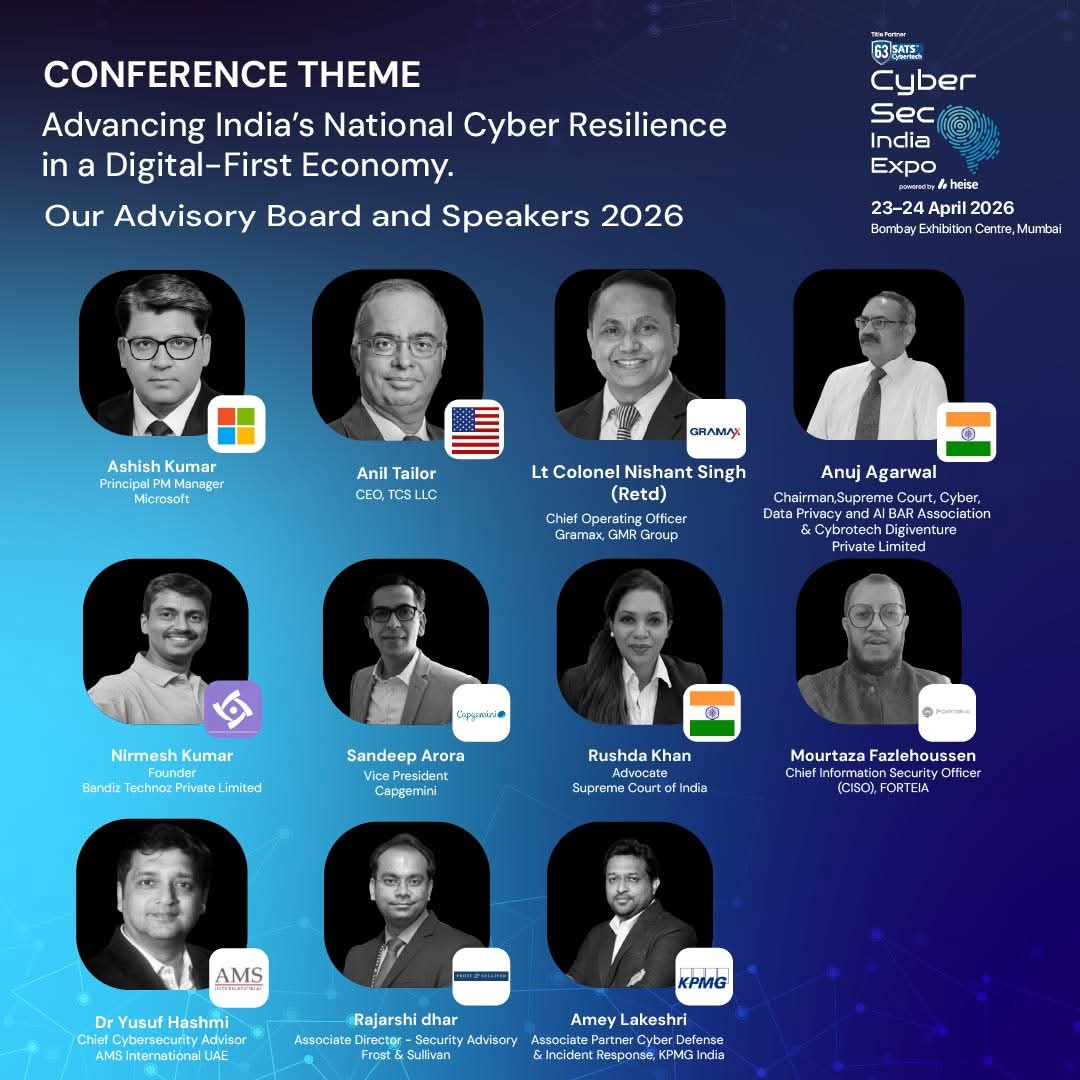
Designed as a high-impact knowledge platform, the conference will focus on securing Digital India through AI-enabled defense, Zero Trust frameworks, and post-quantum security preparedness. Over two days, the conference will host more than 50 industry leaders, policymakers, CISOs, and technology experts, facilitating in-depth dialogue on emerging cyber threats, regulatory shifts, AI integration, data privacy, and the evolving risk landscape.
At a time when India handled over 29.44 lakh cyber incidents in 2025, and ransomware continues to emerge as a material business risk with multi-crore financial impact across BFSI, healthcare, manufacturing, and government sectors, the conference aims to address real-world challenges through actionable insights and collaborative discussions. With AI-driven attacks, supply chain vulnerabilities (accounting for nearly 30–40% of incidents), and increasing regulatory accountability, cybersecurity is rapidly transitioning into a boardroom priority.
The conference will feature distinguished advisory board members including Mr Shyamkumar Nair, Regional Chief Security Officer, South Asia, Mastercard; Dr. Lalit Gupta, President, Cybersecurity Council for India; Dr. Yusuf Hashmi, Chief Cybersecurity Advisor, Dell Technologies; Mr Krishan Dev Nidumolu, Head of Information Security, Insurance Information Bureau of India; Mr Anil Tailor, CEO, TCS LLC; and Prof. Dr. Shri K. Kulkarni, Senior Advisor – Defense & Intelligence Affairs (Cybersecurity), Governments of USA & India.
A diverse lineup of speakers, including Ranjeeth Bellary, Partner – Assurance, EY; Gaurav Hirani, General Manager – Head Cloud DevSecOps, Jio; Nageshwaran C, Chief Information Security Officer, TVS Holdings; and Prof. Ajay Singh, Professor of Practice, Author and Fellow, Institute of Directors, along with other leading experts, will share practical perspectives and industry insights. The agenda spans a wide spectrum of critical themes, including ransomware 3.0 and cyber extortion trends; securing critical infrastructure and cyber-physical systems (OT/ICS); protection of Digital Public Infrastructure such as Aadhaar, UPI, and DigiLocker; post-quantum cryptography readiness and quantum security roadmaps; AI-driven cyber defense, SOC automation, and threat detection; Zero Trust adoption in complex enterprise environments; cloud security and DPDP-compliant architectures; cyber resilience through governance, risk, and compliance (GRC); as well as supply chain and third-party risk management frameworks.
Adding perspective to the evolving cybersecurity landscape, Mr Shyamkumar Nair, Regional Chief Security Officer, South Asia, Mastercard, said,
“The activation of the DPDP Rules, 2025 marks a significant shift from awareness to accountability in India’s cybersecurity ecosystem, as data protection and security obligations become enforceable and organizations must demonstrate board level governance, breach preparedness, and rights centric data protection. Cyber resilience today should be measured not by incident counts, but by how effectively institutions anticipate threats, detect and contain them quickly, and ensure continuity of essential services. Public–private partnerships will play a critical role in strengthening national cyber resilience, enabling real time threat sharing and coordinated response across critical infrastructure and SMEs. With a workforce of around 650,000 cybersecurity professionals, India is steadily positioning itself as a global hub for cyber talent and innovation. Platforms such as CyberSec India 2026 are important in enabling industry leaders, policymakers and security professionals to collaborate on building stronger, more resilient digital ecosystems for the future.”
He further added, “Indian organizations are still in the early stages of preparing for post-quantum cybersecurity. While awareness is increasing, implementation remains limited. Around 50–55% of companies are evaluating or piloting post-quantum cryptography, but fewer than 10–15% have started deploying quantum-resistant encryption, and less than 5% have meaningful adoption in production. With initiatives such as the National Quantum Mission driving momentum, post-quantum migration is rapidly becoming a near-term priority for data protection and regulatory resilience.”
Sharing his perspective on the regulatory landscape, Dr. Lalit Gupta, President, Cyber Security Council of India and Advisory Board Member, CyberSec India 2026, said,
“The activation of India’s Digital Personal Data Protection (DPDP) Rules marks a decisive shift in the country’s cybersecurity journey—moving from awareness-driven compliance to enforceable accountability. Organizations will now be required to demonstrate strong governance frameworks, robust risk management practices, and clearly defined breach response mechanisms, rather than merely stating their intent to protect data. With regulatory oversight and penalties now in place, cybersecurity will increasingly become a board-level governance priority instead of remaining a purely technical IT concern. This is also reflected in rising board-level attention, with over 50% of Indian enterprises now ranking cybersecurity as a top business risk. As India’s digital economy continues to expand, this transition will play a critical role in strengthening trust, accountability, and responsible data stewardship across industries.”
Mr Taher Patrawala, Managing Director, Media Fusion, said,
“As India’s digital economy expands at an unprecedented pace, the nature of cyber threats is becoming more sophisticated, interconnected, and persistent. From AI-driven attacks to quantum-era risks, the country must proactively build resilience frameworks that are not only robust but also future-ready. The CyberSec India Conference 2026 serves as a critical platform for industry leaders, policymakers, and cybersecurity professionals to come together, exchange insights, and collectively shape strategies that will safeguard India’s digital infrastructure and national interests in the years ahead.”
With cyber threats becoming more AI-driven, large-scale, and financially disruptive, and with India ranking among the top global targets for ransomware and email-based attacks, the CyberSec India Conference 2026 stands as a vital platform to enable strategic dialogue, policy alignment, and industry collaboration. The conference is set to play a pivotal role in strengthening India’s cyber resilience and shaping the roadmap toward a secure and globally competitive digital economy.
