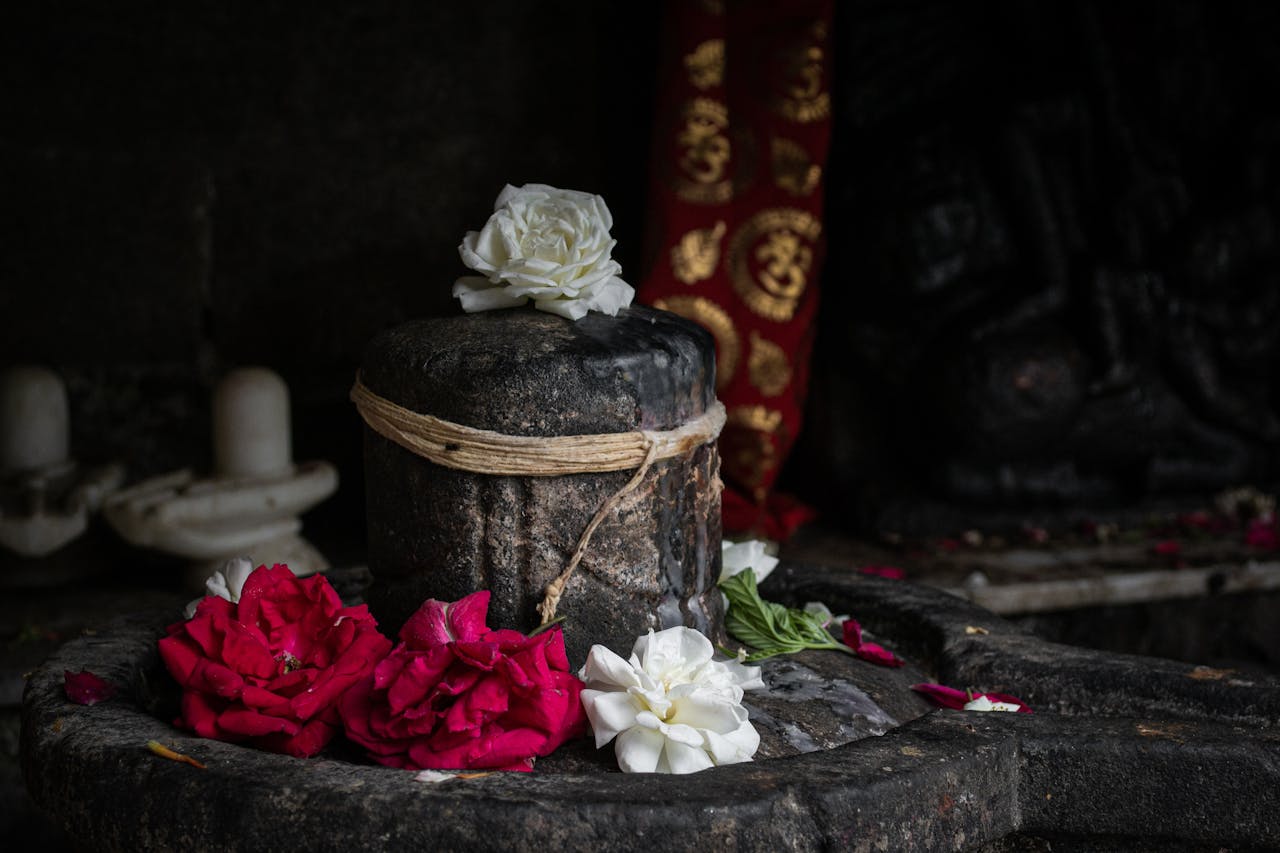
Introduction to Lord Shiva
Lord Shiva is one of the principal deities in Hinduism, revered for his multifaceted nature and profound significance within the Hindu pantheon. He is often referred to as the Supreme Being and is widely regarded as the destroyer and transformer within the cycle of creation, preservation, and destruction. This cycle, known as the Trimurti, also includes Brahma, the creator, and Vishnu, the preserver. Lord Shiva embodies the aspects of destruction that lead to regeneration, making him vital in the ongoing processes of life.
His importance transcends mere religious observance; Lord Shiva represents the ultimate truth and the path to spiritual realization. He is often depicted in various forms, including the ascetic meditating in the Himalayas and the vibrant Nataraja, symbolizing the cosmic dance of creation and dissolution. Each of these representations highlights his duality, demonstrating his ability to embody both the serene and the powerful. The imagery associated with Lord Shiva—such as the crescent moon, Ganga river flowing from his hair, and the trident—carries significant symbolism, further emphasizing his multifarious roles and attributes.
Devotees recognize Lord Shiva not only as a figure of reverence but also as a personal deity who encompasses compassion, destruction of evil, and the path to enlightenment. His followers believe that by chanting his numerous names, they can connect with his divine energy, seek blessings, and attain deeper spiritual insights. The practice of reciting Lord Shiva’s names serves as an important spiritual exercise that fosters devotion and understanding. Overall, Lord Shiva’s role is pivotal, as he embodies the transformative forces in life, offering guidance and strength to his devotees through his divine presence.
Understanding the Importance of Chanting Shiva’s Names
The practice of chanting the names of Lord Shiva holds profound significance in Hindu spirituality, serving not only as a form of devotion but as a means to achieve mental clarity and inner peace. Reciting these divine names, often referred to as ‘mantras,’ creates a sacred rhythm that can transform one’s mental state and foster a deep connection with the divine. Through this recitation, individuals often find themselves more attuned to their spiritual selves, paving the way for enlightenment and a more profound understanding of existence.
Chanting the names of Lord Shiva, such as “Mahadeva” or “Shambhu,” is a form of ‘Japa,’ which emphasizes the importance of repetition in Hindu worship. This practice not only facilitates a deeper engagement with the divine but also acts as a form of meditation. As practitioners repeat these names, their minds often transcend everyday distractions, leading to heightened concentration and spiritual awakening. The repetitive nature of Japa cultivates a peaceful mental environment, allowing practitioners to experience a sense of calm that can influence their overall life experiences.
Moreover, the psychological benefits of chanting extend beyond mere relaxation. Regular recitation can help in reducing stress and anxiety, improving emotional stability, and enhancing cognitive capabilities. The vibrational quality of the mantras can resonate within the chanter, promoting healing and transformation at various levels. Engaging with Shiva’s names acts as a daily reminder of the divine presence in one’s life, encouraging individuals to cultivate virtues such as compassion, patience, and resilience.
In summary, the practice of chanting the names of Lord Shiva is a powerful tool for spiritual and psychological growth. It provides an effective means to connect with the divine while fostering peace and mental harmony in one’s personal journey. By incorporating this practice into daily life, devotees not only honor Lord Shiva but also enrich their own spiritual experiences.
List of 100 Names of Lord Shiva
- Mahadeva – The great god; represents the supreme reality.
- Shankar – The one who brings auspiciousness and prosperity.
- Trilochana – The three-eyed one; symbolizes higher perception and intuition.
- Nataraja – Lord of dance; depicts the cosmic dance of creation and destruction.
- Neelakanth – The blue-throated one; refers to his act of swallowing poison during the churning of the ocean.
- Bholenath – The innocent lord; represents simplicity and purity.
- Sadashiva – The eternal Shiva; denotes the unchanging and timeless aspect of divinity.
- Kailashnath – Lord of Mount Kailash; signifies spiritual enlightenment and heavenly bliss.
- Maheshwara – The great lord; embodies the ultimate force of creation and preservation.
- Pashupati – Lord of all beings; represents compassion towards all living entities.
- Vishwanath – Lord of the universe; illustrates the omnipresence of divine energy.
- Brahmananda – The bliss of the supreme reality; symbolizes transcendental joy.
- Parameshvara – The supreme lord; highlights the highest authority in the cosmic realm.
- Rudra – The fierce aspect of Shiva, associated with storms and the hunt; signifies transformation through destruction.
- Digambara – The sky-clad one; symbolizes spiritual detachment and renunciation.
- Sureshvara – Lord of the gods; represents supremacy among celestial entities.
- Vishveshwara – The lord of the universe; illustrates the unity of all existence.
- Kapalabhairava – The fierce aspect of Shiva; signifies fearlessness and overcoming challenges.
- Ananta – The eternal one; represents the infinite and timeless aspects of divinity.
- Jagadisha – The lord of the world; highlights Shiva’s role as the sustainer of creation.
- Shambhu – The auspicious one; symbolizes purity and blessing.
- Bhavani Shankar – The union of divinity; underscores the balance of masculine and feminine energies.
- Kapardini – The one with matted hair; signifies the abandonment of worldly attachments.
- Har – The remover of sins; symbolizes liberation from negativity.
- Mrityunjaya – The conqueror of death; represents victory over mortality.
- Omkareshvara – The lord of the sacred sound ‘OM’; signifies the ultimate reality.
- Trimurti – The three forms of divinity; illustrates the interconnectedness of creation, preservation, and destruction.
- Aashutosh – The one who grants boons quickly; symbolizes the responsive nature of divine grace.
- Shivayogin – The embodiment of yoga; represents the union of individual consciousness with universal consciousness.
- Parvatinath – Lord of Parvati; signifies duality in divinity.
- Santana – The lord of continuity; represents the flow of life and existence.
- Dhanvantari – The god of medicine; symbolizes healing and health.
- Shivashakti – The union of Shiva and Shakti; highlights the dynamic interplay of energy and consciousness.
- Ajay – The invincible one; symbolizes eternal strength.
- Vighneshwara – The remover of obstacles; signifies the pathway to success.
- Siddheshvara – Lord of the accomplished; illustrates the power of self-realization.
- Bhutapati – Lord of the spirits; signifies mastery over the elements.
- Sadhyakrishna – The one who fulfills desires; represents abundance and prosperity.
- Chandramouli – The one with the moon as a crown; symbolizes tranquility and serenity.
- Akhileshvara – King of the whole universe; signifies ultimate authority.
- Krityakarta – The doer of deeds; illustrates the power of action.
- Virabhadra – The heroic aspect of Shiva; represents courage in the face of adversity.
- Shitala – The cool one; symbolizes calmness and peace.
- Shasyamala – The one clad in green; signifies fertility and abundance.
- Chitragupta – The celestial accountant; represents justice and order.
- Sumeshwara – The most auspicious one; symbolizes goodness and righteousness.
- Kalpeshwara – The lord of creation; signifies infinite possibilities.
- Kripalu – The compassionate one; highlights mercy and forgiveness.
- Ananthashakti – The infinite energy; symbolizes boundless potential.
- Umapati – Consort of Uma; represents divine love and union.
- Jnanasagar – The ocean of knowledge; signifies wisdom and enlightenment.
- Amantrana – The one who invokes peace; symbolizes serenity.
- Shubha – The auspicious one; signifies positive energy.
- Tantric – The master of rituals; illustrates the power of sacred practices.
- Shivajyoti – The light of Shiva; symbolizes enlightenment and clarity.
- Yogindra – Lord of yogis; represents spiritual mastery.
- Dakshinamurti – The teacher of wisdom; illustrates the transmission of knowledge.
- Mritunjaya – The one who conquers death; symbolizes immortality.
- Natya – The dancer; symbolizes rhythm and harmony in existence.
- Bhagwan – The supreme god; signifies reverence and worship.
- Brahmashiva – The god of creation; represents the source of life.
- Parabrahman – The ultimate reality; signifies the non-dual nature of existence.
- Sarasvatyapradayaka – The bestower of wisdom; symbolizes learning and intellect.
- Kalanagendra – King of time; denotes the eternal and cyclical nature of time.
- Vishwarupa – The universal form; represents the totality of existence.
- Ajaya – The never-conquered one; symbolizes everlasting strength.
- Nishkala – The formless one; represents the essence beyond physical manifestation.
- Guhyapati – Lord of the secret; symbolizes hidden knowledge.
- Hara – The one who destroys ignorance; signifies enlightenment through knowledge.
- Jagannatha – Lord of the universe; symbolizes universal love.
- Vajradeh – The diamond body; signifies strength and resilience.
- Shankaranarayana – The embodiment of Shiva and Vishnu; signifies unity in duality.
- Satyavrata – The one of truth; symbolizes righteousness.
- Virupaksha – The all-seeing one; signifies omniscience.
- Maharam – The great reality; represents the essence of existence.
- Bhagavatpada – The one with divine feet; illustrates the path of devotion.
- Ganesha – The lord of intellect; signifies the removal of obstacles in wisdom.
- Parjanya – The god of rain; symbolizes sustenance and abundance.
- Mahesvara – The great god; signifies the ultimate divine authority.
- Ajit – The undefeated one; symbolizes invincibility.
- Eeshwara – The lord; represents supreme consciousness.
- Mahaprabhu – The great lord; signifies power and divinity.
- Dwarkanath – The lord of Dwarka; signifies heritage and culture.
- Shrinath – The auspicious one; represents beauty and grace.
- Anavaprabhu – The one without a master; symbolizes self-sufficiency.
- Mahashaktimaya – The one full of divine energy; represents strength.
- Shantakaram – The one with a calm disposition; symbolizes peace.
- Bhavyabhushana – The one adorned by greatness; signifies magnificence.
- Keshav – The one with long hair; symbolizes unyielding strength.
- Mahatapa – The one with great penance; signifies spiritual discipline.
- Dharamraj – The lord of righteousness; symbolizes justice.
- Chandrashekhara – The one with the moon in his hair; represents beauty and softness.
- Parameshwaram – The ultimate lord; signifies absolute power.
- Jatanarayana – The protector of the universe; symbolizes guardianship.
- Akshobhya – The immovable one; represents stability.
- Parmatma – The supreme soul; signifies universal consciousness.
- Sadhukaram – The one with a good disposition; symbolizes generosity.
- Mahamurti – The great form; signifies the totality of existence.
- Sankatmochana – The remover of troubles; signifies the alleviation of suffering.
- Bhagavatpada – The one with divine feet; signifies the path to salvation.
How to Chant the Names of Lord Shiva
Chanting the names of Lord Shiva is a revered spiritual practice that not only elevates one’s consciousness but also fosters a deep connection with the divine. To ensure effective recitation of these sacred names, it is essential to adhere to specific methods and techniques.
Finding the optimal time and place for chanting is crucial. Early morning, particularly during the Brahma Muhurta, which is approximately one and a half hours before sunrise, is considered the most auspicious time for spiritual practices. A quiet, serene environment, free from distractions, enhances focus and allows one to connect deeply with the divine essence of Lord Shiva.
The physical posture during chanting also plays a significant role in the effectiveness of the practice. It is recommended to sit in a comfortable, upright position, such as the lotus or half-lotus pose, which facilitates proper breathing and concentration. Keeping the spine straight and shoulders relaxed helps in channeling energy, fostering a state of calm and focus.
A calm mindset is essential before starting the chanting. Taking a few moments to meditate or perform deep breathing exercises can help center one’s thoughts and intentions. Engaging in a prayer or setting an intention prior to chanting can enhance the devotion and sincerity of the practice.
The use of mala beads is traditional in chanting practices, providing a tactile element that aids in counting the recitations. A mala typically consists of 108 beads and is used to maintain focus during the chanting process. Each complete cycle of chants through the mala can deepen the experience, allowing one to immerse fully in the divine energy of Lord Shiva.
Focusing on the sound and vibration of the names while chanting can open pathways to greater spiritual connection. Visualizing Lord Shiva during recitation, along with meditative breathing, can enhance the experience, ensuring that the chanting is both a spiritual exercise and a means of invoking divine energy.
The Significance of Repetition in Chanting
Repetition, known as ‘Japa’ in spiritual practice, serves a vital role in chanting the names of Lord Shiva. This technique is deeply rooted in various Indian scriptures, which emphasize that persistent repetition can significantly enhance one’s spiritual journey. The act of engaging in Japa effectively centers attention and fosters a heightened sense of concentration. By repeatedly reciting the names of Lord Shiva, practitioners can cultivate a focused mindset, thereby diminishing distractions that often hinder spiritual growth.
Chanting invokes a profound sense of devotion, as each recitation allows devotees to connect with their inner selves and express their reverence towards the divine. As the sequences of words flow, individuals often find themselves immersed in the rhythm of their chants, leading to a meditative state that transcends ordinary thought. This repetitive action is believed to deepen one’s devotion, enhancing feelings of gratitude and love towards Lord Shiva, ultimately strengthening the bond between the devotee and the divine.
Moreover, Japa is considered a purifying practice. The consistent repetition of sacred names is thought to cleanse the mind of negative thoughts and impurities, promoting spiritual clarity. Scriptures, such as the ‘Shiva Purana’, extol the virtues of such practice, emphasizing its transformative impact on both mental and spiritual realms. Therefore, it is not merely the act of chanting that holds significance; rather, it is the dedication to repeating these names that orchestrates a profound inner change.
In essence, the practice of Japa invites individuals to cultivate a disciplined approach toward spirituality, encouraging not only personal growth but also an enriched understanding of Lord Shiva’s divine essence. Through consistent and mindful repetition, devotees pave their path toward enlightenment and a deeper appreciation for the sacred tradition surrounding the names of Shiva.
Personal Testimonials and Experiences
The practice of chanting the names of Lord Shiva has influenced many devotees profoundly, often leading to transformative experiences and deeper spiritual connections. For instance, one devotee recounts how a period of consistent chanting helped alleviate feelings of anxiety and depression. Initially, the individual approached the practice as a form of meditation, but over time, the repetition of Shiva’s names began to create a sense of peace. This tranquility allowed for greater emotional stability and a clearer mind, ultimately facilitating personal development.
Another testimony highlights the communal aspect of chanting. A group of friends formed a regular gathering to chant together, which not only strengthened their bonds but also enhanced their collective spiritual experiences. They noted a significant shift in their perspectives on life, feeling more connected to each other and to the divine. The power of collective intention and devotion emerged as a crucial element in their testimonials, illustrating how engagement with Lord Shiva’s names can foster community and support.
Ultimately, the diverse experiences shared by devotees emphasize how engaging with the names of Lord Shiva can signify a journey toward inner peace, communal harmony, and a deeper realization of the self. These testimonials encourage others to explore the practice and witness how it may enrich their spiritual paths.
The Role of Music and Chants in Devotional Practices
Music and chants play a pivotal role in devotional practices, especially in Hinduism, where they are often regarded as essential tools to connect with the divine. Particularly in the context of Lord Shiva, the practice of chanting His names is enhanced by incorporating traditional musical elements. This combination serves not only to enrich the experience but also to elevate the spiritual ambiance during worship.
Central to the musical experience in devotional practices is the use of traditional instruments. Instruments such as the tabla, harmonium, and mridangam are commonly employed, each contributing its unique sound and rhythm. These instruments provide a rich auditory backdrop that complements the recitation of Shiva’s 100 names. The rhythmic patterns produced through these instruments not only engage the listener but also facilitate a connection with the spiritual essence of the chants.
Singing plays an equally important role in enhancing the chanting of Shiva’s names. Bhakti music, which focuses on devotion and love for the divine, includes various forms that specifically honor Lord Shiva. Genres such as Bhajans and Kirtans, often characterized by their repetitive and melodic structures, make it easier for devotees to participate. In collective gatherings, these forms of music create a sense of community, allowing individuals to immerse themselves in collective devotion while chanting the sacred names of Shiva.
The integration of music into the recitation of Shiva’s names not only serves to heighten the emotional and spiritual experience but also enables devotees to delve deeper into their own consciousness. The rhythm and melody help in expressing emotions that words alone may struggle to convey. Consequently, the act of chanting becomes a holistic practice that strengthens the bond between the devotee and the divine, transforming the simple act of invocation into a profound spiritual journey.
Common Challenges and Misconceptions About Chanting
Chanting the names of Lord Shiva can be a profoundly rewarding practice, yet many individuals encounter various challenges when they first embark on this spiritual journey. One prevalent obstacle is the issue of distractions. In our fast-paced lives, it’s not uncommon for individuals to struggle with maintaining focus during chanting sessions. External noises, internal thoughts, or the clutter of daily responsibilities can divert attention away from the practice. To mitigate these distractions, practitioners are encouraged to create a serene environment, which may include dimming lights, eliminating noise, or even using meditation techniques to foster a deeper mental connection.
Another significant challenge that many face is self-doubt regarding the effectiveness of their chanting. Newcomers may find themselves questioning whether their efforts are genuine enough or if they are truly experiencing the spiritual benefits associated with this practice. It is essential to recognize that spiritual growth is a gradual process and that each person’s experience can differ. By adopting a patient mindset and maintaining consistency in practice, individuals can cultivate a deeper sense of assurance in the efficacy of their devotion.
Additionally, misconceptions about chanting can act as barriers. Some individuals perceive chanting as an archaic ritual with no relevance in modern spirituality. However, chanting serves not just as a religious exercise, but as a mindful practice that enhances focus, emotional stability, and a sense of community. Embracing an open-minded approach to chanting can transform the experience from mere repetition of sounds to a meaningful practice that nurtures both the body and soul.
In navigating these challenges and debunking myths surrounding chanting, individuals can approach their spiritual practice with renewed vigor and clarity, ultimately enriching their connection to Lord Shiva.
Conclusion and Encouragement for Practice
In this exploration of the 100 names of Lord Shiva, we have emphasized the profound spiritual significance associated with these divine names. Each name embodies distinct attributes and qualities of Lord Shiva, granting practitioners a deeper connection to the divine. Chanting these names serves as a powerful form of meditation, allowing individuals to cultivate inner peace, strength, and spiritual enlightenment. By adopting this practice, one can experience a transformation that resonates well beyond the confines of a single session.
The accessibility of chanting Lord Shiva’s names makes it an achievable spiritual practice for everyone. Regardless of your familiarity with spiritual concepts, integrating this practice into your daily routine can be seamlessly incorporated. Whether it is through silent meditation, singing, or reciting the names, every mode of chanting fosters a personal connection to the divine. Individuals can choose a specific time, such as early morning or before bedtime, to engage in this practice, enabling a moment of tranquility amidst a busy lifestyle.
Furthermore, incorporating the names of Lord Shiva into daily life offers continuous inspiration and guidance. As practitioners delve deeper into the meanings behind these names, they may find themselves encouraged to explore various aspects of their spirituality, fostering growth and self-discovery. This practice serves not just as a spiritual exercise but as an avenue for reflection, gratitude, and a reminder of the divine presence within and around us.
Thus, the art of chanting Lord Shiva’s names is not merely a ritual to observe; it is an invitation to rediscover oneself and connect profoundly with the divine. Embrace this opportunity to enrich your life and enhance your spiritual journey through the illuminating power of Lord Shiva’s names.