Indian temples are renowned worldwide not only for their architectural grandeur but also for their intricate stone carvings and sculptures, which seamlessly blend artistic brilliance with profound spiritual, mythological, and cosmic symbolism. Temple walls are far more than mere stone surfaces; they are living chronicles that record human devotion, artistic mastery, and cultural heritage across centuries. Every figure, every motif, and every relief tells a story—be it the tale of gods and goddesses, epics like the Ramayana and Mahabharata, celestial beings such as apsaras and Gandharvas, or the simple rhythms of daily life. Collectively, these carvings serve as a bridge between the human and the divine, inviting worshippers and visitors into a multidimensional experience of devotion, philosophy, and aesthetics.
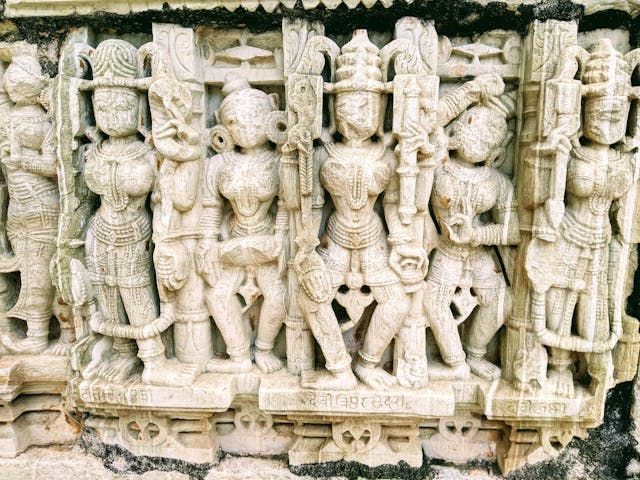
The Artistic Brilliance of Temple Carvings
Carvings on temple walls are extraordinary visual narratives, carefully chiseled by craftsmen trained in traditional arts. Far from being mere decorative elements, these artworks function as visual scriptures, illustrating mythology, folklore, cosmic concepts, and everyday life.
-
Mythological Narratives: Epics like the Ramayana, Mahabharata, and Bhagavata Purana are brought to life on temple walls. Through elaborate scenes and vivid depictions, these carvings educate devotees on moral principles, dharma (righteousness), and the cosmic order. They make complex spiritual concepts accessible even to those unfamiliar with sacred texts.
-
Nature and Daily Life: Temples capture the vibrancy of society at the time of their construction. Animals, flora, musicians, dancers, and people engaged in rituals and daily activities populate the walls. These elements not only reflect aesthetic sensibilities but also provide historians with invaluable insights into contemporary social life, attire, and cultural practices.
-
Divine Figures: Deities, celestial beings, and mythological creatures are depicted with symbolic gestures (mudras), poses, and accessories that convey specific divine attributes such as protection, blessing, or fearlessness. Shiva as Nataraja, for example, symbolizes the cosmic cycles of creation and destruction, while the lotus signifies purity and enlightenment.
Through such detailed carvings, temples convey a rich narrative tapestry that transcends time and culture. Every chiseled figure is a storyteller, inviting contemplation and spiritual reflection.
Sculptures as Spiritual Mediums
Alongside carvings, sculptures enhance the sacred aura of temple walls, providing a three-dimensional experience of devotion. These sculptures are more than ornamental—they act as spiritual mediums, embodying divine truths and philosophical principles.
-
Deities and Guardians: Central sanctums frequently house larger-than-life sculptures of primary deities, commanding reverence and focus. Entranceways often feature Dvarapalas (guardian figures) or mythological creatures to protect the sacred space from negative forces.
-
Symbolic Motifs: Elements such as lotus flowers, conch shells, celestial wheels, and mythical creatures represent purity, creation, and cosmic order. Each motif is purposefully placed to reflect philosophical teachings and complement the spiritual narrative.
-
Human Emotions and Dharma: Sculpted figures also capture the spectrum of human emotions—joy, sorrow, valor, devotion—reminding worshippers of life’s impermanence and the importance of righteous living. These expressions bridge the worldly and spiritual realms, making the temple a living classroom for moral and ethical reflection.
Through their positioning, scale, and gestures, sculptures serve as didactic tools, guiding devotees along their spiritual journey and reinforcing the teachings conveyed by the carvings.
Symbolism and Hidden Meanings
Temple walls are rich with symbolism, offering multiple layers of meaning. Every detail, from the posture of a deity to the intricacy of a floral motif, carries philosophical, spiritual, or cosmological significance.
-
Mudras and Gestures: Hand gestures (mudras) denote specific spiritual concepts, such as protection (abhaya), generosity (varada), and meditation (dhyana). These symbolic signs communicate subtle messages to the devotee, conveying ideas beyond what words can express.
-
Numerology and Geometry: Patterns, proportions, and repetitions follow principles of sacred geometry, reflecting cosmic harmony and balance. Temples are often designed as miniature universes, with spatial arrangements, symmetry, and iconography representing the cosmos.
-
Cosmic Storytelling: From the outer walls featuring ashtadikpalas (guardians of the eight directions) to the sanctum sanctorum symbolizing the ultimate spiritual plane, temple carvings narrate a journey from the mundane world to divine enlightenment. This microcosmic design allows devotees to experience spiritual ascension visually and experientially.
In essence, temple art merges the tangible with the metaphysical, inviting repeated exploration and meditation to uncover hidden layers of meaning.
Regional and Structural Features
Temple art in India reflects both regional styles and local environmental influences.
-
North Indian Temples: Known for smaller, compact plans, Nagara-style temples feature curvilinear shikharas (beehive-shaped towers) and elaborately carved panels narrating mythological tales.
-
South Indian Temples: Dravidian-style temples are marked by massive gopurams (ornate gateway towers) and expansive courtyards densely populated with sculptures. Each gopuram is a vertical canvas, depicting divine stories and celestial beings.
-
Regional Variation: Temples incorporate local flora, fauna, and cultural motifs, reflecting the environmental context and traditional customs of their location. This fusion of local identity and spiritual narrative gives each temple a unique character while preserving universal symbolic elements.
Such regional diversity demonstrates the adaptability and creativity of temple architecture, ensuring that sacred spaces resonate with both local communities and wider religious traditions.
Materials and Techniques Used
The materials and techniques employed in temple art significantly influence both the aesthetic impact and longevity of the structures.
-
Stone: Granite, sandstone, and marble are widely used for durability and resistance to environmental wear. Stone allows deep carvings and fine details that endure for centuries.
-
Wood: In regions where stone was scarce, wood provided a malleable medium for detailed carvings. Though more vulnerable to decay, wooden sculptures offer warmth and intricate craftsmanship, often treated to resist environmental damage.
-
Metal: Bronze, copper, and other metals were used for decorative elements and freestanding sculptures. Their reflective surfaces enhance visual depth and capture light to accentuate features.
Techniques:
-
Chisel Work: Craftsmen shape material by removing excess with precision, achieving highly detailed figures.
-
Relief Carving: Figures project from a flat surface, creating dynamic interactions of light and shadow.
-
Bas-Relief and High Relief: Shallow (bas) or deep (high) relief techniques provide varying degrees of three-dimensionality, enhancing storytelling and emphasizing movement and emotion.
These techniques, combined with skillful material selection, produce artwork capable of conveying intricate spiritual and philosophical narratives over millennia.
Symbolism in Temple Art
Symbolism in temple carvings is profound and deliberate, reflecting cultural values, spiritual teachings, and cosmological concepts.
-
Deities: Each deity embodies specific attributes and powers. For example, Lord Ganesha’s elephant head symbolizes wisdom and the removal of obstacles, while his multiple arms indicate the ability to perform diverse tasks. Shiva as Nataraja represents cosmic creation and destruction.
-
Animals: Lions, elephants, and serpents are frequently depicted, symbolizing strength, wisdom, and renewal, respectively. Their presence conveys moral and spiritual virtues to devotees.
-
Mythological Themes: Stories from epics, Puranas, and folklore narrate cosmic principles, historical events, and ethical lessons. These narratives are visually compelling and serve as accessible educational tools for devotees, particularly those unable to read sacred texts.
Symbolism transforms temple walls into didactic art, making each visit a journey of spiritual reflection and understanding.
Iconography of Deities and Figures
Understanding iconography is essential for decoding temple sculptures.
-
Hindu Deities: Attributes, gestures, and posture signify divine roles. Multiple arms, weapons, or animal mounts indicate powers and responsibilities. Placement within panels reveals relationships and hierarchy among deities.
-
Buddhist Figures: Bodhisattvas like Avalokiteshvara are depicted with multiple arms symbolizing compassion, guiding humanity toward enlightenment.
-
Christianity: Saints and angels, such as Archangel Gabriel, embody theological virtues and serve as spiritual guides within sacred spaces.
-
Egyptian Deities: Figures like Isis symbolize motherhood and protection, emphasizing community care and magical powers.
Iconography allows devotees and scholars alike to understand religious narratives, theological principles, and cultural values represented in temple art.
Narrative and Storytelling Through Carvings
Temple carvings function as visual storytelling tools, communicating complex religious, historical, and moral concepts.
-
Composition and Movement: Dynamic poses, overlapping limbs, and expressive faces lead viewers through stories with clarity and emotional impact.
-
Scale and Hierarchy: Larger figures denote central importance, while minor figures support the narrative context.
-
Light and Shadow: Varying carving depths enhance three-dimensionality, emphasizing movement, drama, and spiritual significance.
Through these methods, carvings serve as a bridge between sacred knowledge and everyday understanding, allowing devotees to engage deeply with spiritual and cultural narratives.
Cultural Significance
Temple art preserves cultural heritage, acting as a historical record of religious beliefs, social practices, and artistic trends.
-
Intergenerational Connection: Carvings provide continuity, linking communities to their ancestors and shared spiritual identity.
-
Educational Role: Artworks serve as visual teaching tools, communicating ethical, moral, and cosmological lessons.
-
Community Identity: Temples function as cultural hubs, hosting festivals, rituals, and social gatherings, reinforcing communal cohesion.
Preservation of temple art is vital for maintaining cultural memory, pride, and continuity, particularly in the face of modernization and globalization.
Preservation and Restoration Challenges
Temple artworks face threats from both natural and human factors.
-
Environmental: Climate change, moisture, and natural disasters contribute to erosion and decay.
-
Human Activity: Pollution, urbanization, and tourism can cause physical wear and damage to sculptures and carvings.
-
Preservation Efforts: Projects like Angkor Wat employ protective coatings, specialized restoration teams, and traditional techniques to safeguard artwork.
-
Technological Solutions: 3D scanning and digital documentation preserve intricate details, enabling education, research, and virtual restoration.
Collaboration among communities, governments, and heritage organizations is essential to ensure these treasures endure for future generations.
The Enduring Legacy
Temple wall art embodies a fusion of devotion, artistic mastery, and cultural memory. From the intricacy of carvings to the symbolism of sculptures, every element serves as a testament to humanity’s spiritual and creative endeavors.
These sacred artworks educate, inspire, and connect generations across time, preserving moral, philosophical, and cultural knowledge. They influence contemporary artists and architects, attract scholars and tourists, and provide spiritual guidance to devotees.
In every temple, the walls speak silently but powerfully—telling tales of gods and humans, of cosmic order and ethical living, of artistry and devotion. The preservation and appreciation of temple art ensure that this dialogue continues, allowing future generations to explore their spiritual heritage, cultural identity, and human creativity, immortalized in stone and revered through time.
Photo by Karan Ashok: