India, Sep 30: As artificial intelligence becomes increasingly embedded across the media and entertainment value chain, the industry is facing a new challenge: how to identify, understand and attribute the content being used by AI systems.
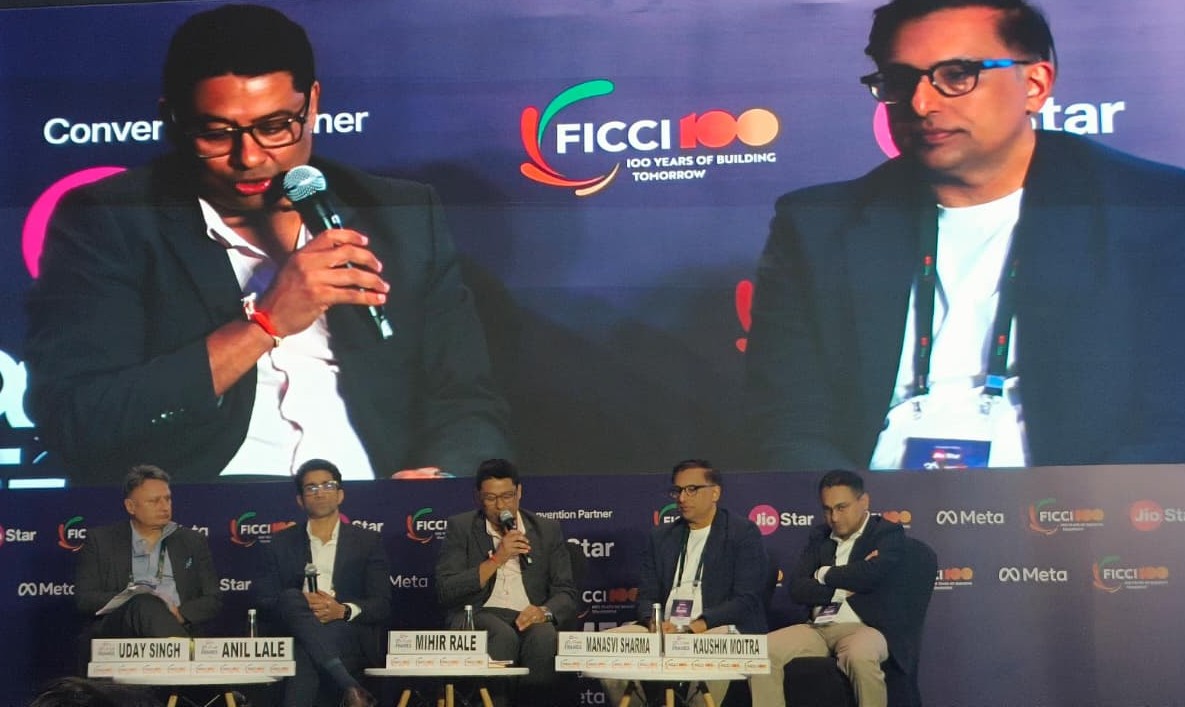
As policymakers and the creative industry examine how existing copyright frameworks should apply to generative AI, a recent Department for Promotion of Industry and Internal Tradediscussion paper examined questions around the use of copyrighted material for AI training, copyright and authorship of AI-generated works, moral rights and potential liability for infringement. These issues were discussed at the FICCI panel, The Great Content Race: Artificial Intelligence and Copyright, featuring Uday Singh, Motion Picture Association; Kaushik Moitra, Bharucha and Partners; Manasvi Sharma, Gracenote; and Anil Lale, JioStar, with the discussion moderated by Mihir Rale.
"The use of AI is inevitable across the content ecosystem. As AI becomes more integrated into content creation and discovery, we need to ensure that the underlying content can be identified, understood and attributed. This makes trusted content intelligence and provenance increasingly important," said Manasvi Sharma, Senior Vice President, Technology at Gracenote, speaking during the discussion.
A significant role AI is playing in media is understanding existing content not simply creating new movies or music, but understanding what is happening inside a movie, programme, sporting event or other media so that it can be discovered, distributed, engaged with and monetized more effectively. Creators want audiences to discover their content and the value of their intellectual property to persist as it moves through the ecosystem. This is where a neutral identity and data layer becomes important.
Media has historically been identified largely at the programme or title level. Increasingly, however, content can be identified at the level of scenes, moments and portions of the stream itself, an area Gracenote is actively working on. If identity can persist at that level, a clip, scene, short-form derivative or other piece of media derived from the original can potentially be associated back with the underlying programme.
Gracenote is already applying AI to content discovery, connecting AI models with trusted, source-verified content intelligence. Its recent research found that ungrounded AI models fabricated every tested metadata attribute for nearly one in five movie and TV titles examined, highlighting the importance of authoritative content data in AI-powered discovery experiences.
The discussion also highlighted the broader question of whether the emerging challenges around AI and copyright will require market-led mechanisms, technological solutions, statutory intervention or a combination of these approaches. Any framework for licensing or remuneration will ultimately require greater visibility into what content has been used and how it has contributed to AI systems and outputs.
Consistent identifiers can provide a foundation for tracking content across its lifecycle, while provenance mechanisms could help establish declared sources and licensed content within AI-driven workflows. Together, these can provide the visibility needed to support discussions around licensing and remuneration.