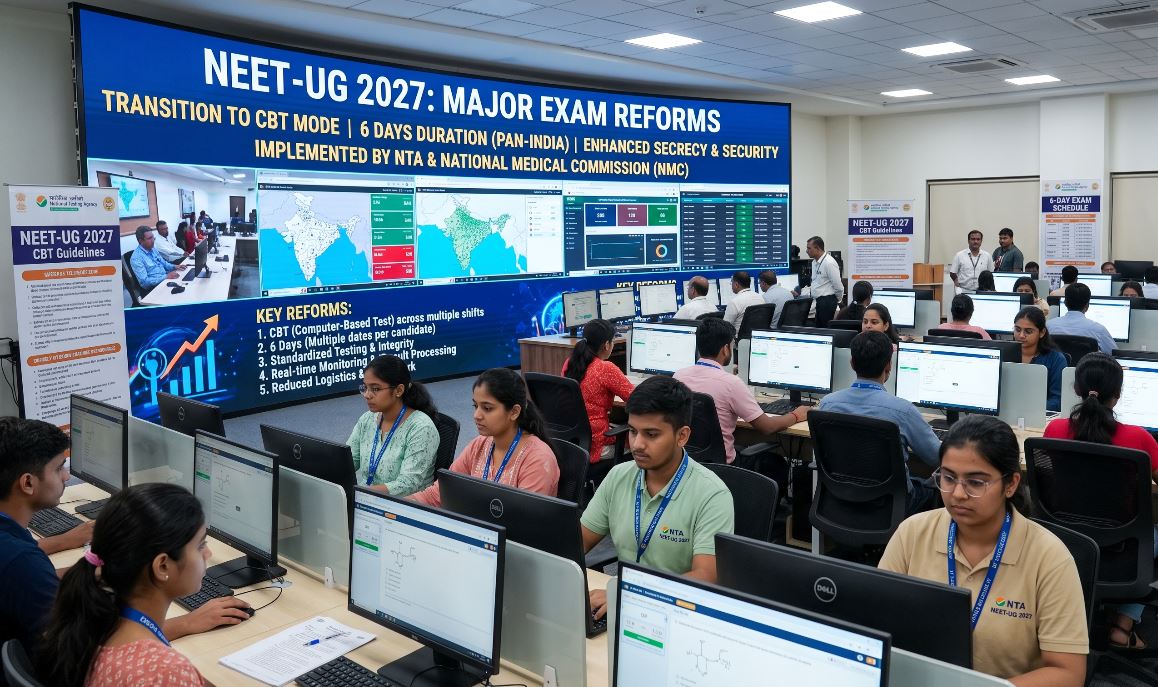
Nov18: A hospital can have exceptional doctors, advanced medical equipment, and sophisticated treatment protocols, yet struggle to deliver a seamless patient experience. An operating theatre may be ready while patient scheduling remains inefficient. A clinical team may deliver excellent care while administrative bottlenecks delay discharge. A hospital may invest in AI-enabled diagnostics while its workforce and operating systems remain unprepared to use them effectively. These are not necessarily failures of medicine. They reveal a deeper challenge facing healthcare today: clinical excellence and organisational excellence do not always move together.
For decades, healthcare careers have largely been defined by clinical knowledge, specialised expertise, and the ability to deliver patient outcomes. However, as healthcare organisations grow more complex, doctors, pharmacists, paramedical professionals, and administrators are increasingly expected to understand the business systems supporting care delivery. Decisions involving resource allocation, financial sustainability, patient experience, technology adoption, and operational efficiency now influence how effectively healthcare institutions serve patients.
When Clinical Decisions Become Business Decisions
Consider a seemingly straightforward decision to expand a hospital's outpatient services. Clinically, the need may be evident. Operationally, however, expansion involves staffing, capacity planning, patient flow, procurement, pricing, marketing, and financial forecasting. A decision that appears beneficial from one perspective may create unintended pressure elsewhere.
This is where healthcare management becomes a critical professional capability. The challenge is not to turn clinicians into finance specialists or operations executives overnight. It is to help them understand how different parts of a healthcare organisation interact, recognise competing priorities, and make decisions that balance quality of care with operational and financial realities.
The distinction is particularly important as healthcare moves towards more integrated and value-based models of care. Patient outcomes cannot be separated entirely from access, affordability, continuity, and experience. Leaders must therefore look beyond departmental performance and understand how decisions influence the wider care journey.
AI Is Changing Healthcare. But Who Is Managing the Change?
Artificial intelligence is adding another layer of complexity to this transition.
AI and Generative AI are opening opportunities across patient management, healthcare operations, supply chains, logistics, finance, and revenue cycle management. Yet implementing these technologies requires more than purchasing software or automating individual tasks.
An AI-powered patient scheduling system, for instance, may improve appointment allocation; but its effectiveness depends on clinical capacity, data quality, staff adoption, patient communication, and integration with existing workflows. Similarly, automation in revenue cycle management may improve administrative efficiency, but it must operate within appropriate governance, accuracy, and accountability frameworks.
The larger question is no longer simply what AI can do for healthcare. It is how healthcare professionals can evaluate where AI creates value, redesign processes around it, and ensure technology supports rather than complicates care delivery.
This makes management judgement increasingly important. Healthcare leaders must learn to distinguish between technological possibility and organisational readiness, while balancing innovation with patient trust, safety, and sustainable performance.
Building the Management Perspective Behind Better Healthcare
The growing intersection of clinical expertise and business decision-making is creating a need for structured management education tailored to healthcare professionals.
ISB Online's Certificate Programme in Healthcare Management addresses this intersection through a 12-week online learning experience designed for doctors, healthcare professionals, pharmacists, paramedical staff, and healthcare administrators.
The programme approaches healthcare management through financial, operational, marketing, and strategic perspectives, alongside applications of AI and GenAI in healthcare delivery and administration. Real-world case studies and hands-on projects in healthcare marketing and strategic management connect business frameworks with the decisions professionals encounter in healthcare organisations.
Learners gain perspectives from ISB faculty, the research done at ISB’s Max Institute of Healthcare Management and senior industry practitioners, while access to the ISB Online Network creates opportunities for continued learning and professional connections.
The relevance of this approach lies in its interdisciplinary nature. Healthcare professionals increasingly need to understand not only their own functions, but also how financial decisions affect patient access, how operational choices influence care quality, and how digital transformation changes organisational responsibilities.
The Next Healthcare Leader Must Understand the Entire Ecosystem
The future of healthcare will not be shaped by clinical innovation alone. It will also depend on how effectively institutions organise resources, integrate technology, manage costs, and deliver consistent patient experiences.
For healthcare professionals, this creates an important career inflection point. Technical expertise remains essential, but the ability to connect clinical priorities with business realities may increasingly distinguish those prepared for broader responsibilities.
The question is no longer whether healthcare professionals should understand management. It is whether healthcare organisations can afford to separate clinical excellence from management capability.
For professionals looking to develop this wider perspective, ISB Online's Healthcare Management programme offers an opportunity to explore the business of healthcare while building on the expertise they already possess.