New Delhi, Nov 27: India's power sector is expected to attract investment opportunities worth nearly ₹200 lakh crore over the next two decades, Union Power Minister Manohar Lal said on Friday, calling for coordinated efforts by the Centre, State Governments and private players to meet the country's rapidly expanding energy requirements.
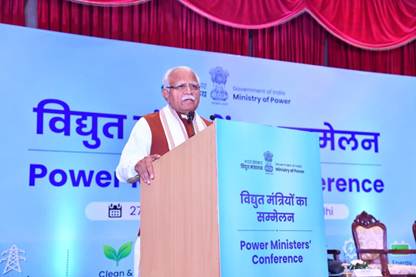
Addressing the two-day National Power Ministers' Conference, which began in New Delhi on November 27, Manohar Lal said the next phase of India's power sector development would require integrated planning, stronger infrastructure and sustained reforms across generation, energy storage, transmission and distribution.
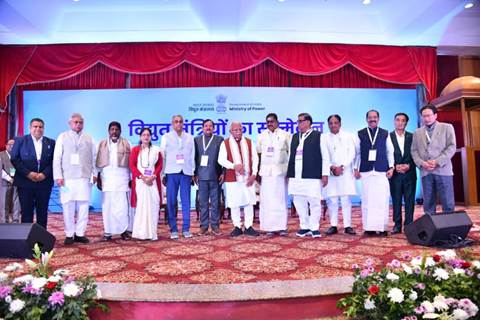
The November 27-28 conference has brought together Power Ministers, senior officials and electricity regulators from 28 States and eight Union Territories. The national-level meeting is being held after a gap of two years, with the previous conference organised in 2024.
Emphasising the importance of Centre-State coordination, Manohar Lal said India had made considerable progress in expanding electricity generation capacity, integrating renewable energy and strengthening the national grid. However, future requirements would demand a more coordinated approach to ensure that all components of the electricity ecosystem develop together.
He urged States to accelerate the installation of smart electricity meters, highlighting their potential to improve consumer services, strengthen billing efficiency and enhance the financial health of distribution companies.
DISCOMs Return to Profitability
Highlighting improvements in the distribution segment, the Power Minister said electricity distribution companies (DISCOMs), taken together, had recorded a positive profit after tax (PAT) during the financial year 2024-25 following years of financial difficulties.
He credited the improvement to reforms undertaken by the Ministry of Power in collaboration with State Governments and stressed the need to sustain the turnaround through better operational efficiency, sound financial management and appropriate regulatory measures.
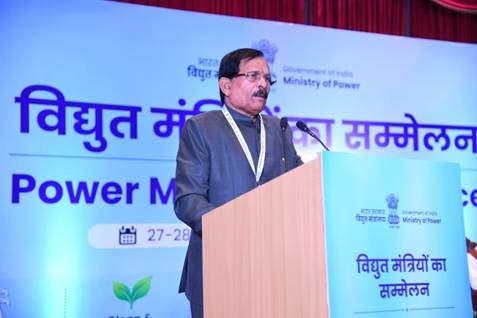
According to the Minister, strengthening DISCOM finances would be essential for ensuring reliable electricity supply and attracting fresh investments into the power sector.
He also called for greater private-sector participation, noting that the projected ₹200 lakh crore investment opportunity could only be realised through collective efforts involving governments, investors, utilities and other stakeholders.
Energy Storage and Transmission Among Key Priorities
The conference is focusing on several critical issues that will shape India's future electricity infrastructure.
Key areas of discussion include the implementation of Resource Adequacy (RA) plans, faster deployment of energy storage systems, and the development of inter-state and intra-state transmission networks.
The financial sustainability of DISCOMs is another major priority, alongside the implementation of the Revamped Distribution Sector Scheme (RDSS).
Particular attention is being given to smart metering, feeder separation and household electrification to improve the efficiency and reach of electricity distribution.
Issues relating to nuclear power sites are also part of the conference agenda.
Minister of State for Power Shripad Yesso Naik urged participating States and Union Territories to share their experiences, implementation challenges and regulatory concerns during the deliberations.
He said the focus should shift from policy announcements to effective execution, with greater emphasis on measurable outcomes, infrastructure performance and long-term sustainability.
India's Installed Power Capacity Reaches 563 GW
Providing an overview of the country's recent progress, Power Secretary Pankaj Agarwal said India's installed electricity generation capacity had reached approximately 563 GW, with more than 55 per cent coming from non-fossil fuel sources.
He noted that the country added around 60 GW of generation capacity over the preceding 12 months, of which nearly 87 per cent came from non-fossil sources.
Agarwal said the Government's broader energy vision, guided by Prime Minister Narendra Modi, was to move beyond energy security towards energy independence as India works towards the Viksit Bharat 2047 goal.
The expansion of renewable energy capacity, alongside improvements in transmission infrastructure and storage technologies, will be crucial to meeting the country's future electricity demand, he indicated.
Regulators to Join Key Deliberations on November 28
A major feature of the second day of the conference will be a joint session involving the Forum of Regulators and State Electricity Regulatory Commissions (SERCs).
The session will bring together State Power Ministers, SERC chairpersons, State Secretaries for Power and Energy, and senior Ministry of Power officials to discuss regulatory and policy-related challenges affecting the electricity sector.
The participation of regulators is expected to strengthen coordination between policy formulation and implementation, particularly in areas concerning electricity tariffs, distribution reforms and sectoral financial sustainability.
36 States and UTs Participate
Representatives from 28 States and eight Union Territories are attending the two-day meeting, making it an important platform for discussions on India's evolving energy requirements.
The participating States include Uttar Pradesh, Haryana, Punjab, Himachal Pradesh, Uttarakhand, Odisha, West Bengal, Bihar, Jharkhand, Maharashtra, Gujarat, Rajasthan, Madhya Pradesh, Chhattisgarh, Karnataka, Kerala, Tamil Nadu, Andhra Pradesh, Telangana, Assam, Arunachal Pradesh, Manipur, Meghalaya, Mizoram, Nagaland, Tripura and Sikkim.
The Union Territories represented include Delhi, Chandigarh, Jammu and Kashmir, Ladakh, Puducherry, Andaman and Nicobar Islands, Lakshadweep, and Dadra and Nagar Haveli and Daman and Diu.
With a projected investment requirement of ₹200 lakh crore, the conference assumes significance as India prepares for a major expansion of its electricity infrastructure. The emphasis on integrated planning, renewable energy, storage, stronger distribution networks and financial reforms is expected to shape the sector's development priorities over the coming years.