Pic Credit: Pexel
Devotees across India and around the world are observing Radhashtami 2026 on Saturday, September 19, celebrating the sacred appearance day of Srimati Radharani, who is revered in the Vaishnava tradition as the embodiment of pure devotion and divine love for Lord Krishna.
Radhashtami falls on the Ashtami tithi of Shukla Paksha in the Hindu month of Bhadrapada, approximately 15 days after Janmashtami. The festival has a particularly deep connection with the Braj region, especially Barsana, which is traditionally regarded as the birthplace or appearance place of Radharani and becomes a major centre of celebrations.
For devotees, Radhashtami is more than a religious observance. It is an opportunity to reflect on the meaning of unconditional love, humility, compassion and surrender. Radharani's devotion to Krishna is regarded as the highest expression of bhakti, inspiring devotees to deepen their own spiritual connection.
The Divine Significance of Radharani
In Gaudiya Vaishnava philosophy, Radharani is revered as Krishna's hladini shakti, or the divine energy associated with spiritual bliss and love. She is also addressed as Krishna Vallabha, reflecting her eternal relationship with Krishna.
Traditional accounts describe her divine appearance in different ways across Hindu scriptures and devotional traditions. One widely followed Braj tradition associates her appearance with Barsana and Vrishabhanu Maharaj.
Her importance in Vaishnava devotion is captured in the belief that sincere worship of Krishna is inseparable from devotion to Radharani. Devotees therefore seek her blessings for Krishna-prema — pure and selfless love for Krishna.
The spiritual message is simple yet profound: devotion is not about seeking material rewards alone, but about cultivating humility, love and a willingness to serve.
Radhashtami Celebrations at Hare Krishna Mandir
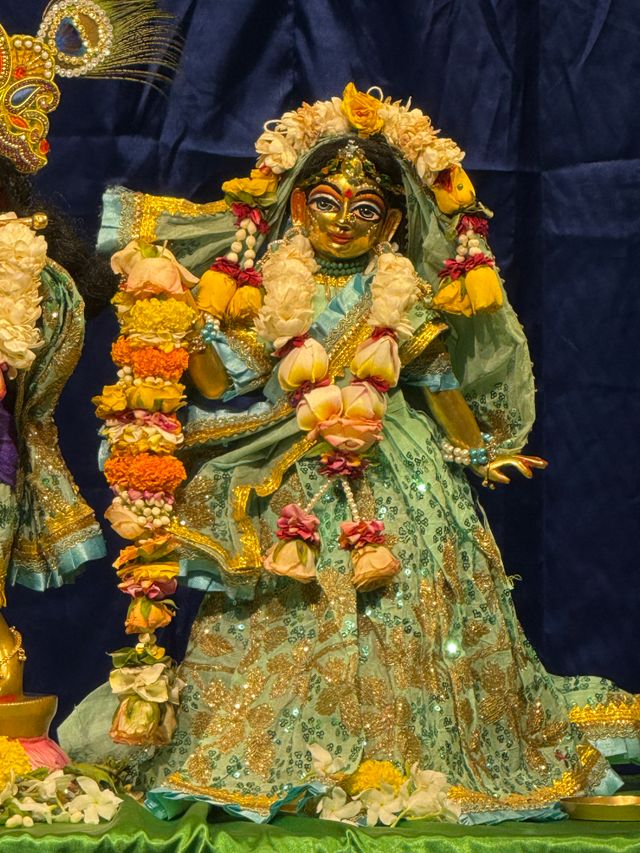
At Hare Krishna Mandir, the festival is being observed with devotional programmes centred around Sri Radha-Krishna. The Deities are traditionally adorned in beautiful new clothes and decorated with fresh flowers, creating a festive and spiritual atmosphere for devotees.
Special abhishekam, kirtans, bhajans and aarti form an important part of the celebrations. Devotees also recite Sri Radhikashtakam, a devotional prayer glorifying Radharani.
Offerings of bhoga are prepared with devotion, with some celebrations featuring a wide variety of traditional preparations. The temple atmosphere comes alive with devotional music, prayers and the participation of devotees who gather to mark the sacred occasion.
Fasting and Worship
Many devotees observe a Radhashtami vrat as an expression of their devotion. The nature of fasting varies according to individual tradition and spiritual practice, with some devotees observing a strict fast while others take fruits or permitted food during the day.
The worship commonly includes:
- Abhishekam: The Radha-Krishna Deities are ceremonially bathed with panchamrita, traditionally prepared using milk, curd, ghee, honey and sugar, followed by water and other offerings.
- Shringar: The Deities are dressed in fresh attire and decorated with flowers, ornaments and other traditional elements.
- Bhoga: Devotees prepare and offer vegetarian food with the understanding that the offering is an act of love and gratitude.
- Kirtan and Bhajan: Devotional singing creates an atmosphere of remembrance and collective prayer.
- Aarti: Lamps and other traditional offerings are presented before the Deities as devotees participate in prayer.
- Scriptural remembrance: Devotees listen to or recite sacred texts and prayers associated with Radha and Krishna.
A Festival Rooted in Braj Culture
Radhashtami has a special cultural and spiritual significance in Barsana, Vrindavan, Mathura and Nandgaon, where traditions associated with Radha and Krishna have been preserved across generations.
Barsana's Shri Radha Rani Temple, situated on the Brahmagiri hill, is among the most prominent pilgrimage centres associated with the festival. Thousands of devotees traditionally visit the Braj region around Radhashtami to participate in prayers, kirtans and temple celebrations.
The festival also forms an important part of the wider cultural heritage of Braj, where devotional music, poetry, dance and temple traditions have long been connected with the stories of Radha and Krishna.
The Deeper Message of Radhashtami
For devotees, the most important lesson of Radhashtami lies beyond the rituals.
Radharani represents devotion that is free from selfish expectations. Her relationship with Krishna is remembered as a symbol of love that seeks not personal gain but the happiness and service of the divine.
That message gives the festival a relevance that extends beyond a single day of worship. In a world often shaped by competition and material concerns, Radhashtami invites people to pause, reflect and reconnect with values such as compassion, humility, gratitude and selfless service.
As temples resonate with kirtans and prayers on Radhashtami, devotees remember Radharani not merely as a revered figure of sacred tradition, but as an enduring symbol of pure love, unwavering devotion and spiritual surrender.
Radhashtami is ultimately a celebration of the heart — a reminder that the deepest form of devotion begins when love becomes selfless and service becomes an expression of that love.