Oct 26: Panchjanya organised ‘Sushasan Samvad 3.0’ at Taj Lakefront, Bhopal, bringing together prominent personalities from governance, journalism, education and public administration to discuss Madhya Pradesh’s development journey and its contribution to India's progress. Inspired by the principles and administrative legacy of Lokmata Ahilyabai Holkar, the event centred on good governance, justice, public welfare and inclusive development. Madhya Pradesh Chief Minister Dr Mohan Yadav graced the occasion as the chief guest, highlighting the relevance of these enduring principles in shaping the state's future.
The event featured a series of discussions exploring how the ideals of Ahilyabai Holkar, whose leadership was characterised by people-centric governance, social responsibility and cultural preservation, continue to hold significance in modern administration. The dialogue brought together diverse perspectives on effective governance, responsible leadership and the importance of balancing development with cultural values.
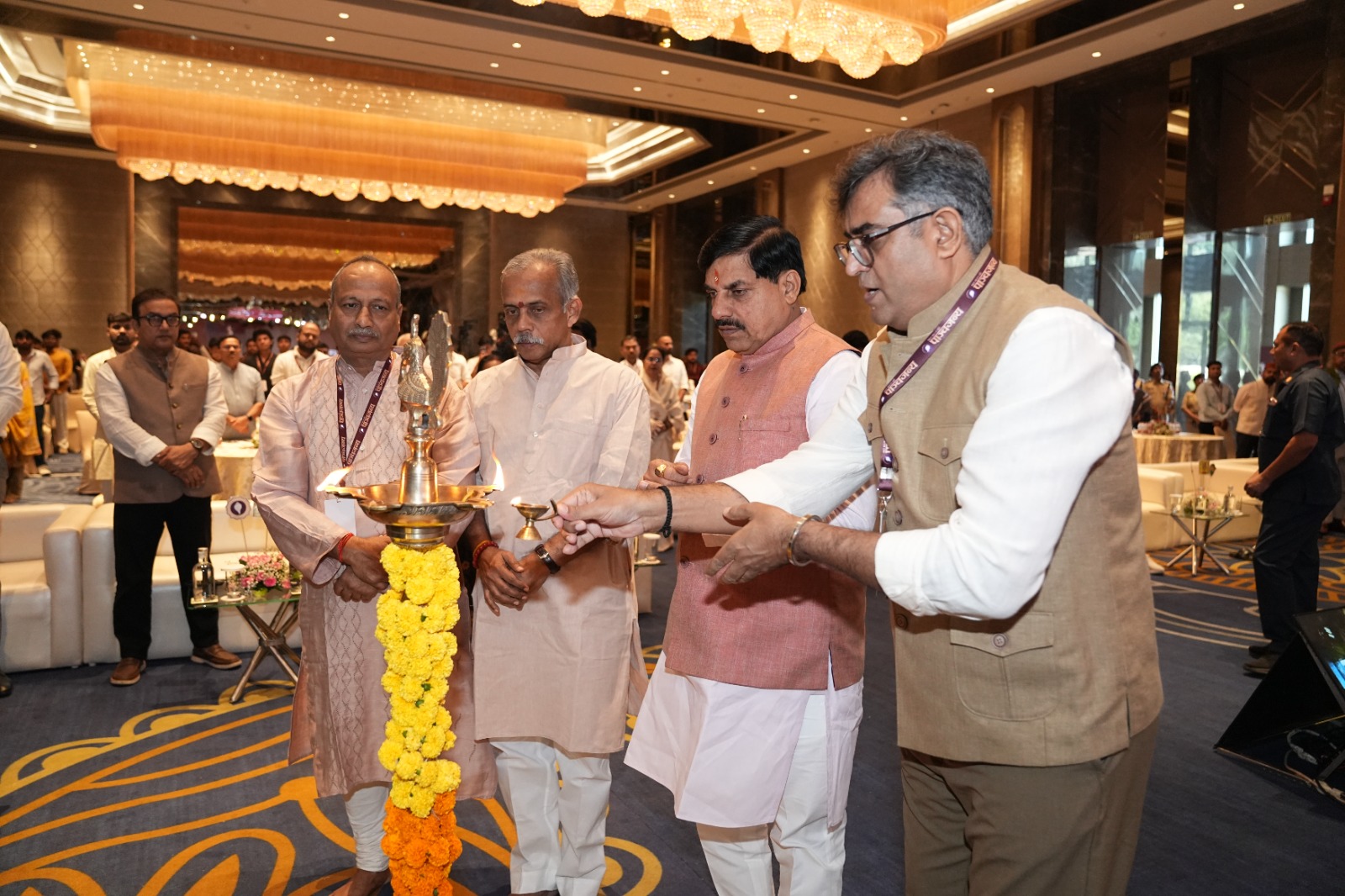
The programme commenced with a ceremonial lamp-lighting, followed by an introductory address by Hitesh Shankar, Editor of Panchjanya. Setting the context for the discussions, he emphasised the importance of revisiting India's rich traditions of governance and drawing inspiration from historical leaders whose vision remains relevant.
Addressing the gathering, Hitesh Shankar, Editor of Panchjanya, said,
“Good governance is not merely about introducing welfare schemes but about understanding how these initiatives transform people's lives. The Ladli Behna Yojana raises an important question about the future of women's empowerment, where financial assistance becomes a stepping stone towards self-reliance, dignity and an independent identity. Inspired by the principles of Lokmata Ahilyabai Holkar, Sushasan Samvad 3.0 seeks to encourage meaningful discussions on governance that go beyond immediate benefits to create lasting social change. Through this platform, Panchjanya aims to connect the legacy of people-centric leadership with the aspirations of a progressive and self-reliant Madhya Pradesh.”
One of the major highlights of the event was an exclusive interaction with Chief Minister Dr Mohan Yadav, moderated by Hitesh Shankar. The session focused on Madhya Pradesh's governance priorities, development initiatives and long-term vision, drawing connections between the principles of public service exemplified by Ahilyabai Holkar and the aspirations of a progressive state.
Speaking at the event, Dr Mohan Yadav, Chief Minister of Madhya Pradesh, said,
“Women's empowerment is an essential part of Madhya Pradesh's development journey. Initiatives such as the Ladli Behna Yojana reflect the importance of supporting women financially while recognising their aspirations for self-respect, independence and a stronger identity in society. The larger objective of good governance must be to create opportunities that enable every individual to move towards self-reliance. Lokmata Ahilyabai Holkar demonstrated how administration rooted in justice, compassion and public welfare can transform society. Her principles continue to offer valuable lessons as we work towards building a prosperous and developed Madhya Pradesh.”
The event also featured discussions with distinguished speakers from different fields. Priyank Kanoongo, Member of the National Human Rights Commission, participated in a dedicated session focusing on human rights and social responsibility. Highlighting the importance of protecting individual dignity, he said,
“The true strength of good governance lies in protecting the rights and dignity of every citizen, particularly the most vulnerable sections of society.”
Uttam Kumar Sharma, Field Director of the Cheetah Project, shared perspectives on wildlife conservation and the importance of preserving the state's natural heritage. He said, “Wildlife conservation is not just about protecting endangered species but also about restoring ecological balance and preserving our natural heritage for future generations.”
The programme also celebrated Madhya Pradesh's cultural richness through a special performance by folk singer Kavita, reflecting the importance of preserving regional traditions and cultural identity alongside development.
Further enriching the dialogue, J. Nandakumar, National Convenor of Prajna Pravah, participated in a special session highlighting the significance of India's intellectual and cultural traditions. He said,
“India's progress must remain connected to its civilisational values, as cultural consciousness and national development are deeply interconnected.”
Senior journalist Kanchan Gupta also shared his perspective on the role of informed public discourse in strengthening governance. He said,
“A strong democracy depends on informed citizens, responsible journalism and meaningful public debate that holds governance accountable.”
Ankit Awasthi, educator and former RAS officer, highlighted the importance of education and youth participation in shaping the nation's future. He said,
“Education must go beyond academic achievement to develop responsible, aware and capable citizens who can contribute meaningfully to nation-building.”
Vijay Manohar Tiwari, Vice-Chancellor of Makhanlal Chaturvedi National University of Journalism and Communication, reflected on the relationship between journalism, society and responsible governance. He said,
“Journalism plays a vital role in connecting governance with public expectations, ensuring that the voices of society remain central to national discourse.”
Senior journalist Ramesh Sharma also contributed to the discussions, emphasising the importance of India's historical and cultural foundations. He said, “Understanding our history and cultural heritage is essential to shaping a future that combines modern progress with the values that define our society.”
The concluding session featured Dr Vikram Singh, former Director General of Police, Uttar Pradesh, who participated in the discussions on governance and public administration.
The event concluded with a vote of thanks, reaffirming Panchjanya's commitment to encouraging constructive dialogue on governance, social responsibility and national development. Rooted in the ideals of Lokmata Ahilyabai Holkar, Sushasan Samvad 3.0 highlighted the importance of governance that places people at its centre while preserving the cultural and historical values that continue to shape Madhya Pradesh's identity.