Department of Biosciences at Chandigarh University receives a grant of ₹11-Lakh from Punjab Biodiversity Board; 100 Heritage Trees in Kharar already Mapped
CHANDIGARH, India, Aug. 5, 2026 /PRNewswire/ -- As rapid urbanization and infrastructure expansion continue to threaten centuries-old trees of ecological, cultural and religious significance, the need for a systematic scientific approach for their identification and conservation has become essential. Taking a significant step towards the scientific conservation of heritage trees, Chandigarh University has launched an initiative to identify, document and conserve ecologically, religiously and culturally significant tree species across SAS Nagar (Mohali) district.
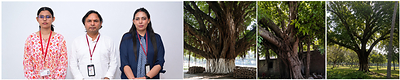
The project will establish the district's first comprehensive GIS-based database of heritage trees, providing a scientific foundation for evidence-based management and long-term conservation planning while protecting invaluable natural assets for future generations.
The ₹11-lakh project, funded and sanctioned by the Punjab Biodiversity Board (PBB) under the National Biodiversity Authority is being implemented by the Department of Biosciences at the University Institute of Biotechnology (UIBT), Chandigarh University.
Led by Prof (Dr) LK Attri, Head of the Department of Biosciences, along with Dr Shailika Sharma, Assistant Professor, the initiative combines field surveys with advanced Remote Sensing and Geographic Information System (GIS) technologies to scientifically map and assess heritage trees across the district.
Sharing details about the project, Prof (Dr) LK Attri, Head of the Department of Biosciences, Chandigarh University said, "The project is primarily aimed at documenting the present status of heritage trees, including their ecological, cultural and religious significance, through GIS-based digital tagging, geospatial mapping and assessment of key characteristics such as height, trunk diameter, health, biomass and carbon sequestration potential. By integrating field observations with geospatial technologies, the initiative will generate reliable scientific data to support long-term conservation and environmental planning. The project idea was conceived and executed in collaboration and support of Dr Gurharminder Singh, Principal Scientific Officer, Punjab Biodiversity Board."
Prof Attri further added, "Beyond the documentation part, this project is aimed at establishing a heritage trees list for Mohali highlighting mature trees of exceptional ecological, historical, religious and cultural importance. The database will help government agencies and local authorities prioritize conservation measures including protecting root zones from excavation and soil compaction, monitor tree health and implement preventive interventions such as lightning protection for vulnerable heritage trees."
Notably, the project has already documented more than 100 heritage trees across Kharar Tehsil, the largest tehsil in SAS Nagar (43.5 per cent) of the district's geographical area. Using advanced Remote Sensing and GIS technologies, the identified trees are being scientifically classified, geotagged and assessed for their height, trunk diameter, biomass and carbon sequestration potential to build a reliable geo-spatial database for long-term conservation. A dedicated team of research fellows is carrying out extensive field surveys, documentation, geotagging, GIS mapping and spatial analysis of heritage trees.
Highlighting the significance of the initiative, Dr Attri, who is the Principal Investigator, said, "Heritage trees are living symbols of our environmental, cultural and spiritual legacy. Many of these trees have survived for decades and in some cases centuries providing ecological services while remaining deeply connected with local traditions and communities. Through scientific mapping and documentation, we aim to create a strong knowledge base that will support evidence-based conservation and encourage society to recognize and protect these invaluable natural assets."
The project is expected to deliver multiple public benefits extending well beyond biodiversity conservation. The geo-spatial database can be instrumental in assisting government agencies in environmental resource management, sustainable urban and rural development planning and climate resilience initiatives. By estimating the biomass and carbon sequestration potential of heritage trees, the study will also provide valuable insights into the role of mature trees in mitigating climate change and maintaining healthy ecological balance.
Moreover, the initiative further highlights the importance of preserving trees that hold religious and cultural significance for local communities, ensuring that conservation efforts protect not only biodiversity but also Punjab's rich social and cultural heritage.
Emphasizing the role of technology in conservation, Dr. Shailika Sharma, Co-Principal Investigator, said, "Modern geospatial technologies allow us to understand our natural resources with far greater accuracy and efficiency. By combining field-based scientific surveys with GIS mapping, we are creating a digital resource that can support informed policy decisions, conservation planning and community awareness. We hope this initiative inspires greater public participation in protecting heritage trees and the ecosystems they sustain."
By combining scientific research with advanced geospatial technologies, Chandigarh University's heritage tree mapping initiative is creating an important foundation for biodiversity conservation, climate action and sustainable development. The project demonstrates how technology-driven environmental research can help protect Punjab's natural heritage while supporting evidence-based planning and encouraging greater public awareness about the need to protect the state's irreplaceable ecological treasures.
"Many of the documented heritage trees, including Peepal, Banyan and Neem are valued not only for their ecological services such as improving air quality, supporting biodiversity and storing carbon, but also for their deep cultural, religious and medicinal significance. For generations, these trees have served as community gathering spaces while continuing to play an important role in traditional healthcare, local livelihoods and environmental sustainability. We also intend to prepare a comprehensive Heritage Tree List for Mohali, a coffee table book highlighting the ecological, cultural and religious significance of these trees, and a web-based GIS platform to make this valuable information accessible to researchers, policymakers and the public," added Dr. Shailika.
About Chandigarh University
Chandigarh University is a NAAC A+ Grade University and QS World Ranked University. This autonomous educational institution is approved by UGC and is located near Chandigarh in the state of Punjab. It is the youngest university in India and the only private university in Punjab to be honoured with A+ Grade by NAAC (National Assessment and Accreditation Council). CU offers more than 109 UG and PG programs in the field of engineering, management, pharmacy, law, architecture, journalism, animation, hotel management, commerce, and others. It has been awarded as The University with Best Placements by WCRC.
Website address: https://www.cuchd.in/
 View original content to download multimedia:https://www.prnewswire.com/in/news-releases/chandigarh-university-launches-heritage-tree-conservation-project-to-digitally-map-and-preserve-centuries-old-heritage-trees-in-mohali-302843432.html