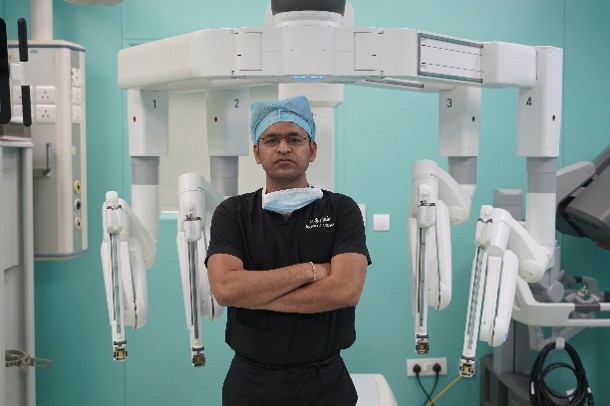
By:- Dr. Sharad S. Rajamani, Director & Senior Consultant - Neurosurgery, Skull Base & Vascular, Endoscopic Cranial & Spinal Surgery, KIMS Hospitals, Mahadevapura, Bengaluru
Headache is one of the most common symptoms in medicine, and the vast majority of headaches have benign causes. Tension headaches, migraines, cluster headaches, and headaches driven by dehydration, sleep deprivation, or screen time account for almost all of them.
But within that enormous volume of benign headaches, there is a subset of presentations where the headache is a symptom of something that requires urgent neurological or neurosurgical attention, and missing it carries consequences that are sometimes irreversible.
The Headaches That Worry Neurosurgeons
The "thunderclap" headache is the presentation that prompts the most urgent concern. This is a headache that reaches maximum severity within seconds to minutes, described by patients as the worst headache of their life, and it has no prior equivalent. In the context of this presentation, subarachnoid haemorrhage, caused by the rupture of a cerebral aneurysm, must be excluded before any other diagnosis is entertained.
Subarachnoid haemorrhage has a mortality rate of approximately 40 percent, and a significant proportion of survivors sustain permanent neurological injury. CT brain scanning within six hours of onset, followed by lumbar puncture if the CT is negative, is the standard investigation pathway.
New headache in a patient with a known cancer, even if the cancer is not known to have metastasised to the brain, requires imaging rather than reassurance. Brain metastases can present with headache, and the earlier they are identified the wider the treatment options available.
Headache accompanied by fever, neck stiffness, and photophobia is meningitis until proven otherwise. This is a clinical emergency. Bacterial meningitis carries a significant mortality rate and produces serious neurological sequelae in survivors; the window for effective antibiotic treatment is narrow and treatment should not be delayed for diagnostic confirmation.
Progressive headache that worsens over days to weeks, particularly one that is worst in the morning or that wakes someone from sleep, raises concern for raised intracranial pressure from a mass lesion, hydrocephalus, or idiopathic intracranial hypertension. The horizontal position during sleep increases intracranial pressure, which is why lesions raising pressure often produce headaches that are worst immediately after waking.
The Neurological Context Matters
A headache that occurs in isolation, without any accompanying neurological symptoms, has a significantly different clinical implication from one accompanied by confusion, speech difficulty, visual changes, limb weakness, or personality change.
Any headache with an associated neurological deficit requires urgent assessment. These are the presentations where the neurological examination and urgent imaging produce findings that change management immediately.
When Headache Leads to Neurosurgery
Not every serious headache leads to surgery, but several of the conditions that present with headache do. Cerebral aneurysms identified on imaging following a headache presentation are managed with either surgical clipping or endovascular coiling depending on the anatomy and the neurosurgical assessment.
Brain tumours presenting with headache require surgical resection in most cases, with the approach and extent of resection guided by the tumour type, location, and the patient's neurological status. Hydrocephalus, where the accumulation of cerebrospinal fluid raises intracranial pressure, is managed with ventriculoperitoneal shunting or endoscopic third ventriculostomy.
The Message for Patients
Most headaches do not require a neurosurgical opinion. But the specific features described above, sudden onset reaching maximum severity within seconds, new headache in a cancer patient, headache with fever and neck stiffness, progressive morning-predominant headache, and headache with any neurological symptom, warrant urgent assessment rather than the standard advice of rest and analgesia.
The difficulty is that patients cannot always distinguish which category their headache falls into, which is why these features are worth knowing, so that the decision to seek care is made on something more specific than severity alone.