New Delhi, Aug 22: India Health 2026, organised by Informa Markets in India, opened today at Hall 6, Bharat Mandapam, New Delhi, bringing together healthcare providers, manufacturers, policymakers, innovators, procurement leaders, distributors and global stakeholders. With the healthcare economy projected to reach 110.21 trillion by FY27, India Health aims to support the nation's ambition of becoming a global healthcare and manufacturing hub. The three-day exhibition, being held from August 21 to 23, features more than 300 domestic and international brands and is expected to welcome over 8,000 healthcare and medtech professionals.
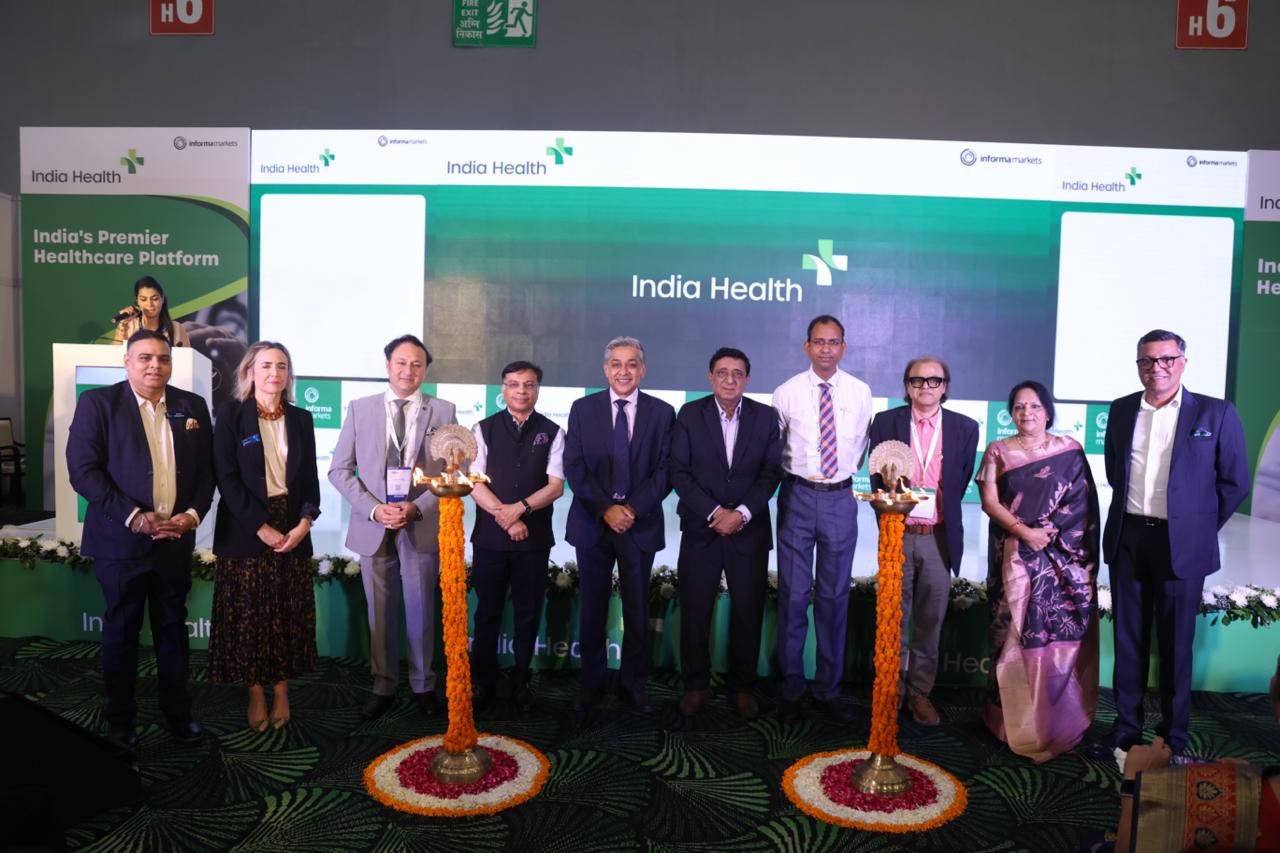
The inauguration featured a traditional lamp-lighting ceremony, the National Anthem and addresses by key industry representatives. The ceremony brought together Dr. Jitendra Sharma, MD, Founder and CEO, AMTZ; Dr. Sunil K. Khetarpal, Deputy Director General, AHPI; Mr. Nital Patel, Secretary, ADMI; Dr. Rajiv Chhibber, Vice President, Sahajanand Medical Technologies; Mr. Rajiv Nath, Managing Director, Hindustan Syringes & Medical Device Ltd & Forum Coordinator AIMED; Prof. Dr. Rajendra Pratap Gupta, Founder and Chairman, Health Parliament and Academy of Digital Health Sciences; Dr. Annie Kumar, National President, TNAI; Mr. Yogesh Mudras, Managing Director, Informa Markets in India, Ms. Solenne Singer, Senior VP, inD Group and Mr. Rahul Deshpande, Senior Group Director, Informa Markets in India, setting the tone for three days of discussions, business engagement and collaboration across India’s healthcare and medtech ecosystem.
Speaking about India Health 2026, Dr Jitender Sharma, MD, Founder and CEO, AMTZ said,
“As an association partner for India Health 2026, we are proud to support a platform that brings the complete healthcare and MedTech ecosystem together. AMTZ has grown into one of the world’s largest MedTech clusters, with 187 manufacturers and 212 start-ups generating a collective annual business of nearly ₹70,000 crore. Through the exhibition, we want to demonstrate that India can move beyond manufacturing individual devices to operating entire hospitals with safe, high-quality, Made-in-India medical technologies. Our Made in India Hospitals initiative will establish 100 hospitals in tier-2 and tier-3 cities, adding 10,000 beds and creating a powerful proof point for Indian healthcare innovation.”
Mr. Nital Patel, Secretary, ADMI, further highlighting the digital transformation, added,
“At India Health 2026, technology must be viewed not simply as an innovation showcase, but as a means to solve real healthcare challenges. From diagnostics and digital transformation to scalable manufacturing, the focus must remain on solutions designed around patients and the realities of care delivery—from major hospitals and laboratories to small towns and remote rural communities. The true measure of progress will be the partnerships, stronger capabilities, better products and wider access to dependable healthcare that follow these conversations.”
Considering that the healthcare sector is entering into a more patient-led phase of growth, Dr Sunil K. Khetarpal, Deputy Director General, AHPI, emphasised,
“Healthcare today extends far beyond hospitals; it is an interconnected ecosystem in which the patient must remain at the centre of every decision. At India Health 2026, we are moving towards a healthcare model that is patient-centric, technology-driven, outcome-driven and quality-driven. But technology alone cannot deliver transformation—its true impact is realised only when it reaches patients safely, affordably and equitably at the right point of care. By bringing together providers, policymakers, regulators, innovators, medtech companies and academia, India can build a world-class healthcare ecosystem that advances patient outcomes while combining quality, affordability and global leadership.”
Highlighting the broader growth trajectory of India's healthcare sector, Mr. Yogesh Mudras, Managing Director, Informa Markets in India, said,
"India's healthcare sector is entering a new phase of growth, driven by expanding manufacturing capabilities, increasing investment, digital transformation, and a strong focus on innovation. With healthcare expenditure expected to contribute 5% of India's GDP by 2030, the sector is poised to play an even greater role in the country's economic and social development."
"India is also steadily strengthening its position as a global healthcare destination. The medical tourism market is projected to grow from US$8.71 billion in 2025 to US$16.21 billion by 2030, reflecting growing international confidence in the country's clinical expertise, quality healthcare infrastructure, and value-driven care delivery."
"The strong participation at India Health 2026 demonstrates the momentum across India's healthcare and medical manufacturing ecosystem. By bringing together industry leaders, innovators, healthcare providers, manufacturers, and policymakers, the platform is fostering meaningful collaborations that support innovation, strengthen domestic manufacturing, and help position India as a global hub for healthcare excellence and medtech advancement."
Strengthening the event's international presence, the Dubai Health Authority is participating as an exhibitor, underscoring the growing healthcare partnership between India and the UAE while creating avenues for cross-border collaboration, innovation and knowledge sharing. Furthermore, to support meaningful business engagement, the event includes the newly launched B2B Matchmaking App which enables pre-scheduled meetings between exhibitors, buyers and key decision-makers accelerating business outcomes.
The exhibition floor featured the latest products and technology-led solutions aimed at strengthening clinical efficiency, diagnosis and patient care. DKS Ortho presented its latest orthopaedic implant solutions, while DRGEM Healthcare’s Raymo showcased a next-generation AI-enabled mobile X-ray system. Faceecho.AI highlighted AI-enabled visual health screening solutions, while Hamdard displayed its healthcare and wellness innovations. Together, the exhibits reflected the growing convergence of medical devices, diagnostics and artificial intelligence.
Beyond the show floor, the event presented two distinct conference programmes. This includes the specially curated Global MedTech Conference which brought together regulators, industry leaders, innovators and policy architects for a focused, decision-oriented dialogue on the medical devices and diagnostics sector.
Parallelly, the conference programme themed ‘Driving Innovation to Shape the Future of Clinical Care’ brought about discussions on hospital expansion, clinical innovation, critical care, future of medical education, diagnostics economy, and digital transformations. Healthcare providers, technology companies and industry stakeholders examined the evolving economics and delivery models of Indian healthcare. Sessions such as From Expansion to Excellence: The Next Chapter for Multi-Specialty Hospitals, Speciality vs Scale: Where Will the Next Value Be Created? and The New Diagnostics Economy considered how hospital networks could expand without compromising clinical standards, affordability or operational efficiency.
Over the next two days, the conference will examine technologies, care models and partnerships shaping the future of healthcare, with discussions spanning digital transformation, AI-driven care, precision oncology, women's health, workforce development, supply chain resilience, and the expansion of quality healthcare beyond metropolitan centres.
India Health 2026 will continue through August 23 at Bharat Mandapam, providing a forum for healthcare and medtech stakeholders to engage on emerging technologies, evolving care models and collaboration opportunities across the sector. With participation from providers, manufacturers, innovators, procurement leaders and policymakers, the exhibition will facilitate dialogue around the priorities shaping healthcare delivery in India. The remaining programme will also offer opportunities to assess new products, exchange operational insights and build partnerships across the healthcare value chain.