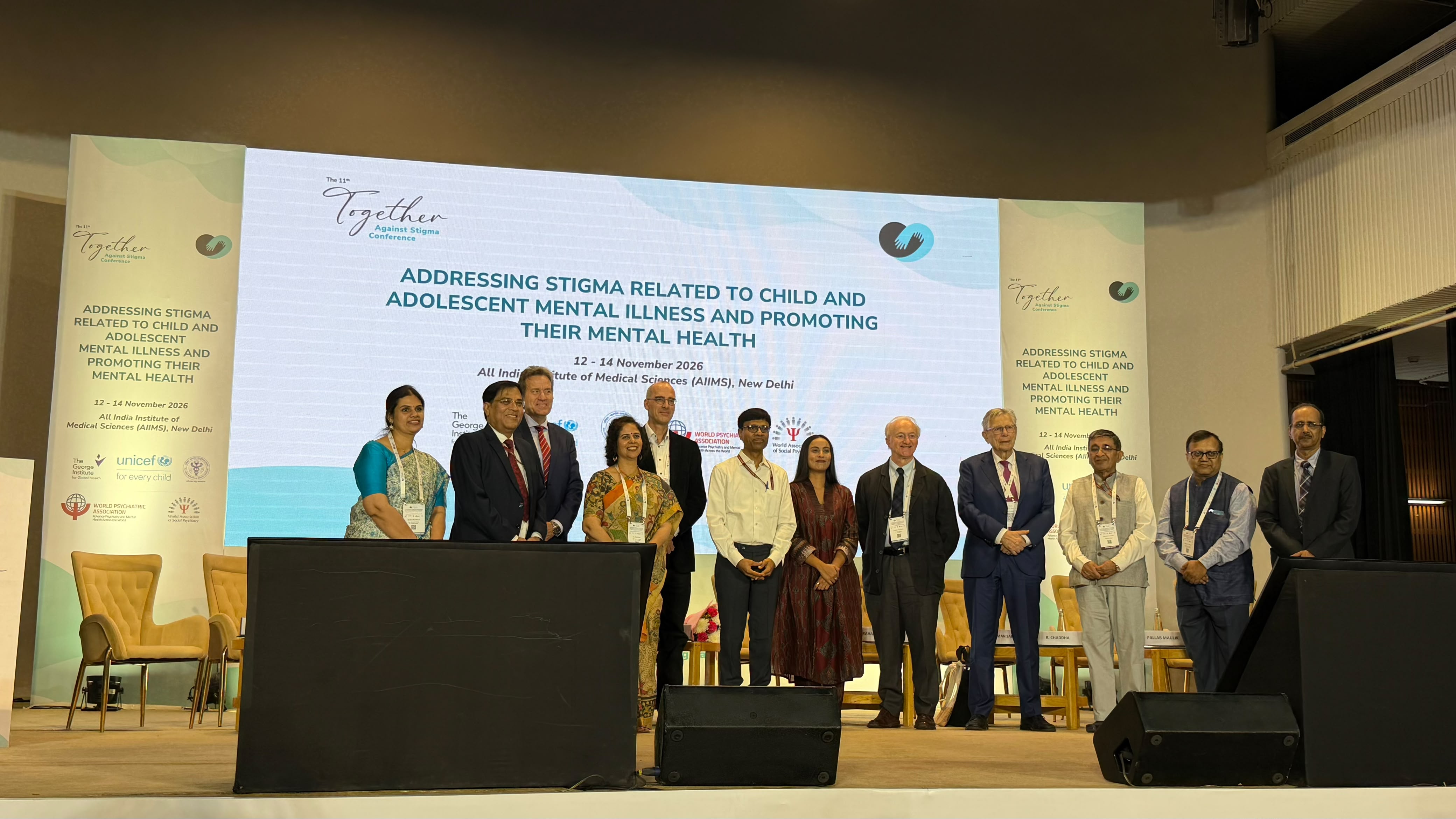
New Delhi, Nov 12: Participants at the 11th Together Against Stigma conference called for schools, health services and communities to tackle mental health stigma from childhood and make it easier for children and adolescents to get support. The conference opened today at the All India Institute of Medical Sciences, New Delhi, and is being held in the Global South for the first time.
Opening day discussions highlighted the need to introduce age-appropriate mental health education in schools, train teachers and peers to recognise distress, and improve access to support through Adolescent Friendly Health Clinics and Tele-MANAS.
Participants called for sustained action on stigma at every stage, from recognising distress and seeking help to treatment and recovery. They urged policymakers and health services to involve people with lived experience and their caregivers in designing and evaluating policies and services.
Addressing the Conference, Dr. M. Srinivas, Member, NITI Aayog, emphasised the need to address mental health stigma across different stages of life, beginning in childhood. He called for coordinated efforts involving the health, education, child development and social welfare sectors, alongside academic and research institutions.
“Through initiatives such as Tele-MANAS, India is working to expand access to mental health support. We must now build on these efforts through collaborative research, pilot programmes, and evidence-based policy recommendations that can be scaled across the country. My request to the experts and researchers gathered here is to translate the knowledge and experience shared at this conference into actionable policies and interventions that make a meaningful difference to people's lives,” Dr. M. Srinivas said.
Addressing the gathering, Prof. Pallab Maulik, Director of Research, The George Institute for Global Health India, said,
“The discussions so far have highlighted an important point: instead of focusing only on the gaps in mental health care and policies, we need to focus on the positive steps that can bring change. As Professor Sartorius and Professor Thornicroft highlighted, our priority should be to use existing evidence, promote social contact and turn these discussions into real actions that make a difference beyond this conference.”
“Stigma is the most important obstacle between us and achieving meaningful progress in mental health. Over the years, through the World Psychiatric Association, we have worked to bring together national societies, professionals, journalists and communities to develop programmes that actively address stigma. One of the important outcomes of these efforts has been the creation of the Global Alliance of Stigma Societies, which enables people working across countries to share experiences, learn from one another and strengthen their initiatives. We must continue to bring together not just mental health professionals, but also people with lived experience, their families and communities, because reducing stigma requires collective effort,” said Prof. Norman Sartorius, President Association for the Improvement of Mental Health Programmes, Geneva
Mr. Jesper Moller, Deputy Representative (Programme) UNICEF India highlighted the importance of placing children and adolescents at the centre of mental health responses.
“Accessibility to mental health is critical and goes hand in hand with ending stigma. Children and adolescents need support closer to where they live, learn, and grow, with needs identified early and timely access to appropriate services. This requires stronger systems functioning across schools, primary healthcare, child protection services, and communities, supported by a workforce equipped to respond to young people’s mental health needs. Through the Together Against Stigma initiative, UNICEF and partners continue working to strengthen the systems and workforce that can make a supportive environment a reality for every child,” said Mr. Jesper Moller, Deputy Representative (Programmes), UNICEF India.
Prof. Rajesh Sagar, Department of Psychiatry, AIIMS New Delhi, highlighted the importance of community participation in changing public perceptions of mental health.
"Government policies lay the essential groundwork, but true stigma reduction happens when community participation transforms public perception. The path forward lies in integrating mental wellness into routine primary care, educating schools and workplaces, and treating mental health with the same dignity and urgency as physical health," he said.
The conference runs until 14 November at the Jawaharlal Nehru Auditorium. The George Institute for Global Health is organising it with the Department of Psychiatry at AIIMS New Delhi and UNICEF India, with support from the World Psychiatric Association and the World Association of Social Psychiatry.