
Kochi, June 9 : A 22-year-old medical student suffering from severe lung failure was successfully treated after undergoing an emergency ECMO retrieval and inter-hospital transfer across central Kerala. The student was transferred to Apollo Adlux Hospital for advanced intensive care after his condition rapidly worsened despite conventional treatment.
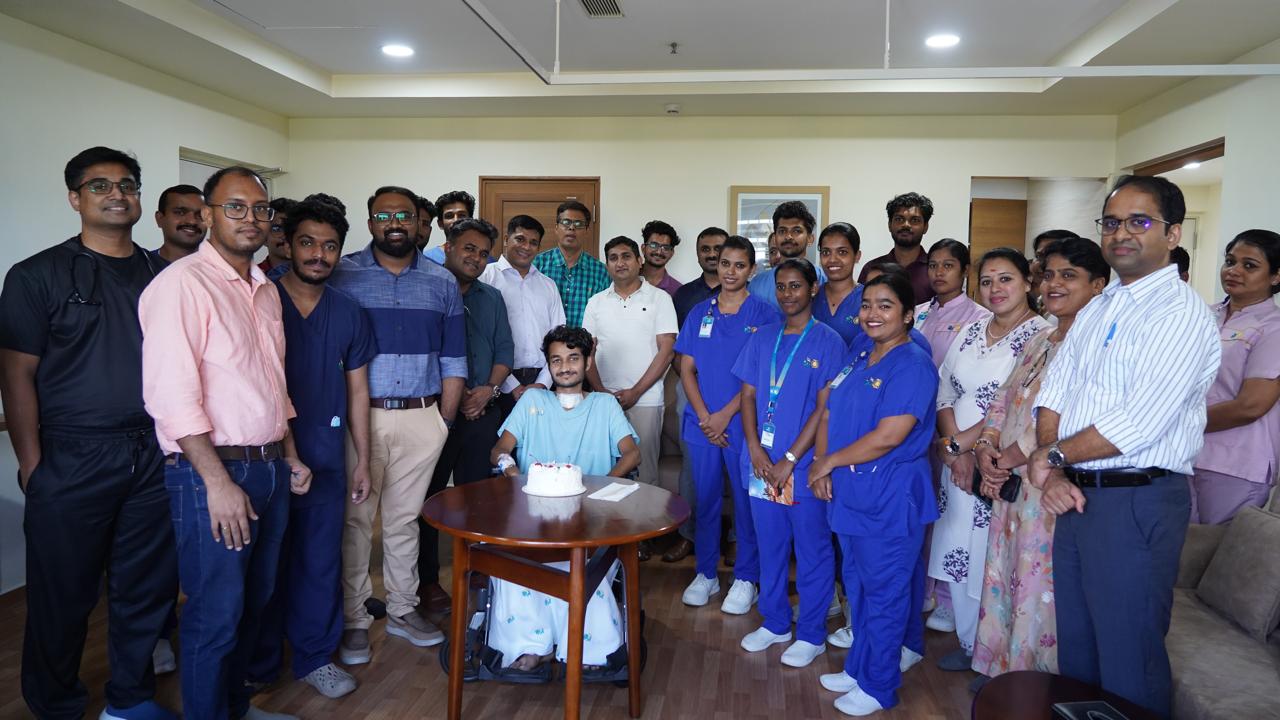
The student, originally from Rajasthan and pursuing medical studies in Kerala, initially developed fever, cough, vomiting, and abdominal discomfort following exposure to stagnant water. He was later admitted to a hospital in central Kerala after rapidly developing severe breathlessness and episodes of blood-stained sputum.
Doctors at the referring hospital suspected severe leptospirosis complicated by Acute Respiratory Distress Syndrome and diffuse alveolar haemorrhage, a life-threatening condition involving bleeding within the lungs that severely impairs oxygen exchange. Despite intensive treatment, including antibiotics, oxygen support, and mechanical ventilation, his respiratory failure continued to deteriorate.
Recognising the urgency of the situation, the treating team led by Dr Aneesh initiated an emergency referral for Extracorporeal Membrane Oxygenation , an advanced life-support system that temporarily takes over the lung function, allowing severely injured lungs time to recover. A specialised ECMO retrieval team, led by Dr. Srivatsa Nagachandan, travelled to the peripheral hospital to assess and stabilise the patient for transport.
Following initiation of the ECMO support, the patient was transported safely with coordinated support from Kerala Police, the ECMO retrieval team, and ambulance personnel. Upon arrival, he required prolonged ECMO support, mechanical ventilation, and intensive critical care over several weeks.
Over the following weeks, the patient gradually recovered. As his lungs improved, ECMO and ventilator support were successfully discontinued, and he was discharged home in stable condition.
“Initiating ECMO in a peripheral ICU is significantly more complex than in a dedicated ECMO centre. The patient was critically unstable with severe lung injury and ongoing pulmonary bleeding. Rapid decision-making, technical expertise, and close teamwork were essential to establish life support safely,” said Dr. M Srivatsa Nagachandan, Consultant, Department of Critical Care and Extracorporeal supports, Apollo Adlux Hospital.
“This case highlights the importance of timely referral, advanced critical care capabilities, and seamless collaboration between referring hospitals, retrieval teams, and emergency services. ECMO retrieval is among the most demanding aspects of critical care transport. Stabilising a patient outside a tertiary care centre, initiating extracorporeal support and transferring them safely requires exceptional planning, precision and teamwork,” said Dr. Ranjit Unnikrishnan, Senior Consultant, Department of Critical Care and Extracorporeal supports, Apollo Adlux Hospital.
Dr. D Likhith Roy, Consultant, Department of Critical Care and Extracorporeal supports, Apollo Adlux Hospital, added,
“This case involved significant medical, logistical, and emotional challenges. Seeing a young patient recover from severe lung failure after such a critical illness was deeply rewarding for everyone involved.”
The ECMO retrieval team comprised Dr. Ranjit Unnikrishnan, Dr. Srivatsa Nagachandan, Dr Rinett Sebastin, Dr. D Likhith Roy, Dr. Binoy Xavier KP, ECMO Coordinators Mr. Bijo Mathews, Mr. Abhijith Anilkumar, Mr. Karthik Menon Jayachandran, Ms. Athulya Mohanan.