With the release of Hunkkaar: The Roar, director Karan D Kapadia has incredibly shifted the way we look at on-screen crime shows. There are releases that you watch for the plot, and there are releases that make you fall in love with the genre and the vision; Hunkkaar strongly falls in the latter category. It displays a riveting battle against a system where belief can overpower evidence, shifting the focus from crime to everything that follows when a woman stands for herself.
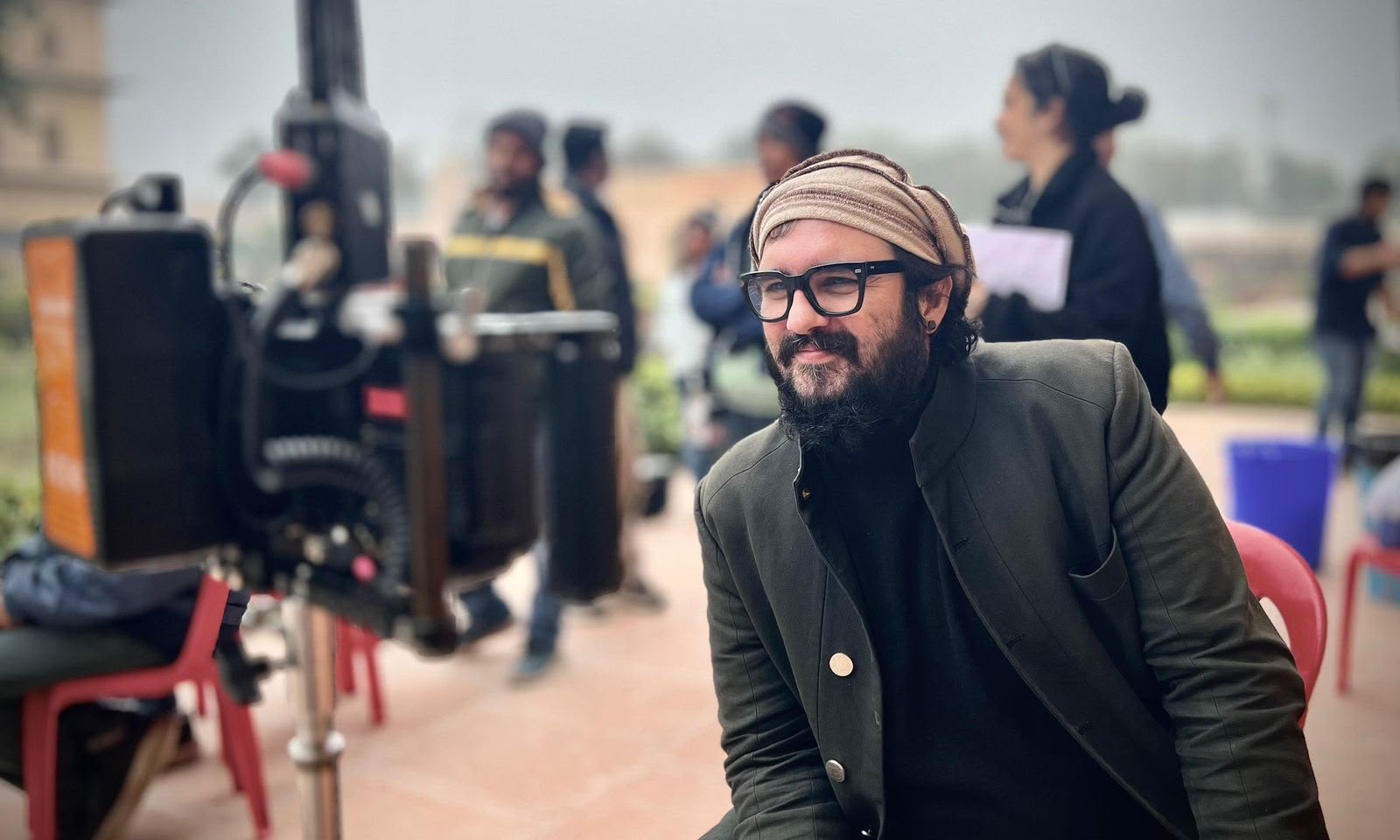
Under the directorial vision of Kapadia, Hunkkaar displays the larger world surrounding sexual violence. For Kapadia, the show was beyond looking at an individual case. "We were very mindful of talking about the meta idea of what plagues our society. We didn't want to delve into a specific story because you get into the controversies of that, and it washes away all the good things we wanted to reflect on. We wanted to reflect on the media landscape of our country, blind faith, how survivors are perceived and treated, and the police system. We also wanted to celebrate the judiciary and the police, given what a Herculean task it is to bring anyone to task in our country when they are people with power. We wanted to talk about this systematic idea of brainwashing that exists in our country.”
What makes the show even more intriguing is its structure. Instead of starting with the assault, Hunkkaar opens with the aftermath of the assault. For Kapadia, starting from there allowed him to unravel many layers of the incident. "You always start the story with the inciting incident, but here we wanted to peel back the onion, so to say, and play with timelines. We wanted to unravel not just the heinous act but everything that takes place after it, from the problematic investigation, the psychological trauma our survivor goes through, society's response, the media's reaction to how the judiciary deals with it.”
The series looks at violence in a way that doesn't turn into a spectacle, fueling its impact even more. And Kapadia credits co-creator Nitya Mehra for being clear about it. "There were a couple of reasons she gave for not showing the act. One was the sensitivity of the subject, and the second was that we didn't want to glorify that idea. The power of alluding to it and letting your own mind uncover what could have horribly happened is far more impactful than actually seeing it. When you leave something to the audience's imagination, they form their own perception of it, as opposed to you telling them and showing them exactly what happened.”
Delving deep into the consciousness of defence's tactics and society's responses to it, Kapadia adds, "When a crime like this happens, no one has witnessed it, so it's one person's story against another's. The defence tries to character-assassinate the survivor and create the impression that she's a bad person, suggesting that something like this couldn't possibly have happened to her. From society's perspective, we wanted to show why we go after the person who has already suffered and why we question them. That person has to relive the trauma over and over again, whether through the media, the court or the investigation."
He continues, "We also wanted to show how families respond to this. They might say, ‘You shouldn't have spoken up’ or ‘You should have let it go.’ Somehow, living with shame becomes more acceptable than speaking your truth. These were themes we were very conscious of and wanted to shed light on. We don't question people who are considered great when something like this happens, and we must. This was a conscious decision, and it has resonated strongly.”
Women continue to be asked to dabble their freedom around the possibility of violence, sparking questions surrounding their outfits, whereabouts and others that often cover the main question - why the violence happened in the first place.
Kapadia believes that the problem lies in the way we're thinking, not with the person being questioned. He believes that when something like this happens, one cannot question why a girl went out or what she was wearing. "That's ridiculous. We're not asking the right questions because we don't want to deal with the social evils that exist in our society. We need to acknowledge that there's a much larger problem that needs fixing, and we have to take it on together. Look at what happened with Nirbhaya. There were people who questioned why she was out at night instead of asking why such a heinous crime had taken place. It's still a question today, and it's something we should keep fighting against.” When the conversation turns to what might change this response, Kapadia brings it back to empathy. “We need more empathy in our society. We have this bravado of showing a strong front, but that's not what we need. We need to address mental health and these issues much more seriously. We can only hope to act as catalysts for change in that respect.”
What makes the show more fascinating is that its characters aren't segregated into those who are always right and those who are entirely wrong. Jasleen, Bhalerao, Amitabh and even Meenu are not created in a way that should idealise sympathy. For Karan, the decision came from the want to bring humanity to the characters rather than inclining towards usual tropes. "All of us have problems and issues in our lives. When we acknowledge our imperfections, I think that resonates much more than a supposedly perfect hero. Our imperfections are what make us human. They bring us alive, and they're what we relate to most. We wanted to stay away from conventional ideas of what a victim or survivor should be like, or what a police officer should be like. We wanted to bring more empathy and humanity to our characters. We're over the moon that this is what has resonated with audiences. Ultimately, we wanted to showcase what makes us truly human,” he says.
Kapadia spots blind faith as a core central theme that the team wanted to focus on. "Our judge also addresses it in her testimony, when she says that making someone believe it's okay that something like this happened can be worse than the crime itself. It's a larger critique of blind faith in our country, and we were very mindful of showcasing that.” He believes that placing questions in front of the authority was a much-needed starting point. "We have to question everything rather than accept what mainstream media or people in power tell us as gospel truth. Given what's happening to women in our country, we have to believe what they're saying, prima facie, and then deal with the matter.”
For him, the purpose of Hunkkaar goes beyond delivering a verdict. He believes that the show acts as a "small catalyst for change." "If it starts a conversation or shifts our consciousness, even slightly, and makes us believe that things need to change, we'll be satisfied. For us, it's important that the show leaves audiences with lasting messages of hope, courage and speaking our truth during difficult times, regardless of the circumstances. We must never give up. That's the universal message we hope the show brings to its audience. If it can inspire people, move them or shift the needle even a little, that's all we could hope for," he says.
Hunkkaar brings to the fore media as an arena where Meenu's story is fought over. News and public reactions birth narratives of their own, often turning it all into perception. Kapadia believes that the media and journalism's role was examined through the show. “As we say in the show, ‘The news is not told, it's sold.’ What's happened to our country's media landscape is very worrying because the media is the fourth pillar of democracy. We want to believe the news and hear it from an objective perspective, rather than through a biased lens. Today, media companies can be bought and paid for. It was important for us to critique journalism in our country and reflect on what's happening in the journalistic landscape."
"Where is our version of the film Spotlight? Where are the journalists fighting for serious issues? News today often revolves around agendas. We wanted to reflect on what is happening to such a powerful medium and examine how it's being used," he says.
“It's also a trial by media. In our country, people are often judged, and a verdict is delivered online before a case has even begun. People in positions of power use these platforms to build a particular narrative. The David-versus-Goliath aspect was important to us as this young woman's battle isn't just taking place in a court of law but it is a battle against society itself.”
The show brings an amalgamation of elements, right from police investigation, courtroom, media and social media, spaces that strongly shape people's perspective and what they deem as truth. And Hunkkaar makes the audience halt before deciding whom to place trust on, whom to question and what to question.