Roorkee, Sep 25: he 3rd Annual Review Meeting of the Rural Technology Action Group commenced today at the Indian Institute of Technology Roorkee and is being held on September 24–25, 2026. The meeting has brought together researchers, scientists and officials from leading IITs and scientific institutions to review the progress of technological interventions developed under RuTAG 2.0, discuss ground-level implementation challenges, and deliberate on strategies for sustainable and scalable rural technologies.
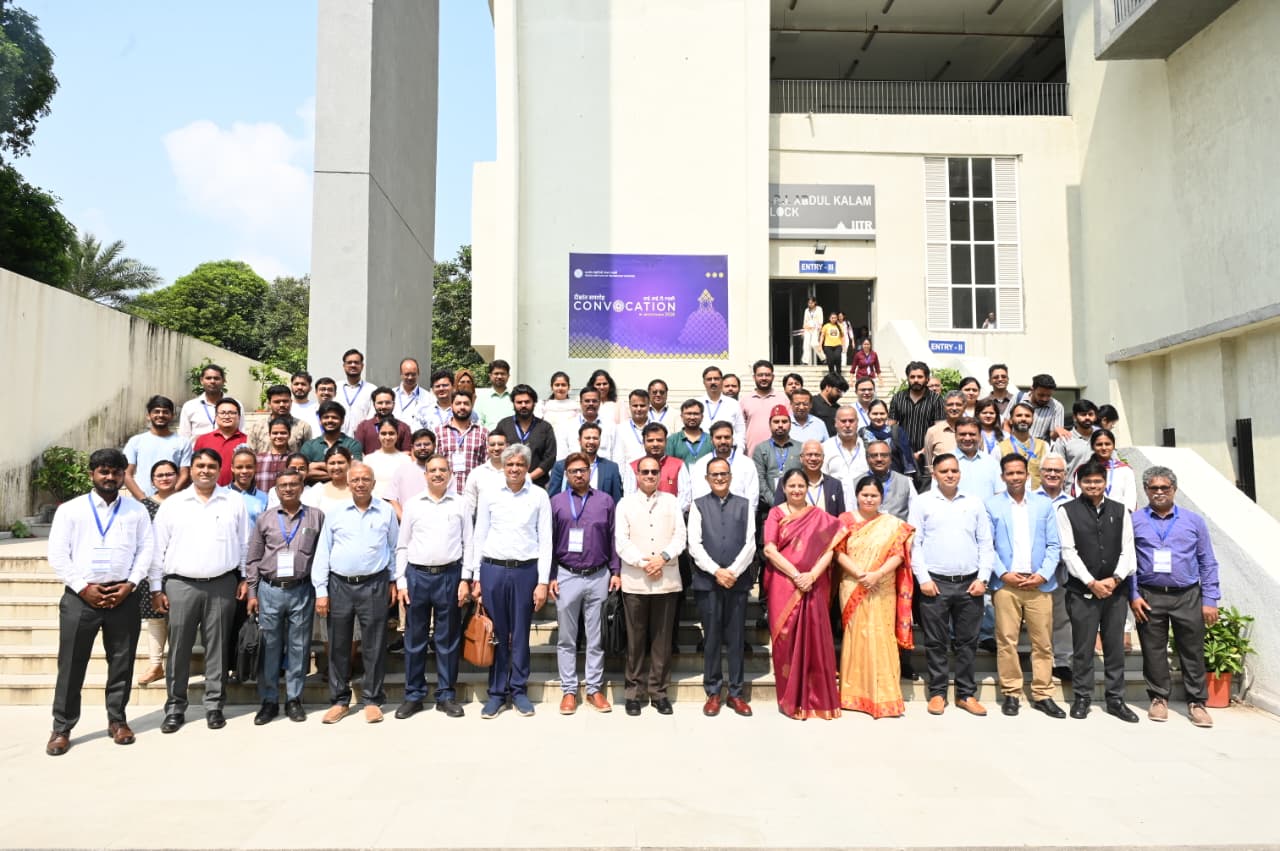
The inaugural session was chaired by Prof. Ajay Kumar Sood, Principal Scientific Adviser to the Government of India, in the presence of Dr. Parvinder Maini, Scientific Secretary, Office of the PSA; Prof. Kamal Kishore Pant, Director, IIT Roorkee; Prof. Vivek Malik, Dean, IIT Roorkee; and Prof. S. K. Singal, PI, RuTAG IIT Roorkee
Representatives from RuTAG centres at IIT Madras, IIT Bombay, IIT Delhi, IIT Roorkee, IIT Guwahati, ICAR-NAARM Hyderabad, and SKUAST Kashmir are participating in the meeting to assess project progress, discuss implementation challenges at the grassroots level, and formulate strategies for sustainable and scalable rural technologies.
Addressing the inaugural session, Prof. Ajay Kumar Sood, Principal Scientific Adviser to the Government of India, emphasized that rural technologies must go beyond scientific innovation and demonstrate practicality, affordability, adaptability and scalability to create meaningful impact at the grassroots level. He highlighted the role of RuTAG in translating high-end research from laboratories into practical solutions for rural communities, households, agricultural fields and other grassroots applications. He further stressed the need to strengthen field-level deployment, enhance community engagement, address implementation challenges, and develop self-sustaining local enterprise models to support wider adoption of rural technologies.
Prof. Ajay Kumar Sood said,
“The true impact of rural technology lies in its ability to move beyond the laboratory and respond effectively to real-world needs. Technologies developed under RuTAG must be practical, affordable, adaptable and scalable so that they can create sustained impact at the grassroots level. Strengthening field deployment, community engagement and local enterprise models will be important for taking these solutions to a wider section of rural communities.”
Dr. Parvinder Maini, Scientific Secretary, Office of the Principal Scientific Adviser, emphasized the need for a seamless and outcome-oriented linkage among academic research, technological development and field-level implementation under RuTAG 2.0. She noted that the success of scientific innovation should be reflected in its effective adoption, sustained utilization and tangible impact on end users. She also highlighted the importance of continuous feedback mechanisms involving rural artisans, farmers and technical experts, along with standardized technology-transfer protocols, effective dissemination mechanisms and stronger collaboration among RuTAG centres and partner institutions.
Prof. Kamal Kishore Pant, Director, IIT Roorkee, emphasized that technological innovation should address the real needs of farmers, artisans and rural communities while ensuring reliability, productivity, affordability and adaptability. He stressed the importance of collaboration among academic institutions, government agencies, industries, NGOs and rural organizations for effective technology transfer, wider dissemination and long-term adoption.
Prof. Kamal Kishore Pant said,
“Technology becomes truly impactful when it responds to the real needs of farmers, artisans and rural communities. RuTAG provides an important platform for connecting academic research with field realities and for strengthening collaboration among institutions, government, industry and rural organisations. Such partnerships are essential for effective technology transfer, wider dissemination and sustained adoption of reliable, affordable and adaptable technologies.”
Dr. Rakesh Kaur, Adviser/Scientist ‘G’, Office of the Principal Scientific Adviser, emphasized the importance of technology-driven interventions in addressing challenges faced by rural communities. She highlighted the need for technologies developed for grassroots applications to be standardized, thoroughly validated and adapted to local requirements before large-scale deployment.
The deliberations on the first day focused on strengthening the connection between research and field-level implementation, improving technology transfer and dissemination mechanisms, and ensuring that technologies developed for rural communities are responsive to local requirements and capable of sustainable adoption.
The two-day review meeting will continue on September 25, 2026, with further deliberations on the progress of RuTAG projects, field-level adoption, technology transfer, dissemination mechanisms and strategies for sustainable implementation of rural technologies. The participating RuTAG centres will also deliberate on strengthening collaboration and developing an actionable roadmap for wider adoption and technology-led rural transformation across the country.