New Delhi, Nov23: Indus Action, with support from the Directorate of Education, Government of NCT of Delhi, officially launched its new handbook, Inclusion in Action: Lessons from RTE 12(1)(c) Implementation in Delhi Classrooms, at Vasant Valley School, Delhi. The landmark study in collaboration with Vasant Valley School and Alstonia provides concrete evidence from nine private unaided schools in Delhi on what it takes to turn a guaranteed school seat into genuine belonging, participation, and academic achievement for students admitted under the Right to Education Act.
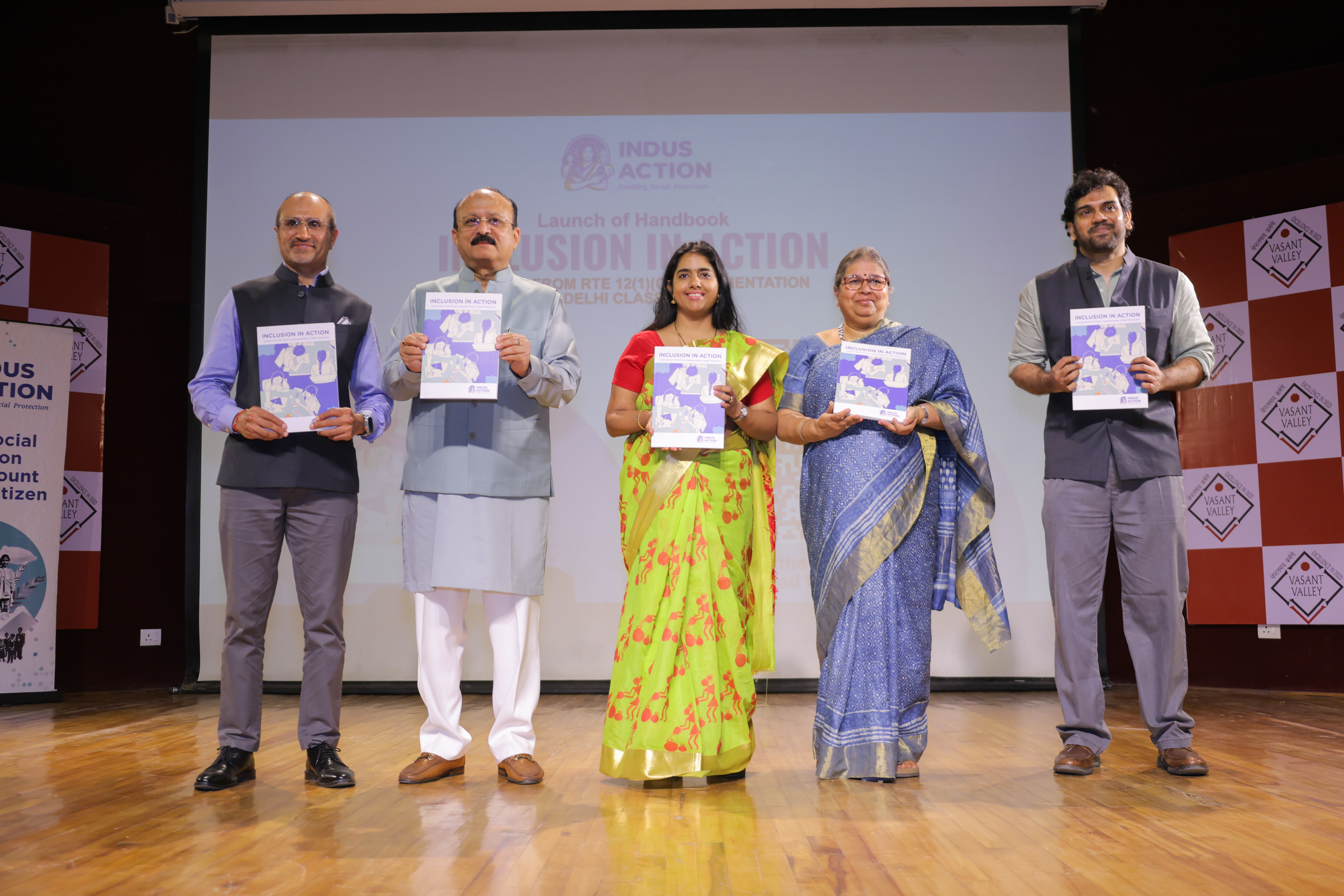
The launch event hosted Shri Ashish Sood, Minister of Education, Government of NCT of Delhi, as the Guest of Honour, alongside prominent educationists, school leaders, and policymakers who discussed actionable pathways toward educational equity.
Addressing the gathering, Shri Ashish Sood emphasised the government's commitment to bridging the gap between school access and academic quality. "Enrolment does not, by itself, ensure that students experience meaningful inclusion. What happens after a child enters the classroom matters just as much as how a school responds to differences in students' backgrounds, learning needs, and experiences shapes whether they feel supported, can participate in school life, and progress in their learning," stated Minister Sood. " This handbook looks at how the vision of the RTE Act Section 12(1) (C) and the NEP takes shape in practice." Smt. Ankita Anand, IAS, Director of Education, reaffirmed the Directorate of Education’s commitment to fostering an education ecosystem where equity and excellence go hand in hand.
Tarun Cherukuri, Founder and CEO of Indus Action, highlighted the systemic shift required to move past mere legal compliance.
"For over a decade, we have focused heavily on opening the school gates for vulnerable families, but a seat without structural belonging is a promise half-kept," said Cherukuri. "This study moves the conversation from classroom integration to deep, empathetic inclusion. By addressing hidden costs, transforming teacher pedagogy, and eliminating peer segregation, we can co-create learning spaces where every RTE student thrives with dignity and strives for their highest potential."
Section 12(1)(c) of the RTE Act 2009 mandates a 25% reservation in private unaided schools for children from Economically Weaker Sections and Disadvantaged Groups, making it one of the largest school affirmative-action programmes in the world. While the policy has opened school doors for over 50 lakh children cumulatively across India, with 40,000+ children admitted every year in Delhi alone; ensuring meaningful inclusion and participation in the classroom remains a critical challenge. Experts noted that if fully implemented nationwide, the policy could enroll 20 lakh children annually.
To explore what enables inclusive learning, Indus Action conducted an intensive study across nine private unaided schools in Delhi. Based on 81 observation sessions spanning 26 classrooms, and deep insights from participants including students, parents, teachers, and school leaders, the study identified 5 categories of key challenges and 14 evidence-based practices for meaningful inclusion. “A seat in a classroom is where inclusion begins, not where it ends. This handbook shows what schools are doing to help every child belong. It tells us whether the promise of the RTE Act is truly realized.” noted Raj Singh Bhandal, Trustee, Vasant Valley Centre for Excellence in Education.
Key Challenges:
- Limited Academic and Extracurricular Participation: Students struggle to meet grade-level expectations, falling further behind as curriculum demands increase.
- Gaps in Teacher Pedagogy, Beliefs, and Preparedness: Limited collaborative learning, low expectations for RTE students, and heavy teacher workloads limit individual attention.
- Difficult Family Circumstances: Limited parental involvement, difficult home environments, and visible economic gaps follow children into the classroom.
- Peer Segregation & Exclusion: RTE and fee-paying students risk forming segregated friend groups within the same classroom.
- Financial Barriers Beyond Class: Cost constraints keep many RTE students from school trips, sports, competitions, and summer camps, leaving them feeling excluded.
What Works - Practices for True Inclusion:
- Teachers as Facilitators: High expectations of students, collaborative learning, differentiated instruction, and remedial academic support can help every student engage with confidence.
- Fostering an Inclusive School Culture: Non-labelling of students, mixed seating arrangements, and trained, empathetic teachers can help all students feel safe and valued.
- Equitable Access & Career Readiness: Equal access to activities, paired with clear pathways to higher education, build student confidence, leadership skills, and long-term prospects.
- Engaging Parents and Community: Sustained, dignified engagement with families strengthen the support students receive, both in and outside school.
The handbook serves as a vital blueprint for school administrators and policymakers to shift the focus from mere classroom "integration" to deep, systemic "inclusion."