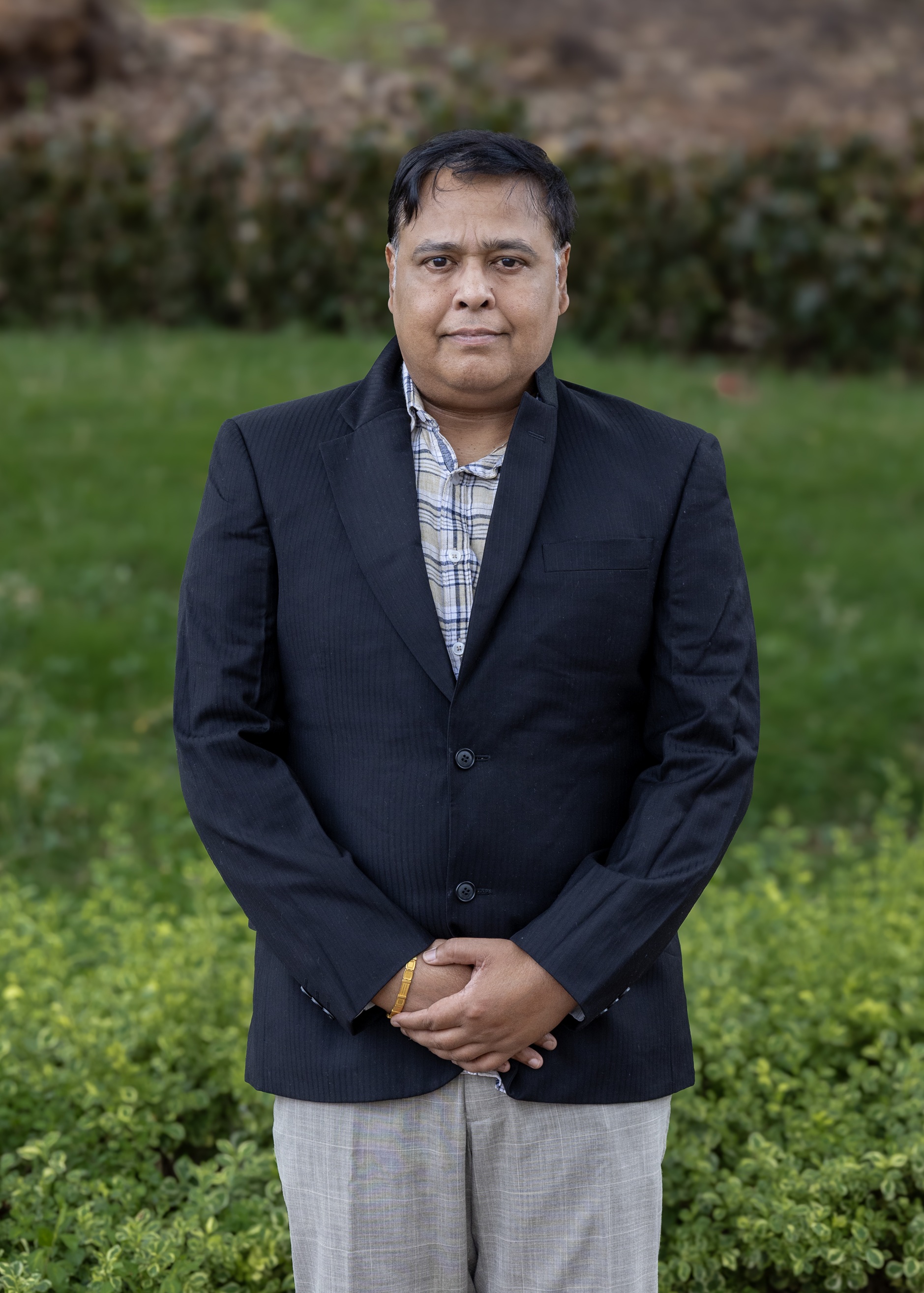
GOA, 09th November 2026: Prof. Saswat Barpanda, Associate Professor at Goa Institute of Management (GIM), in collaboration with researchers from Amrita School for Sustainable Futures, Kollam, and LITEM, France, have explored how communities, institutions and governments can collaborate to make circular economy initiatives work towards a more sustainable future.
Published in Sustainable Development journal, the study examines how new ideas and community initiatives can promote a circular economy. It specifically focuses on the role of social innovation in bringing all stakeholders together to develop practices that are environmentally and socially beneficial.
Instead of following a use-and-throw practice, a circular economy approach reduces waste by repairing, recycling and reusing the available resources. It encourages individuals, businesses and communities to rethink how to consume and manage resources, with the aim of minimising waste.
While both social innovation and the circular economy are widely discussed as ways to promote sustainability, there is still limited understanding of how they work together and what initiatives help in converting ideas into practical outcomes. To understand this, the research team reviewed 97 peer-reviewed research papers and developed a Social Innovation in Circular Economy System (SICES) model.
Through this model, the research team highlighted that successful circular economy initiatives also require people and organisations to participate in decision-making, and institutions to provide the required support to sustain new practices.
The study further explains that local initiatives and community-led solutions can contribute to broader sustainability goals when they receive appropriate institutional support.
Commenting on the research, Dr. Saswat Barpanda, Associate Professor, GIM, said, “A circular economy is not achieved through recycling or technology alone. It also depends on people working together, communities shaping solutions, and institutions creating the conditions for those solutions to endure. Our SICES model helps explain how social innovation can connect these elements and turn sustainability ideas into lasting practice”.
The research offers important insights for policymakers, businesses and organisations looking to develop more sustainable practices. It shows that lasting change is more likely when communities are actively involved and supported by the institutions around them. The findings can also help those working on sustainability initiatives understand why collaboration, local participation and institutional support are important for moving from ideas to long-term action.
The research has been co-authored by Dr. Saswat Barpanda from GIM, Dr. Souresh Cornet from Amrita School for Sustainable Futures, Amrita Vishwa Vidyapeetham, Kollam, and Dr. Marc-Antoine Diego Guidi from LITEM, Institut Mines-Télécom Business School, France.
As the next step, the research team plans to test the proposed model in different communities and settings. This will help understand the model’s relevance across different contexts and further develop the insights presented in the study.