Reinforcing its focus on holistic and experiential learning, Birla Open Minds Schools conducted immersive reading and literary programmes designed to nurture a strong reading culture among students while developing communication, creativity, collaboration and critical-thinking skills. Through engaging activities that bring books, language and storytelling to life, the initiatives encourage students to discover the joy of reading beyond textbooks and examinations.
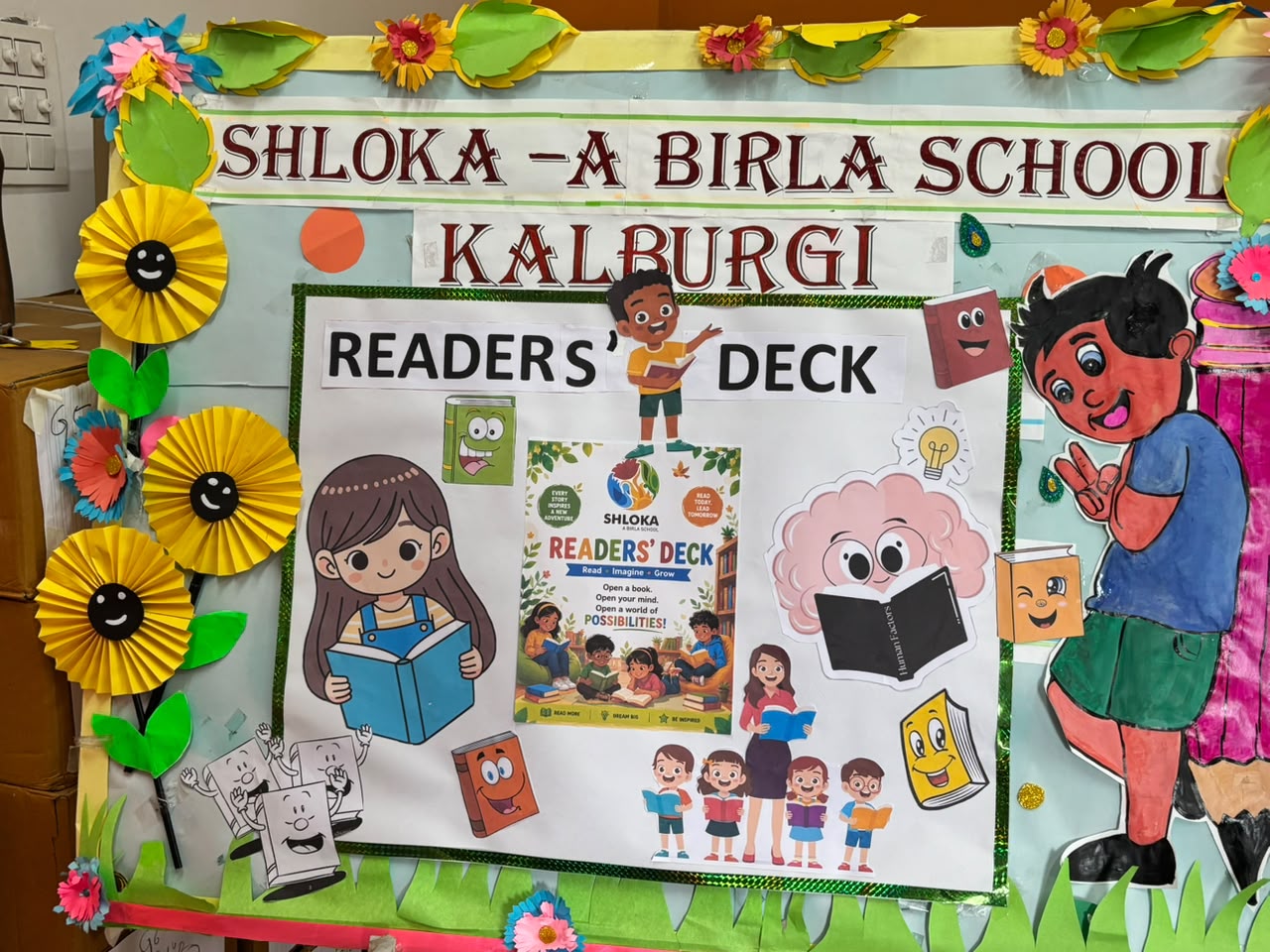
For students in Grades 1–4, the Readers’ Deck is a three-day reading festival. Students participate in engaging activities such as Book Detectives, Spotlight Speaks, Cover Clues, Fluency Sprint, Silent Reading, Roll a Dice and Scavenger Hunt, allowing them to explore books through play, performance and discovery. Adding to the experience is Biblo, the reading mascot, who interacts with students and makes the festival more enjoyable and engaging.
For students in Grades 5–8, the Middle Grades Literary Fest offers an immersive literary experience through activity-based learning. Students engage with literature through stations such as Book Tasting, Word Wizard, Proverbs & Quotes, Open Mic, Silent Reading, Writing Lab, and Comic Strip Making, among others. The activities provide students with opportunities to experiment with language, develop creative writing and storytelling skills, express themselves confidently, and collaborate with their peers.
Ms. Satwant Palekar, Vice President – Academics, Birla Open Minds, said, “Reading is not simply a skill that students acquire; it is a gateway to imagination, curiosity and independent thought. Through initiatives such as Readers’ Deck and Literary Fest, we want students to experience books in ways that are joyful, interactive and meaningful. By combining reading with theatre, storytelling, writing, discussion and creative expression, we are creating opportunities for children to become confident communicators and thoughtful learners.”
The programmes reflect the school network’s approach of taking learning beyond conventional classroom methods and creating spaces where students can explore, question and express themselves. By integrating reading with experiential activities, the initiatives aim to make literature more accessible and enjoyable while building lifelong learning habits from an early age.