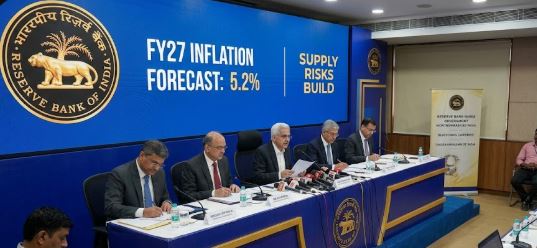
New Delhi, Oct 7: The Reserve Bank of India (RBI) has projected India's retail inflation at 5.2 per cent for FY27, highlighting growing concerns over supply-side pressures, higher commodity costs and an uncertain global economic environment.
Representational Image
The revised outlook comes as the central bank navigates a challenging inflation landscape marked by rising crude oil prices, geopolitical tensions and potential disruptions to agricultural output.
The RBI's latest inflation assessment follows a period of renewed price pressures in the domestic economy. Consumer Price Index (CPI) inflation has been moving higher, while elevated energy and commodity prices are adding to production and transportation costs for businesses.
The central bank has also flagged the possibility of supply-side pressures affecting the inflation trajectory. Weather-related risks, particularly the impact of El Nino conditions and uneven rainfall, could influence food production and lead to volatility in food prices.
Global developments remain another important risk. Crude oil prices have risen sharply amid tensions in West Asia, with oil trading above $100 a barrel. A prolonged increase in energy prices could feed into inflation by raising fuel, logistics and manufacturing costs.
The RBI's inflation projection also comes alongside its decision to raise the repo rate by 25 basis points to 5.50 per cent, signalling a more cautious approach to monetary policy as price pressures strengthen.
The central bank is expected to closely monitor food prices, crude oil movements, global financial conditions and domestic demand while assessing the inflation outlook in the coming months.
For households, businesses and investors, the revised inflation projection highlights the importance of keeping a close watch on borrowing costs, consumer prices and input expenses. A sustained rise in inflation could influence future interest-rate decisions and financial-market conditions.
The RBI's latest assessment underscores the challenge of balancing economic growth with price stability at a time when both domestic supply conditions and global developments remain uncertain.