Lima, Nov 19: Bracing for potential disruptions caused by the El Niño weather phenomenon, the Peruvian government has declared an emergency across the country's entire fuel supply chain, citing the risk that heavy rainfall, floods and landslides could damage critical energy infrastructure and disrupt nationwide supplies.
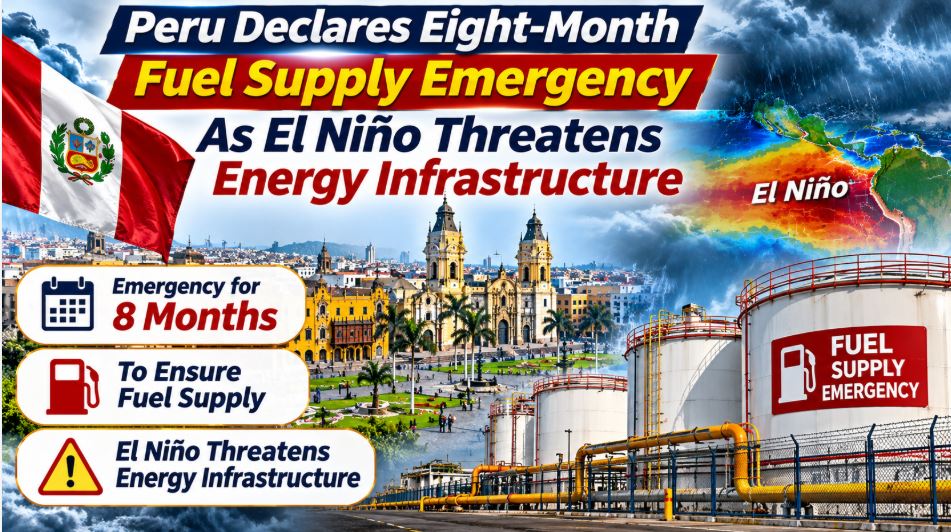
Representational Image
The emergency declaration is aimed at ensuring uninterrupted availability of petroleum products and other hydrocarbon resources despite the threat of extreme weather. Peru's Ministry of Energy and Mines said the move would enable authorities to take preventive and timely measures to safeguard the country's energy supply network.
The order covers every major segment of the hydrocarbon industry, including processing, refining, storage, transportation and marketing. According to the ministry, severe weather could affect strategic infrastructure in several regions, potentially disrupting fuel distribution and essential economic activities.
The government has warned that interruptions in fuel supplies could have wider consequences for transportation, industrial production, commercial operations and essential public services, including electricity generation.
Hydrocarbons play a crucial role in Peru's energy security, accounting for approximately 67 per cent of the country's national energy mix, according to the ministry.
Energy Regulator Tasked With Monitoring Situation
Peru's Supervisory Authority for Energy and Mining Investment has been assigned the responsibility of evaluating the evolving situation and identifying the measures required to address potential disruptions.
The emergency declaration, published in the country's official gazette El Peruano, will remain in force for up to eight months, beginning the day after its publication.
The extended period is intended to provide authorities with sufficient time to implement preventive measures and respond to weather-related challenges affecting the energy sector.
Heavy Rainfall Threatens 1,380 Districts
The latest decision follows another emergency measure announced by the Peruvian government on November 3, when it declared a 60-day state of emergency in 1,380 districts across the country due to the threat of intense rainfall associated with El Niño.
The order covers vulnerable areas across 24 departments and the Constitutional Province of Callao. The affected regions include Amazonas, Ancash, Apurimac, Arequipa, Ayacucho, Cajamarca, Cusco, Huancavelica, Huanuco, Ica, Junin, La Libertad, Lambayeque, Lima, Loreto and Madre de Dios.
Other regions covered by the declaration include Moquegua, Pasco, Piura, Puno, San Martin, Tacna, Tumbes and Ucayali.
Under the emergency framework, regional and local administrations are required to coordinate disaster-prevention and response operations with relevant government ministries and public and private institutions.
The National Institute of Civil Defence (Indeci) will provide technical assistance and oversee the implementation of emergency measures.
El Niño Raises Concerns Over Widespread Disruptions
The decision to expand emergency preparedness measures follows an October 30 assessment by Indeci, which identified the affected districts as particularly vulnerable to the anticipated heavy rainfall.
The agency warned that the persistence of coastal El Niño conditions, alongside the development of the phenomenon in the central equatorial Pacific, could increase the likelihood of intense rainfall and related natural disasters.
Authorities are focusing on reducing disaster risks, strengthening emergency response capabilities and undertaking rehabilitation work wherever necessary to protect vulnerable communities.
With the latest fuel supply emergency, Peru is seeking to safeguard not only its energy infrastructure but also the wider economic activities and essential services that depend on uninterrupted hydrocarbon supplies.
The coming months will be crucial for authorities as they monitor weather developments and implement precautionary measures against the potential impact of El Niño.