New Delhi, Nov 19: India is emerging as an increasingly influential player in the global oil market amid shifting geopolitical alliances, disruptions in crude supply routes and a decline in the traditional pricing influence of the Organisation of the Petroleum Exporting Countries (OPEC), according to a report published in Global Outlook.
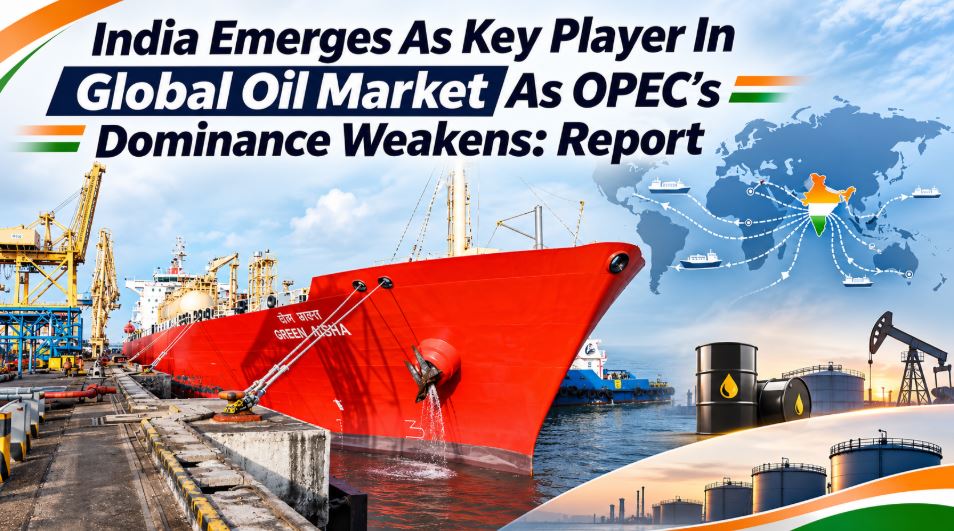
Representational Image
The report argues that the global oil market is moving towards a multipolar structure, with the United States, Russia and other major producers playing increasingly important roles in determining crude supply and prices. In this changing landscape, India has emerged as a strategic link connecting major oil-producing nations with international fuel markets.
As the world's third-largest crude oil importer, India sources petroleum from multiple regions, including Russia, the United States and the Gulf. Its extensive refining capacity, particularly Reliance Industries' Jamnagar refinery complex, has further strengthened its position in global energy trade.
The Jamnagar facility, with a refining capacity of approximately 1.4 million barrels per day, enables India to process different grades of crude oil, including discounted and sanctioned supplies, and export refined petroleum products to international markets.
Russia's Oil Trade Finds Alternative Routes
The report notes that Western sanctions have failed to completely remove Russian crude from the international market. Instead, Russian oil has increasingly been redirected towards alternative buyers and shipping networks.
Despite the reduction of the price cap to $44.10 per barrel from February 2026, around 60 per cent of Russia's seaborne oil reportedly moved through sanctioned shadow tankers in October 2026.
India's Russian crude purchases have also fluctuated in response to changing geopolitical and economic conditions. The report states that India had pledged in February 2026 to stop purchasing Russian oil in exchange for an 18 per cent US tariff.
However, following disruptions in the Strait of Hormuz, Russian crude supplies to India reportedly surged to a record 2.8 million barrels per day in July 2026, accounting for approximately 55 per cent of the country's crude imports. US waivers also facilitated the transactions during the crisis.
OPEC's Influence Faces Fresh Challenges
The report identifies several developments that have weakened OPEC's traditional influence over global oil prices.
Disruptions in the Strait of Hormuz following the US-Israeli conflict with Iran on February 28, 2026, severely affected global oil transportation. According to the paper, crude flows through the strategic waterway declined from around 20 million barrels per day to almost zero.
The United Arab Emirates' exit from OPEC and OPEC+ on May 1, 2026, further weakened the cartel's institutional unity. Meanwhile, planned production increases by OPEC+ members have largely remained unfulfilled.
These developments have contributed to a significant shift in the balance of power in the international oil market.
US Emerges As Major Swing Supplier
The United States has strengthened its position as a key supplier capable of responding to changing global demand.
According to the report, American crude oil production averaged a record 13.6 million barrels per day in 2025, approximately 40 per cent higher than production levels in Russia or Saudi Arabia.
The US Energy Information Administration (EIA) has projected that American crude production could reach another record of 13.8 million barrels per day in 2026.
The report suggests that US shale production, rather than OPEC's traditional quota decisions, is increasingly influencing the additional supply available to the global market.
Jamnagar Refinery Gives India Strategic Advantage
India's refining infrastructure has emerged as one of its biggest strengths in the evolving energy landscape.
The report identifies Reliance Industries' Jamnagar refinery complex as a major strategic asset, highlighting its ability to process heavy and discounted crude grades and supply refined petroleum products to international markets.
Its export-oriented refining operations have helped India maintain access to major markets, including Europe and the United States.
The paper also highlights India's growing role in the trade of Venezuelan crude following the reported US intervention in Venezuela and the subsequent changes in control of the country's oil and gas sector.
Strategic Diversification Key To India's Energy Future
The report recommends that India maintain flexibility in its crude procurement strategy by preserving supply options across Russia, the Americas and the Gulf region.
It also emphasises the importance of strengthening refining capabilities, expanding strategic petroleum storage and developing reliable international payment channels.
According to the paper, these capabilities should be viewed not merely as commercial advantages but also as important instruments of India's foreign policy and energy security.
With global oil supply chains increasingly shaped by geopolitical developments, India appears well-positioned to strengthen its influence as a major importer, refiner and exporter of petroleum products.